

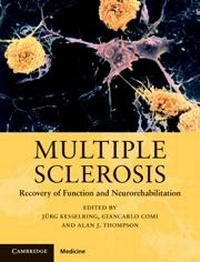
Multiple Sclerosis
Recovery of Function and Neurorehabilitation
Published on 7. October 2010
Book
Hardback
260 pages
978-0-521-88832-5 (ISBN)
Description
Recent developments in basic and applied science have led to better understanding of disease mechanisms and more efficient therapies for multiple sclerosis. The most effective way of managing these patients is through a carefully planned neurorehabilitation programme. The main aims are to reduce disability and handicap and improve functions through effective training, stimulating activity and social participation. As the first text on recovery of function and neurorehabilitation in MS, this book focuses on mechanisms of recovery, application of neuroplasticity to therapeutic interventions, and determination of the efficiency of these interventions. Basic principles of neurorehabilitation in MS are described, as well as techniques for treating specific syndromes which may occur in MS. Written and edited by leading clinicians and researchers, the book achieves an excellent balance between basic science, pathophysiology, and clinical rehabilitation. An essential resource for clinicians and therapists treating patients with multiple sclerosis, neurophysiologists, and health care advisors.
More details
Language
English
Place of publication
Cambridge
United Kingdom
Target group
College/higher education
Product notice
sewn/stitched
Cloth over boards
Illustrations
10 Tables, black and white; 18 Plates, color; 7 Halftones, black and white; 29 Line drawings, black and white
Dimensions
Height: 254 mm
Width: 197 mm
Thickness: 17 mm
Weight
850 gr
ISBN-13
978-0-521-88832-5 (9780521888325)
Copyright in bibliographic data and cover images is held by Nielsen Book Services Limited or by the publishers or by their respective licensors: all rights reserved.
Schweitzer Classification
Other editions
Additional editions
Juerg Kesselring | Giancarlo Comi | Alan J. Thompson
Multiple Sclerosis
Recovery of Function and Neurorehabilitation
E-Book
03/2011
1st Edition
Cambridge University Press
€115.99
Available for download
E-Book
10/2010
1st Edition
Cambridge University Press
€97.49
Available for download
Persons
Juerg Kesselring is Head of the Department of Neurology and Neurorehabilitation, Rehabilitation Centre, Valens, Switzerland. Giancarlo Comi is Professor of Neurology, Chairman of the Department of Neurology, and Director of the Institute of Experimental Neurology, Vita-Salute San Raffaele University, Scientific Institute San Raffaele, Milan, Italy. Alan J. Thompson is Vice-Dean and Deputy Head of the Faculty of Biomedical Sciences at University College London, Director of the UCL Institute of Neurology, Programme Director for the Neurological Disorders theme of UCL Partners (Academic Health Science Centre), and Deputy Director of the Comprehensive Biomedical Research Centre. He is the Garfield Weston Professor of Clinical Neurology and Neurorehabilitation, and is head of the Neurorehabilitation research group in the Institute of Neurology's Department of Brain Repair and Rehabilitation, London, UK.
Content
Preface; Part I. Basic Mechanisms: 1. Conduction studies in multiple sclerosis Kai M. Roesler and Christian W. Hess; 2. The physiopathology of multiple sclerosis Giancarlo Comi; 3. Synaptic changes in multiple sclerosis. Do they occur? How effectively can they be analyzed? Vincenzo Zimarino, Maddalena Ripamonti, Marcello Belfiore, Mattia Ferro and Antonio Malgaroli; 4. Sodium channel expression and function in multiple sclerosis Lakshmi Bangalore, Joel A. Black, Michael D. Carrithers and Stephen G. Waxman; 5. Basic mechanisms of functional recovery Bjoern Zoerner and Martin E. Schwab; 6. The adult human oligodendrocyte precursor cell: a key player in myelin repair Julia M. Rist and Robin J. M. Franklin; 7. Tissue regeneration and repair in multiple sclerosis: the role of neural stem cells Stefano Pluchino, Roberto Furlan, Luca Muzio and Gianvito Martino; 8. Schwann cells as a potential cell-based therapy for multiple sclerosis Violetta Zujovic and Anne Baron-Van Evercooren; Part II. Assessment of Mechanisms and Disease Status: 9. MRI to study white matter damage in multiple sclerosis Marco Rovaris, Annalisa Pulizzi and Massimo Filippi; 10. MRI to assess gray matter damage in multiple sclerosis Massimo Filippi, Federica Agosta and Maria A. Rocca; 11. Application of fMRI in multiple sclerosis Massimo Filippi and Maria A. Rocca; 12. fMRI in focal CNS damage Patrizia Pantano and Eytan Raz; 13. Electrophysiological assessment in multiple sclerosis Letizia Leocani and Giancarlo Comi; 14. fMRI monitoring of therapeutic interventions in multiple sclerosis Massimo Filippi and Maria A. Rocca; Part III. Rehabilitation - General Aspects: 15. How to measure the effects of rehabilitation Stefan J. Cano and Alan J. Thompson; 16. Value and limits of rehabilitation in multiple sclerosis Serafin Beer; 17. Prognosis in neurorehabilitation Angelo Ghezzi and Annalisa Rizzo; 18. Clinical trials to test rehabilitation Alessandra Solari; Part IV. Rehabilitation - Sectorial Interventions: 19. Spasticity in multiple sclerosis Mauro Zaffaroni; 20. Cognitive rehabilitation in multiple sclerosis Dawn W. Langdon; 21. Disorders of mood and affect in multiple sclerosis Anthony Feinstein and Omar Ghaffar; 22. Bladder dysfunction in multiple sclerosis Clare J. Fowler and Gustav Kiss; 23. Ataxia and imbalance in multiple sclerosis Luigi Tesio; 24. Sexual problems in multiple sclerosis Per Olov Lundberg; 25. Bulbar problems in multiple sclerosis Susan L. McGowan, Lucy Rodriguez and Clare Laing; 26. Back home Carlo Pozzilli and Emanuela Onesti; Index.