

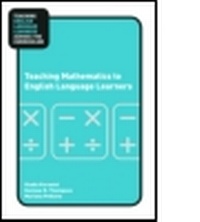
Teaching Mathematics to English Language Learners
Published on 15. September 2008
Book
Paperback/Softback
178 pages
978-0-415-95789-2 (ISBN)
Description
Teaching Mathematics to English Language Learners provides simple and straightforward advice on how to teach mathematics to the English Language Learners in the classroom. The authors offer context-specific strategies for everything from facilitating classroom discussions with all students, to reading and interpreting math textbooks, to tackling word problems. A fully annotated list of math web and print resources completes the volume, making this a valuable reference to help mathematics teachers meet the challenges of including all learners in effective instruction.
More details
Language
English
Place of publication
London
United Kingdom
Publishing group
Taylor & Francis Ltd
Target group
Professional and scholarly
Illustrations
11 s/w Tabellen
Following Teaching Authentic Language Arts; 11 Tables, black and white
Dimensions
Height: 254 mm
Width: 178 mm
Weight
363 gr
ISBN-13
978-0-415-95789-2 (9780415957892)
Copyright in bibliographic data and cover images is held by Nielsen Book Services Limited or by the publishers or by their respective licensors: all rights reserved.
Schweitzer Classification
Other editions
New editions
Gladis Kersaint | Denisse R. Thompson | Mariana Petkova
Teaching Mathematics to English Language Learners
Book
11/2012
2nd Edition
Routledge
€74.60
Shipment within 15-20 days
Additional editions
Gladis Kersaint | Denisse R. Thompson | Mariana Petkova
Teaching Mathematics to English Language Learners
Book
09/2008
Routledge
€155.99
Article exhausted; check for reprint
Persons
Gladis Kersaint is Associate Professor of Mathematics Education at the University of South Florida.
Denisse R. Thompson is Professor of Mathematics Education at the University of South Florida.
Mariana Petkova is a doctoral student in Mathematics Education at the University of South Florida and a high school mathematics teacher in Hillsborough County.
Denisse R. Thompson is Professor of Mathematics Education at the University of South Florida.
Mariana Petkova is a doctoral student in Mathematics Education at the University of South Florida and a high school mathematics teacher in Hillsborough County.
Content
@contents:Part One: Your English Language Learner
1.1 Orientation
1.2 The Process of English Language Learning and What to Expect
1.3 Deciding on the Best ESOL Program
1.4 Teaching for English Language Development
1.5 Not All ELLs are the Same
1.6 Culturally Responsive Pedagogy
1.7 Not All Parents are the Same: Home/School Communication
1.8 English language Learners with Special Needs
Part Two: Influences on the Mathematical Attainment of
English Language Learners
2.1 Section Overview: Influences on the Mathematical Attainment
of English Language Learners
2.2Providing an Equitable Mathematics Education to English
Language Learners: Mathematics Education Standards
2.3 The Nature of Mathematics Language
2.4 Mathematics Teaching and Learning
2.5 Cultural Influences on Mathematics Learning and Engagement
2.6 Assessment Results, Practices, and Procedures
2.7 Recommendations for Improving the Mathematics Preparation of
English Language Learners
Part Three: Best practices to Support English Language Learners
in the Mathematics Classroom
3.1 Section Overview: Classroom Environments that Support English Language Learners
3.2 Orchestrate Classroom Discourse to Support Mathematics Concept and Language Development
3.3 Use Strategies to Help English Language Learners Understand Mathematics
Language
3.4 Emphasize and Support Problem Solving
3.5 Assessing English Language Learners in Equitable Ways
3.6 Teaching Mathematics in Ways that are Culturally Responsive
3.7 Strategies for Mathematics Teachers Who Are Themselves English Language Learners
Part Four: Resources for Teachers
4.1 Glossary
4.2 Internet Resources for Teachers
4.3 Print Resources
1.1 Orientation
1.2 The Process of English Language Learning and What to Expect
1.3 Deciding on the Best ESOL Program
1.4 Teaching for English Language Development
1.5 Not All ELLs are the Same
1.6 Culturally Responsive Pedagogy
1.7 Not All Parents are the Same: Home/School Communication
1.8 English language Learners with Special Needs
Part Two: Influences on the Mathematical Attainment of
English Language Learners
2.1 Section Overview: Influences on the Mathematical Attainment
of English Language Learners
2.2Providing an Equitable Mathematics Education to English
Language Learners: Mathematics Education Standards
2.3 The Nature of Mathematics Language
2.4 Mathematics Teaching and Learning
2.5 Cultural Influences on Mathematics Learning and Engagement
2.6 Assessment Results, Practices, and Procedures
2.7 Recommendations for Improving the Mathematics Preparation of
English Language Learners
Part Three: Best practices to Support English Language Learners
in the Mathematics Classroom
3.1 Section Overview: Classroom Environments that Support English Language Learners
3.2 Orchestrate Classroom Discourse to Support Mathematics Concept and Language Development
3.3 Use Strategies to Help English Language Learners Understand Mathematics
Language
3.4 Emphasize and Support Problem Solving
3.5 Assessing English Language Learners in Equitable Ways
3.6 Teaching Mathematics in Ways that are Culturally Responsive
3.7 Strategies for Mathematics Teachers Who Are Themselves English Language Learners
Part Four: Resources for Teachers
4.1 Glossary
4.2 Internet Resources for Teachers
4.3 Print Resources