

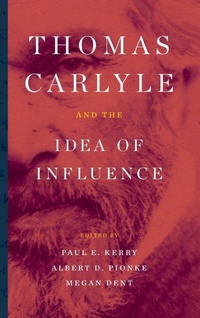
Thomas Carlyle and the Idea of Influence
Published on 20. June 2018
Book
Hardback
394 pages
978-1-68393-065-5 (ISBN)
Description
That Thomas Carlyle was influential in his own lifetime and continues to be so over 130 years after his death is a proposition with which few will disagree. His role as his generation's foremost interpreter of German thought, his distinctive rhetorical style, his approach to history via the "innumerable biographies" of great men, and his almost unparalleled record of correspondence with contemporaries both great and small, makes him a necessary figure of study in multiple fields.
Thomas Carlyle and the Idea of Influence positions Carlyle as an ideal representative figure through which to study that complex interplay between past and present most commonly referred to as influence. Approached from a theoretically ecumenical perspective by the volume's introduction and eighteen essays, influence is itself refigured through a number of complementary metaphorical frames: influence as organic inheritance; influence as aesthetic infection; influence as palimpsest; influence as mythology; influence as network; and more. Individual essays connect Carlyle with the persons and publications of Mathilde Blind, Orestes Brownson, John Bunyan, G. K. Chesterton, Benjamin Disraeli, George Eliot, T. S. Eliot, Ralph Waldo Emerson, Johann Wolfgang von Goethe, James Joyce, William Keenan, Windham Lewis, Jules Michelet, John Stuart Mill, Robert Owen, Spencer Stanhope, John Sterling, and others.
Considered as a whole, Thomas Carlyle and the Idea of Influence assembles a web of conceptual and intertextual connections that both challenges received understandings of influence itself and establishes a standard by which to measure future assertions of Carlyle's enduring intellectual legacy in the twenty-first century and beyond.
Thomas Carlyle and the Idea of Influence positions Carlyle as an ideal representative figure through which to study that complex interplay between past and present most commonly referred to as influence. Approached from a theoretically ecumenical perspective by the volume's introduction and eighteen essays, influence is itself refigured through a number of complementary metaphorical frames: influence as organic inheritance; influence as aesthetic infection; influence as palimpsest; influence as mythology; influence as network; and more. Individual essays connect Carlyle with the persons and publications of Mathilde Blind, Orestes Brownson, John Bunyan, G. K. Chesterton, Benjamin Disraeli, George Eliot, T. S. Eliot, Ralph Waldo Emerson, Johann Wolfgang von Goethe, James Joyce, William Keenan, Windham Lewis, Jules Michelet, John Stuart Mill, Robert Owen, Spencer Stanhope, John Sterling, and others.
Considered as a whole, Thomas Carlyle and the Idea of Influence assembles a web of conceptual and intertextual connections that both challenges received understandings of influence itself and establishes a standard by which to measure future assertions of Carlyle's enduring intellectual legacy in the twenty-first century and beyond.
Reviews / Votes
Influence is a tricky thing. Ample evidence for this truism can be found in Thomas Carlyle and the Idea of Influence. In an interesting and useful compilation from a variety of new and familiar voices, editors Paul E. Kerry, Albert D. Pionke, and Megan Dent have assembled eighteen essays derived from lectures given at the Oxford Research Center for the Humanities in July 2016. Organized in three sections on a wide range of topics and individuals, all of the essays, in various ways and degrees of success, reveal Thomas Carlyle's ubiquitous presence in nineteenth-century discourse. * Victorian Studies *More details
Language
English
Place of publication
Cranbury
United States
Publishing group
Associated University Presses
Target group
Professional and scholarly
College/higher education
Illustrations
9 b/w illustrations;
Dimensions
Height: 235 mm
Width: 157 mm
Thickness: 26 mm
Weight
720 gr
ISBN-13
978-1-68393-065-5 (9781683930655)
Copyright in bibliographic data and cover images is held by Nielsen Book Services Limited or by the publishers or by their respective licensors: all rights reserved.
Schweitzer Classification
Other editions
Additional editions
E-Book
06/2018
1st Edition
Fairleigh Dickinson University Press,U.S.
€125.99
Available for download
Paul E. Kerry | Albert D. Pionke | Megan Dent
Thomas Carlyle and the Idea of Influence
E-Book
06/2018
1st Edition
Fairleigh Dickinson University Press,U.S.
€125.99
Available for download
Persons
Megan Dent completed her Oxford DPhil, "Disraeli and Religion" in 2016.
Paul Kerry is a supernumerary research and teaching fellow at the University of Oxford's Rothermere American Institute and visiting fellow in the Centre for Theology and Modern European Thought. He is an associate professor of History at Brigham Young University and Fellow of the Royal Historical Society.
Albert D. Pionke is professor of English at the University of Alabama.
Paul Kerry is a supernumerary research and teaching fellow at the University of Oxford's Rothermere American Institute and visiting fellow in the Centre for Theology and Modern European Thought. He is an associate professor of History at Brigham Young University and Fellow of the Royal Historical Society.
Albert D. Pionke is professor of English at the University of Alabama.
Content
Abbreviations
Acknowledgements
Preface
Marylu Hill
List of Figures
Introduction: Carlyle's Networks of Influence
Albert D. Pionke
Section One: Oaks and Acorns
Thomas Carlyle, Orestes Brownson, and the Laboring Classes
Chris R. Vanden Bossche
Thomas Carlyle, Ralph Waldo Emerson, and History: On Heroes, Hero-Worship, and the Heroic in History and Representative Men through the "Lens" of Photography
Stephanie Hicks
The Object as Symbol: Carlyle's Symbolic Lexicon and Robert Browning's Theory of the Objective Poet
Laura Clarke
Thomas Carlyle's Influence on George Meredith: Heroes and Hero-Worship in Beauchamp's Career and Lord Ormont and His Aminta
Elizabeth J. Deis
John Roddam Spencer Stanhope and the Aesthetic Male Body: A Pre-Raphaelite Response to Ideas of Victorian Manliness
Madeleine Emerald Thiele
The 'Temporary Figure (Zeitbild)' of the Author in Thomas Carlyle's Sartor Resartus and Mathilde Blind's Tarantella: A Romance
Ulrike I. Hill
Section Two: Orders of Tradition
Shakespeare
Acknowledgements
Preface
Marylu Hill
List of Figures
Introduction: Carlyle's Networks of Influence
Albert D. Pionke
Section One: Oaks and Acorns
Thomas Carlyle, Orestes Brownson, and the Laboring Classes
Chris R. Vanden Bossche
Thomas Carlyle, Ralph Waldo Emerson, and History: On Heroes, Hero-Worship, and the Heroic in History and Representative Men through the "Lens" of Photography
Stephanie Hicks
The Object as Symbol: Carlyle's Symbolic Lexicon and Robert Browning's Theory of the Objective Poet
Laura Clarke
Thomas Carlyle's Influence on George Meredith: Heroes and Hero-Worship in Beauchamp's Career and Lord Ormont and His Aminta
Elizabeth J. Deis
John Roddam Spencer Stanhope and the Aesthetic Male Body: A Pre-Raphaelite Response to Ideas of Victorian Manliness
Madeleine Emerald Thiele
The 'Temporary Figure (Zeitbild)' of the Author in Thomas Carlyle's Sartor Resartus and Mathilde Blind's Tarantella: A Romance
Ulrike I. Hill
Section Two: Orders of Tradition
Shakespeare