

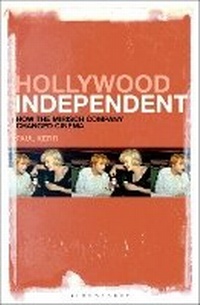
Hollywood Independent
How the Mirisch Company Changed Cinema
Published on 6. April 2023
Book
Hardback
336 pages
978-1-5013-3675-1 (ISBN)
Description
Hollywood Independent dissects the Mirisch Company, one of the most successful employers of the package-unit system of film production, producing classic films like The Apartment (1960), West Side Story (1961), The Great Escape (1963) and The Thomas Crown Affair (1968) as irresistible talent packages. Whilst they helped make the names of a new generation of stars including Steve McQueen and Shirley MacLaine, as well as banking on the reputations of established auteurs like Billy Wilder, they were also pioneers in dealing with controversial new themes with films about race (In the Heat of the Night), gender (Some Like it Hot) and sexuality (The Children's Hour), devising new ways of working with film franchises (The Magnificent Seven, The Pink Panther and In the Heat of the Night spun off 7 Mirisch sequels between them) and cinematic cycles, investing in adaptations of bestsellers and Broadway hits, exploiting frozen funds abroad and exploring so-called runaway productions. The Mirisch Company bridges the gap between the end of the studio system by about 1960 and the emergence of a new cinema in the mid-1970s, dominated by the Movie Brats.
Reviews / Votes
Often overshadowed by United Artists, the Mirisch Company never received the scholarly attention it so richly deserved for having produced some of the best known films that United Artists released in the postwar era. Paul Kerr's new book fills this gap spectacularly! Not only is Hollywood Independent a tour-de-force account of a company's major contribution to Hollywood cinema but also a book that revises and rewrites American film history. This a major achievement! * Yannis Tzioumakis, Reader in Film and Media Industries, University of Liverpool, UK * Paul Kerr's Hollywood Independent makes a significant contribution to our understanding of the complicated transition from the postwar classical studio era to the New Hollywood of the 1970s. Kerr combines insightful scrutiny of corporate records, contemporaneous trade press, and the scholarly literature with original analyses of dozens of individual films, both famous and forgotten. Hollywood Independent uses the history of the Mirisch brothers, Hollywood's most prominent independent producers, to challenge many of the prevailing assumptions regarding this important but neglected moment in cinema history. Meticulously researched and engagingly written, Kerr's book offers a rich and convincing account of the lasting changes in cinematic style, thematic content, and industry practices pioneered by the Mirisch company, changes crucial in understanding the past half century of American cinema. * William Boddy, Professor of Film and Media Studies, Baruch College and the Graduate Center, City University of New York, NY, and author of Fifties Television: The Industry and Its Critics (1992) *More details
Language
English
Place of publication
New York
United States
Publishing group
Bloomsbury Publishing Plc
Target group
College/higher education
Dimensions
Height: 232 mm
Width: 154 mm
Thickness: 24 mm
Weight
623 gr
ISBN-13
978-1-5013-3675-1 (9781501336751)
Copyright in bibliographic data and cover images is held by Nielsen Book Services Limited or by the publishers or by their respective licensors: all rights reserved.
Schweitzer Classification
Other editions
Additional editions
E-Book
03/2023
1st Edition
Bloomsbury Academic USA
€33.49
Available for download
Person
Paul Kerr teaches TV Production at Middlesex University, UK, but spent almost 25 years as a television producer, making dozens of programmes for the BBC and Channel Four, including the award-winning cinema series Moving Pictures (BBC2 1990-96). Among his many documentaries are programmes about the making of two Mirisch classics, The Magnificent Seven and Some Like it Hot. His previous publications include The Hollywood Film Industry, (1986) and MTM: Quality Television (BFI, 1984).
Content
Acknowledgements
Illustrations
Introduction
1. Prequel: What did you do in the war, daddy? The Mirisch brothers before entering production
2. Prequel: The first time: The Mirisches at Monogram, Allied Artists and Moulin Productions
3. How to succeed in business without really trying: Towards a corporate history of the Mirisch companies
4. The organization: Corporate culture and the Mirisch company as 'author'
5. "This book is all that I need": Adaptation as aesthetic and business strategy at The Mirisch Company
6. Same time next year or the return of the seven: The Mirisch Company's sequels and series for cinema and television
7. 'You can't kill a squadron': The Mirisch Second World War film cycle
8. The border jumpers: 'Lend lease in reverse' - The Mirisch Company and transnational cinema
9. The children's hour - Why the Mirisch brothers never worked with the movie brats
10. Midway: Between blockbusters and television - The Mirisch Company after United Artists
11. Conclusion - Cast a giant shadow
Bibliography
Index
Illustrations
Introduction
1. Prequel: What did you do in the war, daddy? The Mirisch brothers before entering production
2. Prequel: The first time: The Mirisches at Monogram, Allied Artists and Moulin Productions
3. How to succeed in business without really trying: Towards a corporate history of the Mirisch companies
4. The organization: Corporate culture and the Mirisch company as 'author'
5. "This book is all that I need": Adaptation as aesthetic and business strategy at The Mirisch Company
6. Same time next year or the return of the seven: The Mirisch Company's sequels and series for cinema and television
7. 'You can't kill a squadron': The Mirisch Second World War film cycle
8. The border jumpers: 'Lend lease in reverse' - The Mirisch Company and transnational cinema
9. The children's hour - Why the Mirisch brothers never worked with the movie brats
10. Midway: Between blockbusters and television - The Mirisch Company after United Artists
11. Conclusion - Cast a giant shadow
Bibliography
Index