

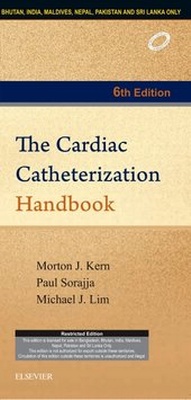
Cardiac Catheterization Handbook, 6e
Published on 22. November 2015
Book
Paperback/Softback
512 pages
978-81-312-4311-4 (ISBN)
Description
This unique, easy-to-access handbook returns with enhanced coverage and clear instructions on what to expect, what to avoid, and how to manage complications in the cath lab. Ideal for cardiologists who need a quick clinical primer on cardiac catheterization, it offers easy access to information on the latest diagnostic and treatment advances necessary for optimal patient care.
Straightforward, easy-to-understand approach and pocket-sized format are ideal for reference on the go.
Covers vascular closure devices, radial artery catheterization, congenital heart disease, and drug-coated, carotid, and renal stenting.
Straightforward, easy-to-understand approach and pocket-sized format are ideal for reference on the go.
Covers vascular closure devices, radial artery catheterization, congenital heart disease, and drug-coated, carotid, and renal stenting.
More details
Language
English
Place of publication
New Delhi
India
Target group
Professional and scholarly
ISBN-13
978-81-312-4311-4 (9788131243114)
Copyright in bibliographic data and cover images is held by Nielsen Book Services Limited or by the publishers or by their respective licensors: all rights reserved.
Schweitzer Classification
Persons
Morton J. Kern, MD, FSCAI, FAHA, FACC, Professor de Medicina da Universidade da California, Irvine, Orange, California; Chief of Medicine, Health Care System Veterans Long Beach, Long Beach, California; Dr. Sorajja joined Allina Health Minneapolis Heart Institute - Minneapolis in 2013. He was previously a professor of medicine at Mayo Clinic before he left to join Minneapolis Heart Institute (R). Dr. Sorajja is the author of over 100 published manuscripts and book chapters, and is a national speaker in the areas of valvular heart disease, hypertrophic cardiomyopathy and complex hemodynamics. Dr. Sorajja's special interest is structural heart interventions, such as transcatheter aortic replacement (TAVR), balloon valvuloplasty, paravalvular leak repair, percutaneous valve implantation, and other similar therapies. Michael Lim, M.D. is a board certified interventional cardiologist with 20 years of and is Chief of the Cardiac Catheterization Lab at Hackensack University Medical Center. Prior to joining Hackensack Meridian Medical Group, Dr. Lim served as the Jack Ford Shelby Endowed Professor in Cardiology and Professor of Internal Medicine at Saint Louis University in St. Louis, Missouri. Dr. Lim has held the role of principal investigator on numerous clinical trials for conditions including mitral valve disease, cardiogenic shock and coronary artery disease. Since 1990, he has contributed more than 100 publications to medical literature, including more than 30 book chapters. He has also served as an invited faculty member at numerous national conferences.
Author
Professor of Medicine, University of California, Irvine, Orange, California; Chief of Medicine, Long Beach Veterans Health Care System, Long Beach, California
Director, Center for Valve and Structural Heart Disease, Minneapolis Heart Institute, Abbott Northwestern Hospital, Minneapolis, Minnesota, USA
Content
1. The Catheterization Laboratory
2. Arterial and Vascular Access
3. Coronary Angiography and Ventriculography
4. Hemodynamic Data
5. Peripheral Artery Disease and Angiography
6. The Electrophysiology Laboratory and Electrophysiologic Procedures
7. Special Techniques
8. High-Risk Cardiac Catheterization
9. Research Techniques
10. Interventional Cardiology Procedures
11. Optimization of Clinical Outcomes and Quality in the Cardiac Catheterization Laboratory
2. Arterial and Vascular Access
3. Coronary Angiography and Ventriculography
4. Hemodynamic Data
5. Peripheral Artery Disease and Angiography
6. The Electrophysiology Laboratory and Electrophysiologic Procedures
7. Special Techniques
8. High-Risk Cardiac Catheterization
9. Research Techniques
10. Interventional Cardiology Procedures
11. Optimization of Clinical Outcomes and Quality in the Cardiac Catheterization Laboratory