

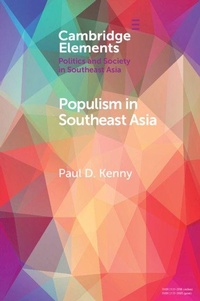
Populism in Southeast Asia
Published on 29. November 2018
Book
Paperback/Softback
86 pages
978-1-108-45910-5 (ISBN)
Description
Conceiving of populism as the charismatic mobilization of a mass movement in pursuit of political power, this Element theorizes that populists thrive where ties between voters and either bureaucratic or clientelistic parties do not exist or have decayed. This is because populists' ability to mobilize electoral support directly is made much more likely by voters not being deeply embedded in existing party networks. This model is used to explain the prevalence of populism across the major states in post-authoritarian Southeast Asia: the Philippines, Indonesia, and Thailand. It extracts lessons from these Southeast Asian cases for the study of populism.
More details
Series
Language
English
Place of publication
Cambridge
United Kingdom
Target group
Professional and scholarly
Product notice
Paperback (trade)
Illustrations
Worked examples or Exercises; 3 Halftones, black and white
Dimensions
Height: 229 mm
Width: 152 mm
Thickness: 5 mm
Weight
139 gr
ISBN-13
978-1-108-45910-5 (9781108459105)
Copyright in bibliographic data and cover images is held by Nielsen Book Services Limited or by the publishers or by their respective licensors: all rights reserved.
Schweitzer Classification
Other editions
Additional editions
Paul D. Kenny
Populism in Southeast Asia
E-Book
01/2019
Cambridge University Press
€17.49
Available for download
Paul D. Kenny
Populism in Southeast Asia
E-Book
11/2018
Cambridge University Press
€14.49
Available for download
Person
Content
1. Introduction; 2. Defining populism; 3. The causes of populism in Southeast Asia; 4. Fragmented parties; 5. Populist leaders; 6. Conclusion - populism and democracy.