

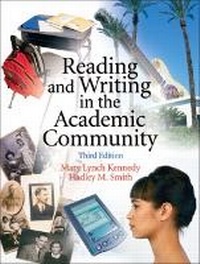
Reading and Writing in the Academic Community
3rd Edition
Published on 18. July 2005
Book
Paperback/Softback
544 pages
978-0-13-193133-6 (ISBN)
Description
For first semester or second semester Freshman Composition courses that emphasize Writing Across the Curriculum.
Reading and Writing in the Academic Community is the guide to writing across the curriculum with the best coverage of the writing process.
Reading and Writing in the Academic Community is a comprehensive rhetoric with engaging, timely readings. The authors wrote their book to include more coverage of the writing process to better meet the needs of students than other books in this market. The text presents the major types of academic writing students encounter as undergraduates while giving full consideration to the writing process and the basics of rhetoric. This text makes few assumptions about students' prior academic experience and provides explicit, step-by-step instruction in paraphrasing, summarizing, quoting, writing essays in response to readings, composing synthesis essays, and using sources to compose comparison-and-contrast essays, argument essays, analysis essays, evaluation essays, and research papers.
Reading and Writing in the Academic Community is the guide to writing across the curriculum with the best coverage of the writing process.
Reading and Writing in the Academic Community is a comprehensive rhetoric with engaging, timely readings. The authors wrote their book to include more coverage of the writing process to better meet the needs of students than other books in this market. The text presents the major types of academic writing students encounter as undergraduates while giving full consideration to the writing process and the basics of rhetoric. This text makes few assumptions about students' prior academic experience and provides explicit, step-by-step instruction in paraphrasing, summarizing, quoting, writing essays in response to readings, composing synthesis essays, and using sources to compose comparison-and-contrast essays, argument essays, analysis essays, evaluation essays, and research papers.
More details
Edition
3rd edition
Language
English
Place of publication
United States
Publishing group
Pearson Education (US)
Target group
Professional and scholarly
Dimensions
Height: 235 mm
Width: 178 mm
ISBN-13
978-0-13-193133-6 (9780131931336)
Copyright in bibliographic data and cover images is held by Nielsen Book Services Limited or by the publishers or by their respective licensors: all rights reserved.
Schweitzer Classification
Other editions
New editions
Mary Kennedy | Hadley Smith
Reading and Writing in the Academic Community
Book
07/2009
4th Edition
Pearson
€188.65
Article not available
Content
Preface, To the Student,
To the Instructor
Supplementary Material for Instructors and Students
Acknowledgments,
Introduction: The Academic Community and Its Conventions
Learning the Conventions
Goals of This Textbook
Part I: Reading and Writing Conventions
Chapter 1: Reading Academic texts A Comprehensive Strategy for the Reading Process
Reading for Content
Reading for Genre, Organization, and Stylistic Features
Reading for Rhetorical Context
Reading and Interpretation
Tackling Difficult Course Readings
Chapter 2--Learning the Basic Conventions: Summarizing, Paraphrasing, and Quoting Setting Rhetorical Goals,
Considering Your Audience
Identifying Your Sources
Avoiding Plagiarism
The Summarizing Process
Creating a Graphic Overview
Compressing Information
Creating a Sentence Outline
Documenting Summaries
The Paraphrasing Process
Strategies for Paraphrasing
Documenting paraphrases
Direct Quoting
Reasons for Direct Quoting
Altering Quotations
Documenting Quotations
Weaving Quotations into Your Essay
Incorporating Quotations, Paraphrases,and Summaries into Essays
The Summary Essay
Part II: Writing As Process
Chapter 3--The Response Essay: An Example of the Composing Process Response Essays: An Introduction
Writing Response Essays
Prewriting
Drafting
Revising
Expanding Your Rhetorical Goal
Chapter 4: Revising Essays for Style What Is Style?
Stylistic Choices in Academic Writing
Students as Academic Stylists
Realizing Your Stylistic Intentions
Move from writer-based to reader-based prose
Vary the structure and length of your sentences
Strengthen your verbs
Make your writing concise by cutting ineffective words and expressions and eliminating needless repetition
Liven up your writing with detail
Avoid sexist language
Chapter 5-Editing for Correctness Basic Sentence Structure
Sentence Fragments
Run-on Sentences and Comma Splices
Elliptical Constructions
Dangling Constructions
Parallel Construction
Subject-Verb Agreement
Pronouns
Clear Antecedents
Other Mismatches between Pronouns and Their Antecedents
Pronoun Consistency
Tense Switching
Misused Words
Punctuation
Commas
Apostrophes
Semicolons and Colons
Part III: Writing for College Courses
Chapter 6--Composing Multiple-Source Essays
Comparing and Contrasting Sources
Uses of Comparison and Contrast
Rhetorical Purpose for Comparison-and-Contrast Essays
Writing an Essay that Compares and Contrasts Sources
Summary of Multiple Sources
Objective Synthesis
Essay Written in Response to Multiple Sources
Writing a Synthesis for a Specific Purpose
Chapter 7--Drawing on Sources for an Argument Essay
The Argument Essay
Finding an Issue and Staking out Your Position
Formulating a Thesis
Supporting Your Thesis
Marshaling Solid Evidence and Making a Strong Case
Considering Your Audience and Identifying Your Reader's Needs
Organizing and Arranging the Argument Essay
Writing an Argument Essay
Prewriting
Drafting
Revising
Editing
Chapter 8--Analysis and Evaluation
Rhetorical Analysis and Evaluation as Opposed to Response
Rhetorical Analysis
Writing a Rhetorical Analysis Essay
Prewriting
Drafting
Revising
Editing
Evaluation
Writing an Evaluation Essay
Prewriting
Drafting
Revising
Editing
Exploratory Analysis
Writing an Exploratory Analysis Essay
Prewriting
Drafting
Revising
Editing
Analysis and Evaluation of Images
Chapter 9--Writing Research Papers Research as Process
Prewriting
Setting a Schedule
Selecting a Topic
Developing a Research Strategy
Exploring Virtual Libraries
Using Electronic Retrieval Systems
Choosing Where to Do Research
Finding Information in an Academic Library
Finding Information on the World Wide Web
Collecting Information through Surveys and Interviews
Evaluating Information Sources
Excerpting Relevant Information from Sources
Drafting
Synthesizing Sources
Arguing, Analyzing, and Evaluating
Drafting a Thesis
Deriving a Plan
Creating an Outline
Writing from Your Outline
Revising
Using Correct Manuscript Form
Revising on the Basis of Reader Comments
Editing
Chapter 10-Personal Essay: Literacy Narrative Features of the Genre
Reflecting on Your Experiences As a Writer
Prewriting
Drafting
Revising
Editing
Part IV: Reading Selections
Chapter 11--Grades and Learning Liz Mandrell "Zen and the Art of Grade Motivation"
Jerry Farber "A Young Person's Guide to the Grading System"
Steven Vogel "Grades and Money"
Stephen Ray Flora and Stacy Suzanne Poponak "Childhood Pay For Grades Is Related to
College Grade Point Average"
Writing Assignments for Chapter 11
Chapter 12--Technology and Identity Steve Mann "Cyborg Seeks Community"
David Brooks "Time to Do Everything But Think"
Sherry Turkle " Cyberspace and Identity"
Writing Assignments for Chapter 12
Chapter 13-Tastes in Pop Music Dave Barry "Bad Songs"
William J. Bennett "What Hath the Beatles Wrought? Rock-&-Roll and the Collapse of
Authority:
Michael J. Budds "From Fine Romance to Good Rockin'-and Beyond: Look What They've
Done to My Song:
Writing Assignments for Chapter 13
Chapter 14-Visual Culture: Family Photography
Freewriting
Generations of an American Family: A Collection of Images
Writing Assignments for Chapter 14
Chapter 15--Racial Profiling Paige Byrne Shortal "Profiling the Children of God"
John DerbyShire "At First Glance-Racial Profiling, Burning Hotter"
Yolanda T. Moses "Race, Higher Education, and American Society"
Writing Assignments for Chapter 15
Appendix --Documenting Sources MLA Documentation Style
APA Documentation Style
Works Cited
Photograph Credits
Index
To the Instructor
Supplementary Material for Instructors and Students
Acknowledgments,
Introduction: The Academic Community and Its Conventions
Learning the Conventions
Goals of This Textbook
Part I: Reading and Writing Conventions
Chapter 1: Reading Academic texts A Comprehensive Strategy for the Reading Process
Reading for Content
Reading for Genre, Organization, and Stylistic Features
Reading for Rhetorical Context
Reading and Interpretation
Tackling Difficult Course Readings
Chapter 2--Learning the Basic Conventions: Summarizing, Paraphrasing, and Quoting Setting Rhetorical Goals,
Considering Your Audience
Identifying Your Sources
Avoiding Plagiarism
The Summarizing Process
Creating a Graphic Overview
Compressing Information
Creating a Sentence Outline
Documenting Summaries
The Paraphrasing Process
Strategies for Paraphrasing
Documenting paraphrases
Direct Quoting
Reasons for Direct Quoting
Altering Quotations
Documenting Quotations
Weaving Quotations into Your Essay
Incorporating Quotations, Paraphrases,and Summaries into Essays
The Summary Essay
Part II: Writing As Process
Chapter 3--The Response Essay: An Example of the Composing Process Response Essays: An Introduction
Writing Response Essays
Prewriting
Drafting
Revising
Expanding Your Rhetorical Goal
Chapter 4: Revising Essays for Style What Is Style?
Stylistic Choices in Academic Writing
Students as Academic Stylists
Realizing Your Stylistic Intentions
Move from writer-based to reader-based prose
Vary the structure and length of your sentences
Strengthen your verbs
Make your writing concise by cutting ineffective words and expressions and eliminating needless repetition
Liven up your writing with detail
Avoid sexist language
Chapter 5-Editing for Correctness Basic Sentence Structure
Sentence Fragments
Run-on Sentences and Comma Splices
Elliptical Constructions
Dangling Constructions
Parallel Construction
Subject-Verb Agreement
Pronouns
Clear Antecedents
Other Mismatches between Pronouns and Their Antecedents
Pronoun Consistency
Tense Switching
Misused Words
Punctuation
Commas
Apostrophes
Semicolons and Colons
Part III: Writing for College Courses
Chapter 6--Composing Multiple-Source Essays
Comparing and Contrasting Sources
Uses of Comparison and Contrast
Rhetorical Purpose for Comparison-and-Contrast Essays
Writing an Essay that Compares and Contrasts Sources
Summary of Multiple Sources
Objective Synthesis
Essay Written in Response to Multiple Sources
Writing a Synthesis for a Specific Purpose
Chapter 7--Drawing on Sources for an Argument Essay
The Argument Essay
Finding an Issue and Staking out Your Position
Formulating a Thesis
Supporting Your Thesis
Marshaling Solid Evidence and Making a Strong Case
Considering Your Audience and Identifying Your Reader's Needs
Organizing and Arranging the Argument Essay
Writing an Argument Essay
Prewriting
Drafting
Revising
Editing
Chapter 8--Analysis and Evaluation
Rhetorical Analysis and Evaluation as Opposed to Response
Rhetorical Analysis
Writing a Rhetorical Analysis Essay
Prewriting
Drafting
Revising
Editing
Evaluation
Writing an Evaluation Essay
Prewriting
Drafting
Revising
Editing
Exploratory Analysis
Writing an Exploratory Analysis Essay
Prewriting
Drafting
Revising
Editing
Analysis and Evaluation of Images
Chapter 9--Writing Research Papers Research as Process
Prewriting
Setting a Schedule
Selecting a Topic
Developing a Research Strategy
Exploring Virtual Libraries
Using Electronic Retrieval Systems
Choosing Where to Do Research
Finding Information in an Academic Library
Finding Information on the World Wide Web
Collecting Information through Surveys and Interviews
Evaluating Information Sources
Excerpting Relevant Information from Sources
Drafting
Synthesizing Sources
Arguing, Analyzing, and Evaluating
Drafting a Thesis
Deriving a Plan
Creating an Outline
Writing from Your Outline
Revising
Using Correct Manuscript Form
Revising on the Basis of Reader Comments
Editing
Chapter 10-Personal Essay: Literacy Narrative Features of the Genre
Reflecting on Your Experiences As a Writer
Prewriting
Drafting
Revising
Editing
Part IV: Reading Selections
Chapter 11--Grades and Learning Liz Mandrell "Zen and the Art of Grade Motivation"
Jerry Farber "A Young Person's Guide to the Grading System"
Steven Vogel "Grades and Money"
Stephen Ray Flora and Stacy Suzanne Poponak "Childhood Pay For Grades Is Related to
College Grade Point Average"
Writing Assignments for Chapter 11
Chapter 12--Technology and Identity Steve Mann "Cyborg Seeks Community"
David Brooks "Time to Do Everything But Think"
Sherry Turkle " Cyberspace and Identity"
Writing Assignments for Chapter 12
Chapter 13-Tastes in Pop Music Dave Barry "Bad Songs"
William J. Bennett "What Hath the Beatles Wrought? Rock-&-Roll and the Collapse of
Authority:
Michael J. Budds "From Fine Romance to Good Rockin'-and Beyond: Look What They've
Done to My Song:
Writing Assignments for Chapter 13
Chapter 14-Visual Culture: Family Photography
Freewriting
Generations of an American Family: A Collection of Images
Writing Assignments for Chapter 14
Chapter 15--Racial Profiling Paige Byrne Shortal "Profiling the Children of God"
John DerbyShire "At First Glance-Racial Profiling, Burning Hotter"
Yolanda T. Moses "Race, Higher Education, and American Society"
Writing Assignments for Chapter 15
Appendix --Documenting Sources MLA Documentation Style
APA Documentation Style
Works Cited
Photograph Credits
Index