

Drawing and the Blind
Pictures to Touch
Will be published approx. on 6. July 1993
Book
Hardback
392 pages
978-0-300-05490-3 (ISBN)
Description
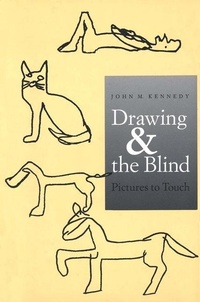
This groundbreaking work explores how children and adults who have been blind since birth can both perceive and draw pictures. John M. Kennedy, a perception psychologist, relates how pictures in raised form can be understood by the blind, and how untrained blind people can make recognizable sketches of objects, situations, and events using new methods for raised-line drawing. According to Kennedy, the ability to draw develops in blind people as it does in the sighted. His book gives detailed descriptions of his work with the blind, includes many pictures by blind children and adults, and provides a new theory of visual and tactile perception-applicable to both the blind and the sighted-to account for his startling findings.
Kennedy argues that space perception is possible through touch as well as through sight, and aspects of perspective are found in pictures by the blind. He shows that blind people recognize when pictures of objects are drawn incorrectly. According to Kennedy, the incorrect features are often deliberate attempts to represent properties of objects that cannot be shown in a picture. These metaphors, as Kennedy describes them, can be interpreted by the blind and the sighted in the same way.
Kennedy's findings are vitally important for studies in perceptual and cognitive psychology, the philosophy of representation, and education. His conclusions have practical significance as well, offering inspiration and guidelines for those who seek to engineer ways to allow blind and visually impaired people to gain access to information only available in graphs, figures, and pictures.
Kennedy argues that space perception is possible through touch as well as through sight, and aspects of perspective are found in pictures by the blind. He shows that blind people recognize when pictures of objects are drawn incorrectly. According to Kennedy, the incorrect features are often deliberate attempts to represent properties of objects that cannot be shown in a picture. These metaphors, as Kennedy describes them, can be interpreted by the blind and the sighted in the same way.
Kennedy's findings are vitally important for studies in perceptual and cognitive psychology, the philosophy of representation, and education. His conclusions have practical significance as well, offering inspiration and guidelines for those who seek to engineer ways to allow blind and visually impaired people to gain access to information only available in graphs, figures, and pictures.
More details
Language
English
Place of publication
United States
Target group
College/higher education
Professional and scholarly
Product notice
Cloth over boards
Dimensions
Height: 243 mm
Width: 163 mm
Thickness: 30 mm
Weight
635 gr
ISBN-13
978-0-300-05490-3 (9780300054903)
Copyright in bibliographic data and cover images is held by Nielsen Book Services Limited or by the publishers or by their respective licensors: all rights reserved.
Schweitzer Classification