


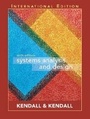
Systems Analysis and Design
International Edition
5th Edition
Published on 20. July 2001
Book
Paperback/Softback
944 pages
978-0-13-042365-8 (ISBN)
Description
For Systems Analysis and Design courses found at the junior/senior undergraduate level or at the graduate level.
The Fifth Edition of Systems Analysis & Design provides a dynamic, comprehensive presentation, making it the perfect SAD textbook. A variety of review questions and problems, an ongoing case study and an Internet-based case study offer students an understandable and motivating look at systems analysis and design.
The Fifth Edition of Systems Analysis & Design provides a dynamic, comprehensive presentation, making it the perfect SAD textbook. A variety of review questions and problems, an ongoing case study and an Internet-based case study offer students an understandable and motivating look at systems analysis and design.
More details
Edition
5th edition
Language
English
Place of publication
United States
Publishing group
Pearson Education (US)
Target group
Professional and scholarly
Dimensions
Height: 276 mm
Width: 216 mm
Thickness: 34 mm
Weight
1918 gr
ISBN-13
978-0-13-042365-8 (9780130423658)
Copyright in bibliographic data and cover images is held by Nielsen Book Services Limited or by the publishers or by their respective licensors: all rights reserved.
Schweitzer Classification
Other editions
New editions
Book
04/2004
6th Edition
Pearson
€65.60
Article exhausted; check for reprint
Previous edition

Book
06/1998
4th Edition
Pearson
€44.56
Article exhausted; check for reprint
Content
I. SYSTEMS ANALYSIS FUNDAMENTALS.
1. Assuming the Role of the Systems Analyst.
2. Understanding Organizational Style and Its Impact on Information Systems.
3. Determining Feasibility and Managing Analysis and Design Activities.
II. INFORMATION REQUIREMENTS ANALYSIS.
4. Sampling and Investigating Hard Data.
5. Interviewing.
6. Using Questionnaires.
7. Observing Decision-Maker Behavior and the Office Environment.
8. Prototyping and Rapid Application Development.
III. THE ANALYSIS PROCESS.
9. Using Data Flow Diagrams.
10. Analyzing Systems Using Data Dictionaries.
11. Describing Process Specifications and Structured Decisions.
12. Analyzing Semistructured Decision Support Systems.
13. Preparing the Systems Proposal.
14. Writing and Presenting the Systems Proposal.
IV. THE ESSENTIALS OF DESIGN.
15. Designing Effective Output.
16. Designing Effective Input.
17. Designing Databases.
18. Designing User Interfaces.
19. Designing Accurate Data-Entry Procedures.
V. SOFTWARE ENGINEERING AND IMPLEMENTATION.
20. Quality Assurance through Software Engineering.
21. Successfully Implementing the Information System.
22. Object-Oriented Systems Analysis and Design and UML.
1. Assuming the Role of the Systems Analyst.
2. Understanding Organizational Style and Its Impact on Information Systems.
3. Determining Feasibility and Managing Analysis and Design Activities.
II. INFORMATION REQUIREMENTS ANALYSIS.
4. Sampling and Investigating Hard Data.
5. Interviewing.
6. Using Questionnaires.
7. Observing Decision-Maker Behavior and the Office Environment.
8. Prototyping and Rapid Application Development.
III. THE ANALYSIS PROCESS.
9. Using Data Flow Diagrams.
10. Analyzing Systems Using Data Dictionaries.
11. Describing Process Specifications and Structured Decisions.
12. Analyzing Semistructured Decision Support Systems.
13. Preparing the Systems Proposal.
14. Writing and Presenting the Systems Proposal.
IV. THE ESSENTIALS OF DESIGN.
15. Designing Effective Output.
16. Designing Effective Input.
17. Designing Databases.
18. Designing User Interfaces.
19. Designing Accurate Data-Entry Procedures.
V. SOFTWARE ENGINEERING AND IMPLEMENTATION.
20. Quality Assurance through Software Engineering.
21. Successfully Implementing the Information System.
22. Object-Oriented Systems Analysis and Design and UML.