

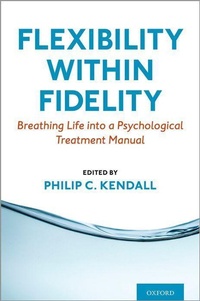
Flexibility within Fidelity
Breathing Life into a Psychological Treatment Manual
Published on 22. October 2021
Book
Paperback/Softback
328 pages
978-0-19-755215-5 (ISBN)
Description
Among mental health researchers, there is a consensus that empirically supported treatments (ESTs) have favorable outcomes and that the outcomes are typically better than other approaches. The majority of these are available as therapist manuals, brief books, or other extended volumes. However, among mental health service providers, there is often a view that these manuals and books can be formulaic and rigid, and likely insensitive to individual patient needs or presentations. With these conflicting perspectives in place, there is a need for accurate communication and reconciliation.
Flexibility within Fidelity identifies how effective ESTs can be implemented with both integrity and flexibility. The book is comprised of chapters focusing on specific ESTs for identified problem areas amongst adults and children/adolescents, including anxiety disorders, PTSD, pain management, and depression among others. Chapter authors focus on the specific treatment components that are required to maintain fidelity and the features of the EST which can be applied with flexibility, promoting a personalized implementation. Written in an accessible style featuring in-depth clinical discussions, this book will equip mental health practitioners with the tools to implement ESTs across client presentations.
Flexibility within Fidelity identifies how effective ESTs can be implemented with both integrity and flexibility. The book is comprised of chapters focusing on specific ESTs for identified problem areas amongst adults and children/adolescents, including anxiety disorders, PTSD, pain management, and depression among others. Chapter authors focus on the specific treatment components that are required to maintain fidelity and the features of the EST which can be applied with flexibility, promoting a personalized implementation. Written in an accessible style featuring in-depth clinical discussions, this book will equip mental health practitioners with the tools to implement ESTs across client presentations.
Reviews / Votes
This is a must-have book for any therapist treating patients with anxiety, depression, OCD, aggression, pain and a variety of other disorders. Although empirically-supported treatments are the clear gold-standard for treating these problems, clinicians often struggle with how best to balance the need for fidelity in applying manualized treatments with the flexibility necessary to meet the specific needs of a given patient and their family. This book provides expert and highly pragmatic guidance for how to achieve this balance. Dr. Kendall, one of leading developers of empirically-supported treatments, has assembled an all-star cast of clinical researchers and treatment developers to guide readers through the key steps for achieving flexibility with fidelity in service of optimal clinical outcomes. * John Piacentini, PhD, ABPP, Director, UCLA Center for Child Anxiety, Resilience, Education and Support (CARES) and Child OCD, Anxiety and Tic Disorders Program * Our own research shows that it is important to train and evaluate psychotherapists along two dimensions, adherence to the evidence-based psychological protocol so that it is delivered as intended, but also competence in its administration. We have discovered that adhering too closely to the protocol in sessions is consistently associated with lower ratings of competence. But how can a therapist be trained to administer the treatment with integrity to achieve the best results while at the same time achieving maximal competence? Now, Phil Kendall, one of the experts in the world in this area, has put together leading developers of evidence-based psychological treatments that demonstrates how to be flexible, and therefore competent, in delivering these interventions with integrity. Every clinicians or clinician in training should be familiar with these strategies."More details
Language
English
Place of publication
New York
United States
Target group
Professional and scholarly
Product notice
Paperback (trade)
Unsewn / adhesive bound
Dimensions
Height: 236 mm
Width: 159 mm
Thickness: 24 mm
Weight
472 gr
ISBN-13
978-0-19-755215-5 (9780197552155)
Copyright in bibliographic data and cover images is held by Nielsen Book Services Limited or by the publishers or by their respective licensors: all rights reserved.
Schweitzer Classification
Other editions
Additional editions
E-Book
08/2021
OUP eBook
€32.99
Available for download
E-Book
07/2021
OUP eBook
€32.99
Available for download
Person
Philip C. Kendall is Distinguished University Professor and Laura H. Carnell Professor of Psychology at Temple University. He is also Director of the Child and Adolescent Anxiety Disorders Clinic (CAADC) at the university. Dr. Kendall is an active researcher, scholar, and clinician and has approximately 800 publications, with his treatment programs having been translated into over a dozen languages. Most recently, he was awarded the 2019 Career/Lifetime Achievement Award conferred at the ABCT annual convention. He is past president of both the Society of Clinical Child and Adolescent Psychology (Division 53) of APA as well as the Association for the Advancement of Behavior Therapy (AABT, now ABCT).
Content
Introduction
Chapter 1: Cognitive Behavioral Therapy for Social Anxiety Disorder: Being Flexible while Maintaining Fidelity
Rachel M. Butler, Emily B. O'Day, and Richard G. Heimberg
Chapter 2: Flexible Principles for the Treatment of Adult Worry
Amy R. Sewart and Michelle G. Craske
Chapter 3: PTSD Treatment with Adults: Making Modifications while Maintaining Fidelity
Colleen A. Sloan, Scott Litwack, and Denise M. Sloan
Chapter 4: Being Flexible while Maintaining Fidelity in Cognitive Behavioral Therapy of Depression
Daniel R. Strunk, Abby Adler Mandel, and Iony D. Ezawa
Chapter 5: Empirically Supported Treatment for Obsessive-Compulsive Disorder: Core Elements and Adaptive Applications
Martin E. Franklin and Sarah G. Turk Karan
Chapter 6: Being Flexible While Maintaining Fidelity for Medical Patients: Patient-Centered and Team-Based Strategies
Mira Reichman, Victoria A. Grunberg, James D. Doorley, Jafar Bakshaie, Ethan G. Lester, Ryan A. Mace, and Ana-Maria Vranceanu
Chapter 7: Goodness of Fit: Flexing Manualized Treatment for Hoarding Disorder
Suzanne Otte, Christiana Bratiotis, and Gail Steketee
Chapter 8: Treatment of Chronic Pain: Importance of Flexibility and Fidelity
John D. Otis
Chapter 9: Flexible Applications of Family-based Therapy for Youth with Bipolar Spectrum Disorders
Haley M. Brickman and Mary A. Fristad
Chapter 10: How to Bend but Not Break an Empirically Supported Treatment for Anxiety in Youth
Lara S. Rifkin, Lindsay Myerberg, Elizabeth A. Gosch, Lesley A. Norris, Margaret E. Crane, and Philip C. Kendall
Chapter 11: The Coping Power Program for Children with Aggressive Behavior Problems
John E. Lochman, Nicole P. Powell, and Shannon Jones
Chapter 12: Delivering Treatment for Adolescent Panic Disorder with Flexibility and Fidelity
Donna B. Pincus, Laura Nelson Darling, and Ovsanna Leyfer
Chapter 13: Tourette and Trichotillomania: Adapting Treatment while Maintaining Fidelity
Jennifer R. Alexander, Jordan T. Stiede, and Douglas W. Woods
Chapter 1: Cognitive Behavioral Therapy for Social Anxiety Disorder: Being Flexible while Maintaining Fidelity
Rachel M. Butler, Emily B. O'Day, and Richard G. Heimberg
Chapter 2: Flexible Principles for the Treatment of Adult Worry
Amy R. Sewart and Michelle G. Craske
Chapter 3: PTSD Treatment with Adults: Making Modifications while Maintaining Fidelity
Colleen A. Sloan, Scott Litwack, and Denise M. Sloan
Chapter 4: Being Flexible while Maintaining Fidelity in Cognitive Behavioral Therapy of Depression
Daniel R. Strunk, Abby Adler Mandel, and Iony D. Ezawa
Chapter 5: Empirically Supported Treatment for Obsessive-Compulsive Disorder: Core Elements and Adaptive Applications
Martin E. Franklin and Sarah G. Turk Karan
Chapter 6: Being Flexible While Maintaining Fidelity for Medical Patients: Patient-Centered and Team-Based Strategies
Mira Reichman, Victoria A. Grunberg, James D. Doorley, Jafar Bakshaie, Ethan G. Lester, Ryan A. Mace, and Ana-Maria Vranceanu
Chapter 7: Goodness of Fit: Flexing Manualized Treatment for Hoarding Disorder
Suzanne Otte, Christiana Bratiotis, and Gail Steketee
Chapter 8: Treatment of Chronic Pain: Importance of Flexibility and Fidelity
John D. Otis
Chapter 9: Flexible Applications of Family-based Therapy for Youth with Bipolar Spectrum Disorders
Haley M. Brickman and Mary A. Fristad
Chapter 10: How to Bend but Not Break an Empirically Supported Treatment for Anxiety in Youth
Lara S. Rifkin, Lindsay Myerberg, Elizabeth A. Gosch, Lesley A. Norris, Margaret E. Crane, and Philip C. Kendall
Chapter 11: The Coping Power Program for Children with Aggressive Behavior Problems
John E. Lochman, Nicole P. Powell, and Shannon Jones
Chapter 12: Delivering Treatment for Adolescent Panic Disorder with Flexibility and Fidelity
Donna B. Pincus, Laura Nelson Darling, and Ovsanna Leyfer
Chapter 13: Tourette and Trichotillomania: Adapting Treatment while Maintaining Fidelity
Jennifer R. Alexander, Jordan T. Stiede, and Douglas W. Woods