

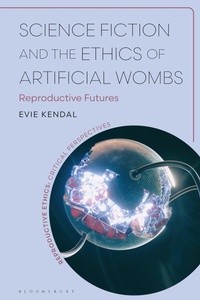
Science Fiction and the Ethics of Artificial Wombs
Reproductive Futures
Will be published approx. on 22. January 2026
Book
Hardback
240 pages
978-1-350-54297-6 (ISBN)
Description
Ectogenesis, or artificial wombs, is not yet a reality. But is it the future? In this revolutionary book, Evie Kendal explores the potential that ectogenesis has to promote sexual equality in human reproduction, and the role science fiction plays in imagining possible futures where this technology is realised.
Fictional representations of ectogenesis are typically used in bioethics to support techno-conservative views of reproduction, conflating the potential issues associated with this technology with other controversial practices, such as human cloning and genetic engineering. Arguing against this dominant trend from a liberal feminist perspective, and placing ectogestation within the rich history of debate in the area, this interdisciplinary volume examines the numerous benefits that growing a foetus in an artificial environment could bring in saving women from the sole burden of reproduction.
Further considering the complex dynamic between ectogenesis and science fiction, Kendal not only applies bioethical reasoning to ectogenesis but to its representation in literature and film, and the subsequent use of such media in the bioethical discourse. As a result, she highlights several problems with the current methods of engagement with science fiction in bioethics. Proposing alternatives, Kendal argues that new methods should capitalise on science fiction's ability to both communicate biotechnical change and explore how to infiltrate emerging technologies into society.
With extended case studies, including Dawn by Octavia E. Butler, Science Fiction and the Ethics of Artificial Wombs brings together bioethics, philosophy, feminist thought, and literary theory to tackle urgent questions about how we think about and imagine this new way of creating human life.
Fictional representations of ectogenesis are typically used in bioethics to support techno-conservative views of reproduction, conflating the potential issues associated with this technology with other controversial practices, such as human cloning and genetic engineering. Arguing against this dominant trend from a liberal feminist perspective, and placing ectogestation within the rich history of debate in the area, this interdisciplinary volume examines the numerous benefits that growing a foetus in an artificial environment could bring in saving women from the sole burden of reproduction.
Further considering the complex dynamic between ectogenesis and science fiction, Kendal not only applies bioethical reasoning to ectogenesis but to its representation in literature and film, and the subsequent use of such media in the bioethical discourse. As a result, she highlights several problems with the current methods of engagement with science fiction in bioethics. Proposing alternatives, Kendal argues that new methods should capitalise on science fiction's ability to both communicate biotechnical change and explore how to infiltrate emerging technologies into society.
With extended case studies, including Dawn by Octavia E. Butler, Science Fiction and the Ethics of Artificial Wombs brings together bioethics, philosophy, feminist thought, and literary theory to tackle urgent questions about how we think about and imagine this new way of creating human life.
Reviews / Votes
What I like so much about this book, is the way it breaks down boundaries between different disciplines. It demonstrates the great value for normative ethics of combining bioethical debate with literary analysis and speculative fiction. This will exhilarate not only bioethical discussions on ectogenesis, but also how bioethics as such can be approached. * Seppe Segers, Professor of Ethics and Moral Science, Ghent University, Belgium * Kendal's Science Fiction and the Ethics of Artificial Wombs constitutes a timely and valuable contribution to scholarship exploring the use of speculative fiction in ethical debates surrounding technological innovation. Drawing on bioethics, feminist theory, and literary studies this monograph challenges its readers to explore the positive role that engagement with science fiction could play in constructing technological futures, in addition to its most common use as cautionary tale. * Nicola Jane Williams, Wellcome Lecturer in the Ethics of Human Reproduction, Lancaster University, UK * In Science Fiction and the Ethics of Artificial Wombs, Kendal's analysis of bioethics and its engagement with science fiction invites readers to think about the importance of popular culture in shaping social policy and medical futures. She argues that artificial womb technology should be explored in the name of a liberal feminism that might free women from the difficulties of pregnancy, speaking to key contemporary issues surrounding reproductive rights and the philosophies of natalism. This is a valuable contribution to the growing scholarship on the ethics of ectogenesis, as well as a case study for the value of science fiction in the field of bioethics. * Anna McFarlane, James Murray Beattie Lecturer in Fantasy Literature, University of Glasgow, UK * An original and enlightening exploration of an underexplored topic. Kendal draws on a diverse range of science fiction sources to demonstrate how the genre offers invaluable insights into contemporary bioethics. * Stephen Wilkinson, Distinguished Professor of Bioethics, Lancaster University, UK *More details
Series
Language
English
Place of publication
London
United Kingdom
Publishing group
Bloomsbury Publishing PLC
Target group
Professional and scholarly
Dimensions
Height: 240 mm
Width: 161 mm
Thickness: 18 mm
Weight
531 gr
ISBN-13
978-1-350-54297-6 (9781350542976)
Copyright in bibliographic data and cover images is held by Nielsen Book Services Limited or by the publishers or by their respective licensors: all rights reserved.
Schweitzer Classification
Other editions
Additional editions
E-Book
12/2025
1st Edition
Bloomsbury Academic
€94.49
Not yet available
Person
Evie Kendal is Senior Lecturer of Health Promotion at Swinburne University of Technology, Australia. She is author of Equal Opportunity and the Case for State Sponsored Ectogenesis (2015) and editor of Teaching Medicine and Medical Ethics Using Popular Culture (2017).
Content
Acknowledgements
Introduction
1. Locating Ectogenesis
2. The Role of Imagination in Bioethics
3. Science Fiction Engaging with Bioethics
4. Bioethics Engaging with Science Fiction
5. Things to Do with (Science Fiction) Stories
Conclusion
Bibliography
Index
Introduction
1. Locating Ectogenesis
2. The Role of Imagination in Bioethics
3. Science Fiction Engaging with Bioethics
4. Bioethics Engaging with Science Fiction
5. Things to Do with (Science Fiction) Stories
Conclusion
Bibliography
Index