

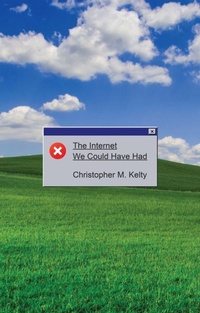
The Internet We Could Have Had
1st Edition
Will be published approx. on 4. September 2026
Book
Hardback
240 pages
978-1-5095-7450-6 (ISBN)
Description
What happened to the internet we could have had? Can we remember a future that did not come to pass? The Internet We Could Have Had takes up the challenge, revisiting the days of "end-to-end" networks, of net neutrality, of free and open source software, the days of Geocities and the lulz of Anonymous. Not as nostalgia, but as a reckoning with the internet we do have.
The internet we could have had was a promise; it could have been a global brain, an end to monopoly capitalism, a liberation of free speech. How did we get from there to here: to surveillance capitalism and data colonialism, facing an extractive AI industry and a fragmented social media landscape powered by misinformation and advertising? Where did it all go wrong? What happened to the promise of the internet and how did it become the disaster we know today?
Part political inquest, part theoretical autopsy, Kelty documents how aspirations of liberation, openness, and participatory democracy opened a door - and through that door walked the Facebook Like Button, Amazon Web Services, Google's Chrome browser and much more. A work of concerted remembering, The Internet We Could Have Had is an attempt to fathom how this past was immensely generative of a future we didn't ask for.
The internet we could have had was a promise; it could have been a global brain, an end to monopoly capitalism, a liberation of free speech. How did we get from there to here: to surveillance capitalism and data colonialism, facing an extractive AI industry and a fragmented social media landscape powered by misinformation and advertising? Where did it all go wrong? What happened to the promise of the internet and how did it become the disaster we know today?
Part political inquest, part theoretical autopsy, Kelty documents how aspirations of liberation, openness, and participatory democracy opened a door - and through that door walked the Facebook Like Button, Amazon Web Services, Google's Chrome browser and much more. A work of concerted remembering, The Internet We Could Have Had is an attempt to fathom how this past was immensely generative of a future we didn't ask for.
Reviews / Votes
"Kelty's genre-bending postmortem covers the past, present, and future of the internet, and reckons with the futures that were once possible. Casting aside the usual suspects, the big men of Silicon Valley and the California Ideology, he settles his analysis on a harder paradox: the openness, decentralization, and ungoverned freedom that made the internet so full of promise doubled as the conditions that enabled the internet we don't want. That older internet is still here, still shaping what we do and what we might yet do, now buried beneath new formations of sociality and extraction that Kelty helps us see differently. Formally inventive and politically sharp, this is a fantastic book that will excite and unsettle anyone who still cares about what the internet could yet become."Gabriella Coleman, Harvard University
"The Internet We Could Have Had is a grouchy, wistful, somehow fun reckoning with a recent past vision of the internet that we've somehow managed to forget. Kelty demonstrates that confronting the naive optimism of our former selves is necessary even if - and especially if - it is deeply painful and deeply cringe."
Lana Swartz, University of Virginia
"This is an opinionated, elegiac history of a once-possible internet, never fully realized but nevertheless foundational to the internet we do have. In The Internet We Could Have Had, Christopher Kelty charts this path as both a participant and a theorist, carefully tracing how we got from there to here."
Nick Seaver, Tufts University
"The Internet We Could Have Had inoculates us. It wards off facile claims that the technical and political potential of the internet was a delusion, a mask, mere legerdemain for the workings of -take your pick - capitalists, the military, techbros, dopamine pushers. Christopher Kelty shows how such figures seized deep unresolved questions of how best to organize the internet's genuine technical and political possibilities - and confected their virtual opposites from within. The Internet We Could Have Had is the book we need now to see clearly why it didn't emerge - and how something new just might."
Matthew L. Jones, Princeton University
More details
Person
Christopher M. Kelty is Professor at the University of California, Los Angeles.
Content
I: 404 Not Found
1.1. Syntax Error
1.2. Insufficient Memory
1.3. Reloading...
II: Have you tried turning it off and on again?
2.1. If Openness...
2.1.1. ...then Google
2.2. If Decentralization...
2.2.1. ...then Amazon
2.3. If Participation...
2.3.1. ...then Facebook
2.4. Else Hackers
III: Future Exception Handling
3.1. The brains we could have had?
1.1. Syntax Error
1.2. Insufficient Memory
1.3. Reloading...
II: Have you tried turning it off and on again?
2.1. If Openness...
2.1.1. ...then Google
2.2. If Decentralization...
2.2.1. ...then Amazon
2.3. If Participation...
2.3.1. ...then Facebook
2.4. Else Hackers
III: Future Exception Handling
3.1. The brains we could have had?