

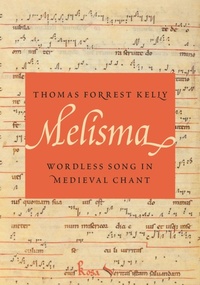
Melisma
Wordless Song in Medieval Chant
Published on 19. June 2025
Book
Hardback
300 pages
978-0-19-776348-3 (ISBN)
Description
In the written record of music in the West, there are many examples of long melodies sung to a single vowel with no other text; but in almost all cases that vowel is part of a syllable in a word, which in turn is part of a longer text; that text is interrupted--or prolonged--by the extension of its vowel to a greater or lesser extent by that string of notes. "Melisma" is the word we use to describe this series of notes. Medieval thinkers such as St. Augustine, St. Jerome, and many others speak of the ineffable joy that cannot be expressed in words when music passes beyond the realm of words into that of pure praise. Most often the word describes those long florid passages that occur in medieval liturgical song--especially in solo chants, and especially in the music designed for the schola, the experienced singers.
This book is about the melisma as a phenomenon, how it works, how melismas appear when they are written in chant, and how they function as part of a text and as part of a song. Many scholars have dealt with this body of music, but this is the first book to treat it as a self-standing subject. Using the evidence of medieval creative minds, Thomas Forrest Kelly uncovers how melismas were heard, analyzed, and performed by medieval singers. He presents a vast assemblage of information: past studies are reviewed and analysed, and many medieval manuscripts are brought to bear through facsimiles. The chief investigative tool is the various sets of contemplative words that medieval creators added to melismas: careful study reveals that the words, and their patterning, their grouping, their accentuation, often reflect the poet's understanding of the underlying melisma.
If we attend carefully to the surviving manuscript evidence, Kelly posits, we can hear those wordless flights of music in something like their original form. Contributing to a deeper understanding of how medieval scribes wrote music and how medieval singers understood and sang it, these insights influence our understanding of music in the largest sense.
This book is about the melisma as a phenomenon, how it works, how melismas appear when they are written in chant, and how they function as part of a text and as part of a song. Many scholars have dealt with this body of music, but this is the first book to treat it as a self-standing subject. Using the evidence of medieval creative minds, Thomas Forrest Kelly uncovers how melismas were heard, analyzed, and performed by medieval singers. He presents a vast assemblage of information: past studies are reviewed and analysed, and many medieval manuscripts are brought to bear through facsimiles. The chief investigative tool is the various sets of contemplative words that medieval creators added to melismas: careful study reveals that the words, and their patterning, their grouping, their accentuation, often reflect the poet's understanding of the underlying melisma.
If we attend carefully to the surviving manuscript evidence, Kelly posits, we can hear those wordless flights of music in something like their original form. Contributing to a deeper understanding of how medieval scribes wrote music and how medieval singers understood and sang it, these insights influence our understanding of music in the largest sense.
Reviews / Votes
Just like its author, who has given so much to students in the field, Melisma is a generous gift for chant scholars to take onwards. * Henry Parkes, Music & Letters * Much is to be admired in this volume by one of the most renowned chant scholars of the twentieth and twenty first centuries and the author of many books, articles, and chapters on chant from a number of perspectives (regional, generic, thematic). This book contributes greatly to his scholarly corpus and will undoubtedly become foundationalto the field of chant studies for decades to come. * Mary Channen Caldwell, Notes *More details
Language
English
Place of publication
New York
United States
Target group
Professional and scholarly
Product notice
sewn/stitched
Cloth over boards
Illustrations
102 figures, 12 tables
Dimensions
Height: 244 mm
Width: 180 mm
Thickness: 28 mm
Weight
703 gr
ISBN-13
978-0-19-776348-3 (9780197763483)
Copyright in bibliographic data and cover images is held by Nielsen Book Services Limited or by the publishers or by their respective licensors: all rights reserved.
Schweitzer Classification
Other editions
Person
Thomas Forrest Kelly is Morton B. Knafel Professor of Music, Emeritus at Harvard University, where he taught until his retirement; he previously taught at Oberlin College, the Five Colleges, and Wellesley College. His published work includes several volumes for general audiences and more specialized studies on aspects of medieval music. He was the founding director of the Castle Hill Festival and served as President of Early Music America, for whose magazine he has written a quarterly column for twenty years. He holds an honorary doctorate from the University of North Carolina and is a Fellow of the American Academy in Rome, the American Academy of Arts and Sciences, and the Medieval Academy of America. He is also a Chevalier of the Ordre des Arts et Lettres of the French Republic, and an honorary citizen of the city of Benevento.
Content
Preface
Abbreviations Chapter 1. Songs without words
Jubilare sine verbis
How do you sing a melisma? Stylistic considerations
How do you write a melisma?
The shape and effect of melismas
Musical nature of melismas Chapter 2. Some historical considerations
The earliest notations of melismas
Medieval words for melismas
Medieval descriptions of melismas and their usage Chapter 3. Melismas within chants of the mass
Tracts
Graduals
Alleluia
Offertories and their verses
Benedictiones
Ite missa est, Benedicamus domino
Appendix A. Opening Melismas in Offertories Chapter 4. Melismas, mostly added, and mostly In the Divine Office
Caudae for antiphons
Melismas for responsories
Borrowed melismas
Composed melismas
Modal melismas
Melismas in antiphons
Later medieval adjustments to melismas
Appendix B: Added responsory-melismas borrowed from offertories Chapter 5. Melismas added to chants in the Mass
Introits
Sequentiae
Appendix C: Melismas in Aquitanian graduals and tropers Chapter 6. Melismas in the Ordinary of the Mass
Kyrieleison
Gloria in excelsis
Sanctus: Osanna melismas Chapter 7. Melismas with words: prosula
Introduction
Genres
Offertory
Alleluia
Fabrice mundi (neuma triplex)
Ordinary of the mass
Style and Performance Chapter 8. Melismas with words: prosa
Text and music
Specific melodiae and prosas
Sequence, prosula, and notation Chapter 9. Conclusions, Details, Examples
Music and language
Detailed examinations of melismas and their subdivisions
Conclusions Bibliography
Credits and Permissions
Index of manuscripts
Index of chant incipits
General index
Abbreviations Chapter 1. Songs without words
Jubilare sine verbis
How do you sing a melisma? Stylistic considerations
How do you write a melisma?
The shape and effect of melismas
Musical nature of melismas Chapter 2. Some historical considerations
The earliest notations of melismas
Medieval words for melismas
Medieval descriptions of melismas and their usage Chapter 3. Melismas within chants of the mass
Tracts
Graduals
Alleluia
Offertories and their verses
Benedictiones
Ite missa est, Benedicamus domino
Appendix A. Opening Melismas in Offertories Chapter 4. Melismas, mostly added, and mostly In the Divine Office
Caudae for antiphons
Melismas for responsories
Borrowed melismas
Composed melismas
Modal melismas
Melismas in antiphons
Later medieval adjustments to melismas
Appendix B: Added responsory-melismas borrowed from offertories Chapter 5. Melismas added to chants in the Mass
Introits
Sequentiae
Appendix C: Melismas in Aquitanian graduals and tropers Chapter 6. Melismas in the Ordinary of the Mass
Kyrieleison
Gloria in excelsis
Sanctus: Osanna melismas Chapter 7. Melismas with words: prosula
Introduction
Genres
Offertory
Alleluia
Fabrice mundi (neuma triplex)
Ordinary of the mass
Style and Performance Chapter 8. Melismas with words: prosa
Text and music
Specific melodiae and prosas
Sequence, prosula, and notation Chapter 9. Conclusions, Details, Examples
Music and language
Detailed examinations of melismas and their subdivisions
Conclusions Bibliography
Credits and Permissions
Index of manuscripts
Index of chant incipits
General index