

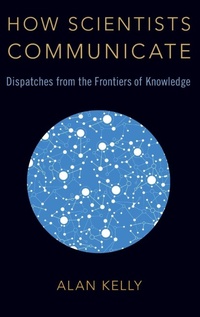
How Scientists Communicate
Dispatches from the Frontiers of Knowledge
Published on 15. October 2020
Book
Hardback
224 pages
978-0-19-093660-0 (ISBN)
Description
The transmission of information transcends time. Since the beginning of humanity, people have shared stories, dreams, wishes, and findings. Within a scientific context, the delivery of information is especially important. Researchers have been sharing their ideas and building on the work of others for as long as we have studied our world. How can a researcher ensure their ideas will be shared most effectively with the next generation, though?
In How Scientists Communicate, Alan Kelly accompanies readers through the many processes of scholarly communication within the field of science. The chapters include an analysis of modern scientific communication, an overview of the historical development of such communication, the nature and goals of a scientific research paper, as well as practical and applicable information for researchers. He explores scientific communication from various perspectives, including the writing process, stages of writing, evaluation through peer review, publication, and what happens afterwards.
This exploration into scientific writing emphasizes the importance of readability and writing for the intended audience. Kelly engages with landmark historical papers, but he doesn't shy away from his own experiences and opinions. This treatise on the art of scientific communication is interesting for readers with various levels of experience, making this book a go-to resource for anyone trying to share their ideas within the scientific community, or interested in how the outputs of science impact our world.
In How Scientists Communicate, Alan Kelly accompanies readers through the many processes of scholarly communication within the field of science. The chapters include an analysis of modern scientific communication, an overview of the historical development of such communication, the nature and goals of a scientific research paper, as well as practical and applicable information for researchers. He explores scientific communication from various perspectives, including the writing process, stages of writing, evaluation through peer review, publication, and what happens afterwards.
This exploration into scientific writing emphasizes the importance of readability and writing for the intended audience. Kelly engages with landmark historical papers, but he doesn't shy away from his own experiences and opinions. This treatise on the art of scientific communication is interesting for readers with various levels of experience, making this book a go-to resource for anyone trying to share their ideas within the scientific community, or interested in how the outputs of science impact our world.
Reviews / Votes
This book is entertaining, easy to read, and unique. Alan Kelly offers an understandable approach to writing science, making this book a useful and understandable overview of the main forms of scientific communication encountered at the undergraduate and graduate levels. * Angelika Hofmann, author of Scientific Writing and Communication and Strategic Projects and Communications Advisor at Yale University * Alan Kelly's writing style is light and accessible, and his focus on the scientific publication process makes this a unique and worthwhile contribution to the field. * Marin S. Robinson, author of Write Like a Chemist and Professor of Environmental and Organic Chemistry at Northern Arizona University * Alan Kelly's How Scientists Communicate isn't just a 'how to' book, although there is a lot of good advice in it; it's also an interesting discussion of the history, evolution, logic, and ethics of our communication media-papers, talks, and posters. He brings long experience, deep insight, and a sense of humor to a book that is worth reading regardless of where you are in your career. * Joshua Schimel, author of Writing Science and Professor at the University of California, Santa Barbara *More details
Language
English
Place of publication
New York
United States
Target group
Professional and scholarly
Dimensions
Height: 240 mm
Width: 161 mm
Thickness: 16 mm
Weight
496 gr
ISBN-13
978-0-19-093660-0 (9780190936600)
Copyright in bibliographic data and cover images is held by Nielsen Book Services Limited or by the publishers or by their respective licensors: all rights reserved.
Schweitzer Classification
Other editions
Additional editions
E-Book
07/2020
OUP eBook
€29.99
Available for download
E-Book
07/2020
OUP eBook
€29.99
Available for download
Person
Alan Kelly is Professor of School of Food and Nutritional Sciences at University College Cork in Ireland. He is the author of Molecules, Microbes, and Meals (Oxford University Press, 2019).
Content
Chapter 1: Introduction
Chapter 2: The History and Future of Scientific Communication
Chapter 3: What Does a Scientific Paper Say?
Chapter 4: The Scientific Voice
Chapter 5: The Perils of Peer Review
Chapter 6: What Happens After Publication? Tracking the Impact of Papers
Chapter 7: Ethics and Integrity in Scientific Communication
Chapter 8: Conferences and Presentations
Chapter 9: Expanding the Comfort Zone: Communicating with Nonspecialist Audiences
Chapter 10: Communication Across a Career in Science
Chapter 11: Some Final Thoughts
Bibliography and Notes
Index
Chapter 2: The History and Future of Scientific Communication
Chapter 3: What Does a Scientific Paper Say?
Chapter 4: The Scientific Voice
Chapter 5: The Perils of Peer Review
Chapter 6: What Happens After Publication? Tracking the Impact of Papers
Chapter 7: Ethics and Integrity in Scientific Communication
Chapter 8: Conferences and Presentations
Chapter 9: Expanding the Comfort Zone: Communicating with Nonspecialist Audiences
Chapter 10: Communication Across a Career in Science
Chapter 11: Some Final Thoughts
Bibliography and Notes
Index