

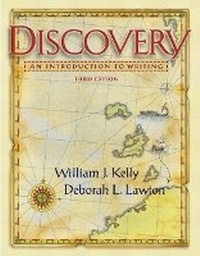
Discovery
An Introduction to Writing
3rd Edition
Published on 18. February 2004
Book
Paperback/Softback
560 pages
978-0-321-10379-6 (ISBN)
Description
The first in a series of two full-color texts for the developmental writing market, Discovery focuses on helping students build sentence and paragraph writing skills.
With its encouraging tone, careful explanations, and abundance of precisely sequenced and incrementally challenging exercise sets, Discovery enables students to view writing as a means of discovering more about themselves and their surroundings.
The book starts with an overview of the writing process and special attention is given to prewriting and the development of topic and supporting sentences. Parts 2 through 5 provide lucid and well-illustrated explanations of basic sentence elements, grammar, punctuation, and mechanics. Part 6 is a section of student and professional reading selections, which include an introduction on critical reading and comprehension and contain numerous writing exercises. An appendix provides practical advice for ESL writers studying English grammar and writing.
With its encouraging tone, careful explanations, and abundance of precisely sequenced and incrementally challenging exercise sets, Discovery enables students to view writing as a means of discovering more about themselves and their surroundings.
The book starts with an overview of the writing process and special attention is given to prewriting and the development of topic and supporting sentences. Parts 2 through 5 provide lucid and well-illustrated explanations of basic sentence elements, grammar, punctuation, and mechanics. Part 6 is a section of student and professional reading selections, which include an introduction on critical reading and comprehension and contain numerous writing exercises. An appendix provides practical advice for ESL writers studying English grammar and writing.
More details
Edition
3rd edition
Language
English
Place of publication
United States
Publishing group
Pearson Education (US)
Target group
Professional and scholarly
Dimensions
Height: 276 mm
Width: 216 mm
Weight
1116 gr
ISBN-13
978-0-321-10379-6 (9780321103796)
Copyright in bibliographic data and cover images is held by Nielsen Book Services Limited or by the publishers or by their respective licensors: all rights reserved.
Schweitzer Classification
Other editions
New editions

Book
08/2006
4th Edition
Pearson
€43.39
Article exhausted; check for reprint
Previous edition

Book
03/2002
2nd Edition
Pearson
€58.43
Article exhausted; check for reprint
Content
Preface.
I. THE ELEMENTS OF EFFECTIVE WRITING.
1. Understanding the Writing Process.
Overview: Seeing Writing as a Process of Discovery.
Understanding the Stages of the Writing Process.
Examining the Dynamics of Writing.
Recognizing the Purpose behind Your Writing.
2. Developing Ideas.
Overview: Understanding Prewriting.
Freewriting.
Brainstorming.
Clustering.
Branching.
Idea Mapping.
Keeping a Journal.
3. Creating Topic Sentences and Supporting Sentences.
Overview: Understanding Composing.
Defining the Paragraph.
Focusing on a Topic.
Developing the Topic Sentence.
Keeping Your Topic Sentence Clear and Specific.
Placing the Topic Sentence Effectively.
Developing Supporting Ideas.
Arranging Selected Details and Examples Effectively.
Changing Writer-Centered Words into Reader-Centered Sentences.
Drafting a Complete Paragraph.
4. Refining Your Draft.
Overview: Understanding Revision.
Reassessing.
Redrafting.
Coherence.
Editing.
5. Subjects and Verbs.
II. EFFECTIVE SENTENCES: CONSTRUCTING MEANING.
6. Sentence Fragments.
Overview: Recognizing and Writing Complete Sentences.
Identifying Action Verbs.
Identifying Linking Verbs.
Identifying Subjects.
Finding the Simple Subject within the Complete Subject.
Recognizing Verb Phrases and Compound Verbs.
Recognizing Compound Subjects.
7. Sentence Fragments.
Overview: Recognizing and Writing Complete Sentences.
Recognizing and Correcting Fragments with Missing Verbs.
Recognizing and Correcting Fragments with Missing Subjects.
Recognizing and Correcting Phrase Fragments.
Recognizing and Correcting Appositive Phrase Fragments.
Recognizing and Correcting Subordinate Clause Fragments.
8. Subordination.
Overview: Creating Complex Sentences with Supporting Clauses.
Distinguishing between Simple and Complex Sentences.
Understanding and Using Subordinating Conjunctions.
Understanding and Using Relative Pronouns.
Punctuating Subordinate Clauses Introduced by Relative Pronouns.
9. Coordination.
Overview: Creating Compound Sentences by Joining Ideas.
Using Coordinating Conjunctions.
Using Semicolons.
Using Conjunctive Adverbs.
10. Avoiding Comma Splices and Run-On Sentences.
Overview: Avoiding Sentence-Combining Errors.
Recognizing Comma Splices and Run-On Sentences.
Using Coordinating Conjunctions to Correct Comma Splices and Run-Ons.
Using Semicolons to Correct Comma Splices and Run-Ons.
Using Periods to Correct Comma Splices and Run-Ons.
Using Subordinating Conjunctions to Correct Comma Splices and Run-Ons.
III. VERBS, CONVEYING ACTION AND TIME.
11. Maintaining Subject-Verb Agreement.
Overview: Understanding Subject-Verb Agreement.
Maintaining Agreement When the Subject Follows the Verb.
Correcting Errors in Sentences Beginning with There and Here.
Maintaining Agreement When Subjects and Verbs Are Separated by Other Words.
Avoiding Problems with Compound Subjects.
Maintaining Agreement with Indefinite Pronouns.
Maintaining Agreement with Collective Nouns, Singular Nouns Ending in -s, and Words Indicating Amounts.
12. Forming Basic Tenses for Regular Verbs.
Overview: Understanding the Basic Tenses.
Using the Present Tense.
Using the Future Tense.
Using the Past Tense.
Using the Perfect Tenses.
13. Using Irregular Verbs Correctly.
Overview: Learning to Use Verbs That Do Not Follow the Rules.
A List of Irregular Verbs.
Strategies for Mastering Irregular Verbs.
14. Passive Voice, Progressive Tenses, and Maintaining Consistency in Tense.
Overview: Understanding Passive Voice and Progressive Tense.
Using the Passive Voice.
Using Progressive Tenses.
Maintaining Consistency in Tense.
15. Additional Elements of Verb Use.
Overview: Avoiding Special Problems with Verbs.
Choosing between Can and Could.
Choosing between Will and Would.
Working with Forms of to Be.
IV. SENTENCE ELEMENTS, STRIVING FOR PRECISION.
16. Using Nouns.
Overview: Understanding Words That Name.
Making Nouns Plural.
Using Collective Nouns.
Using Cue Words to Help Establish Subject-Verb Agreement.
Dealing with Pronoun Case.
Avoiding Problems with Personal Pronouns.
Working with Indefinite Pronouns.
17. Using Pronouns.
Overview: Choosing the Right Pronoun.
Avoiding Errors in Agreement with Singular and Plural Nouns.
Maintaining Agreement with Indefinite Pronouns.
Understanding the Role of Demonstrative Pronouns and Adjectives.
Avoiding Errors in Agreement with Demonstrative Pronouns and Adjectives.
Maintaining Agreement in That, Who, and Which Clauses.
Avoiding Problems with Gender in Pronoun-Antecedent Agreement.
Avoiding Sexist Language When Choosing Pronouns.
Recap: Maintaining Pronoun-Antecedent Agreement.
18. Using Modifiers.
Overview: Building Precise Detail with Modifiers.
Using the Positive Form of Modifiers.
Using the Comparative Form of Modifiers.
Using the Superlative Form of Modifiers.
Using Irregular Modifiers.
Dealing with Confusing Pairs of Modifiers.
Avoiding Double Negatives.
Using -ing Modifiers.
Avoiding Problems with -ing Modifiers.
V. CONSISTENCY WORKSHOP, AIMING FOR CORRECTNESS.
19. Capitalizing Correctly.
Overview: Understanding Proper Capitalization.
Understanding When Words Should Be Capitalized.
20. Using Punctuation Properly.
Overview: Understanding the Role of Punctuation.
Using Periods, Question Marks, and Exclamation Points.
Using Colons and Semicolons.
Using Quotation Marks.
Using Apostrophes.
21. Using Commas.
Overview: Understanding When Commas Are Needed.
Comma Function 1: To Indicate a Pause Between Two Simple Sentences Connected by a Coordinating Conjunction.
Comma Function 2: To Separate the Items in a Series.
Comma Function 3: To Separate an Introductory Phrase from the Rest of the Sentence.
Comma Function 4: To Set Off an Introductory Subordinate Clause.
Comma Function 5: To Set Off Word Groups That Would Otherwise Interrupt the Flow of a Sentence.
Comma Function 6: To Set Off a Direct Quotation from the Rest of a Sentence.
Comma Function 7: To Punctuate Dates and Addresses.
22. Mastering Spelling.
Overview: Understanding the Importance of Correct Spelling.
Forming Plurals.
Adding Prefixes and Suffixes.
Doubling the Final Consonant.
Words with ie or ei Combinations.
Dealing with Confusing Endings and Incorrect Forms.
Dealing with Commonly Confused Words.
Maintaining a Personal Spelling Dictionary.
23. Maintaining Parallelism.
Overview: Learning to Create Balance in Writing.
Keeping Individual Words in a Series Parallel.
Keeping Phrases in a Series Parallel.
Dealing with Other Parallel Structure Challenges.
VI. DISCOVERING CONNECTIONS THROUGH READING.
Overview: Using Active Reading Strategies.
Taking Notes.
Active Reading Strategies.
Active Reading Illustrated.
Readings.
Appendix: Tips for ESL Writers.
Index.
I. THE ELEMENTS OF EFFECTIVE WRITING.
1. Understanding the Writing Process.
Overview: Seeing Writing as a Process of Discovery.
Understanding the Stages of the Writing Process.
Examining the Dynamics of Writing.
Recognizing the Purpose behind Your Writing.
2. Developing Ideas.
Overview: Understanding Prewriting.
Freewriting.
Brainstorming.
Clustering.
Branching.
Idea Mapping.
Keeping a Journal.
3. Creating Topic Sentences and Supporting Sentences.
Overview: Understanding Composing.
Defining the Paragraph.
Focusing on a Topic.
Developing the Topic Sentence.
Keeping Your Topic Sentence Clear and Specific.
Placing the Topic Sentence Effectively.
Developing Supporting Ideas.
Arranging Selected Details and Examples Effectively.
Changing Writer-Centered Words into Reader-Centered Sentences.
Drafting a Complete Paragraph.
4. Refining Your Draft.
Overview: Understanding Revision.
Reassessing.
Redrafting.
Coherence.
Editing.
5. Subjects and Verbs.
II. EFFECTIVE SENTENCES: CONSTRUCTING MEANING.
6. Sentence Fragments.
Overview: Recognizing and Writing Complete Sentences.
Identifying Action Verbs.
Identifying Linking Verbs.
Identifying Subjects.
Finding the Simple Subject within the Complete Subject.
Recognizing Verb Phrases and Compound Verbs.
Recognizing Compound Subjects.
7. Sentence Fragments.
Overview: Recognizing and Writing Complete Sentences.
Recognizing and Correcting Fragments with Missing Verbs.
Recognizing and Correcting Fragments with Missing Subjects.
Recognizing and Correcting Phrase Fragments.
Recognizing and Correcting Appositive Phrase Fragments.
Recognizing and Correcting Subordinate Clause Fragments.
8. Subordination.
Overview: Creating Complex Sentences with Supporting Clauses.
Distinguishing between Simple and Complex Sentences.
Understanding and Using Subordinating Conjunctions.
Understanding and Using Relative Pronouns.
Punctuating Subordinate Clauses Introduced by Relative Pronouns.
9. Coordination.
Overview: Creating Compound Sentences by Joining Ideas.
Using Coordinating Conjunctions.
Using Semicolons.
Using Conjunctive Adverbs.
10. Avoiding Comma Splices and Run-On Sentences.
Overview: Avoiding Sentence-Combining Errors.
Recognizing Comma Splices and Run-On Sentences.
Using Coordinating Conjunctions to Correct Comma Splices and Run-Ons.
Using Semicolons to Correct Comma Splices and Run-Ons.
Using Periods to Correct Comma Splices and Run-Ons.
Using Subordinating Conjunctions to Correct Comma Splices and Run-Ons.
III. VERBS, CONVEYING ACTION AND TIME.
11. Maintaining Subject-Verb Agreement.
Overview: Understanding Subject-Verb Agreement.
Maintaining Agreement When the Subject Follows the Verb.
Correcting Errors in Sentences Beginning with There and Here.
Maintaining Agreement When Subjects and Verbs Are Separated by Other Words.
Avoiding Problems with Compound Subjects.
Maintaining Agreement with Indefinite Pronouns.
Maintaining Agreement with Collective Nouns, Singular Nouns Ending in -s, and Words Indicating Amounts.
12. Forming Basic Tenses for Regular Verbs.
Overview: Understanding the Basic Tenses.
Using the Present Tense.
Using the Future Tense.
Using the Past Tense.
Using the Perfect Tenses.
13. Using Irregular Verbs Correctly.
Overview: Learning to Use Verbs That Do Not Follow the Rules.
A List of Irregular Verbs.
Strategies for Mastering Irregular Verbs.
14. Passive Voice, Progressive Tenses, and Maintaining Consistency in Tense.
Overview: Understanding Passive Voice and Progressive Tense.
Using the Passive Voice.
Using Progressive Tenses.
Maintaining Consistency in Tense.
15. Additional Elements of Verb Use.
Overview: Avoiding Special Problems with Verbs.
Choosing between Can and Could.
Choosing between Will and Would.
Working with Forms of to Be.
IV. SENTENCE ELEMENTS, STRIVING FOR PRECISION.
16. Using Nouns.
Overview: Understanding Words That Name.
Making Nouns Plural.
Using Collective Nouns.
Using Cue Words to Help Establish Subject-Verb Agreement.
Dealing with Pronoun Case.
Avoiding Problems with Personal Pronouns.
Working with Indefinite Pronouns.
17. Using Pronouns.
Overview: Choosing the Right Pronoun.
Avoiding Errors in Agreement with Singular and Plural Nouns.
Maintaining Agreement with Indefinite Pronouns.
Understanding the Role of Demonstrative Pronouns and Adjectives.
Avoiding Errors in Agreement with Demonstrative Pronouns and Adjectives.
Maintaining Agreement in That, Who, and Which Clauses.
Avoiding Problems with Gender in Pronoun-Antecedent Agreement.
Avoiding Sexist Language When Choosing Pronouns.
Recap: Maintaining Pronoun-Antecedent Agreement.
18. Using Modifiers.
Overview: Building Precise Detail with Modifiers.
Using the Positive Form of Modifiers.
Using the Comparative Form of Modifiers.
Using the Superlative Form of Modifiers.
Using Irregular Modifiers.
Dealing with Confusing Pairs of Modifiers.
Avoiding Double Negatives.
Using -ing Modifiers.
Avoiding Problems with -ing Modifiers.
V. CONSISTENCY WORKSHOP, AIMING FOR CORRECTNESS.
19. Capitalizing Correctly.
Overview: Understanding Proper Capitalization.
Understanding When Words Should Be Capitalized.
20. Using Punctuation Properly.
Overview: Understanding the Role of Punctuation.
Using Periods, Question Marks, and Exclamation Points.
Using Colons and Semicolons.
Using Quotation Marks.
Using Apostrophes.
21. Using Commas.
Overview: Understanding When Commas Are Needed.
Comma Function 1: To Indicate a Pause Between Two Simple Sentences Connected by a Coordinating Conjunction.
Comma Function 2: To Separate the Items in a Series.
Comma Function 3: To Separate an Introductory Phrase from the Rest of the Sentence.
Comma Function 4: To Set Off an Introductory Subordinate Clause.
Comma Function 5: To Set Off Word Groups That Would Otherwise Interrupt the Flow of a Sentence.
Comma Function 6: To Set Off a Direct Quotation from the Rest of a Sentence.
Comma Function 7: To Punctuate Dates and Addresses.
22. Mastering Spelling.
Overview: Understanding the Importance of Correct Spelling.
Forming Plurals.
Adding Prefixes and Suffixes.
Doubling the Final Consonant.
Words with ie or ei Combinations.
Dealing with Confusing Endings and Incorrect Forms.
Dealing with Commonly Confused Words.
Maintaining a Personal Spelling Dictionary.
23. Maintaining Parallelism.
Overview: Learning to Create Balance in Writing.
Keeping Individual Words in a Series Parallel.
Keeping Phrases in a Series Parallel.
Dealing with Other Parallel Structure Challenges.
VI. DISCOVERING CONNECTIONS THROUGH READING.
Overview: Using Active Reading Strategies.
Taking Notes.
Active Reading Strategies.
Active Reading Illustrated.
Readings.
Appendix: Tips for ESL Writers.
Index.