

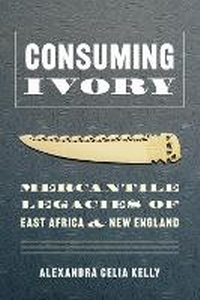
Consuming Ivory
Mercantile Legacies of East Africa and New England
Published on 18. May 2021
Book
Hardback
278 pages
978-0-295-74877-1 (ISBN)
Description
Examines the complex global impact of the ivory trade
The economic prosperity of two nineteenth- and early-twentieth-century New England towns rested on factories that manufactured piano keys, billiard balls, combs, and other items made of ivory imported from East Africa. Yet while towns like Ivoryton and Deep River, Connecticut, thrived, the African ivory trade left in its wake massive human exploitation and ecological devastation. At the same time, dynamic East African engagement with capitalism and imperialism took place within these trade histories.
Drawing from extensive archival and field research in New England, Great Britain, and Tanzania, Alexandra Kelly investigates the complex global legacies of the historical ivory trade. She not only explains the complexities of this trade but also analyzes Anglo-American narratives about Africa, questioning why elephants and ivory feature so centrally in those representations. From elephant conservation efforts to the cultural heritage industries in New England and East Africa, her study reveals the ongoing global repercussions of the ivory craze and will be of interest to anthropologists, archaeologists, historians, and conservationists.
The economic prosperity of two nineteenth- and early-twentieth-century New England towns rested on factories that manufactured piano keys, billiard balls, combs, and other items made of ivory imported from East Africa. Yet while towns like Ivoryton and Deep River, Connecticut, thrived, the African ivory trade left in its wake massive human exploitation and ecological devastation. At the same time, dynamic East African engagement with capitalism and imperialism took place within these trade histories.
Drawing from extensive archival and field research in New England, Great Britain, and Tanzania, Alexandra Kelly investigates the complex global legacies of the historical ivory trade. She not only explains the complexities of this trade but also analyzes Anglo-American narratives about Africa, questioning why elephants and ivory feature so centrally in those representations. From elephant conservation efforts to the cultural heritage industries in New England and East Africa, her study reveals the ongoing global repercussions of the ivory craze and will be of interest to anthropologists, archaeologists, historians, and conservationists.
Reviews / Votes
"[S]trongly researched and well-written book for anthropologists, historians, conservators, politicians, and others interested in the history of the ivory trade and the ongoing global challenges surrounding elephant conservation in the face of the illicit ivory trade."(African Archaeological Review)
More details
Series
Language
English
Place of publication
Seattle
United States
Target group
Professional and scholarly
Illustrations
29 b&w illus., 1 map
Dimensions
Height: 229 mm
Width: 152 mm
Weight
544 gr
ISBN-13
978-0-295-74877-1 (9780295748771)
Copyright in bibliographic data and cover images is held by Nielsen Book Services Limited or by the publishers or by their respective licensors: all rights reserved.
Schweitzer Classification
Other editions
Additional editions

E-Book
05/2021
1st Edition
University of Washington Press
from
€84.99
Available for download