

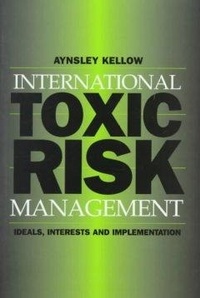
International Toxic Risk Management
Ideals, Interests and Implementation
Will be published approx. on 13. October 1999
Book
Paperback/Softback
234 pages
978-0-521-65469-2 (ISBN)
Description
This original and sometimes controversial book is concerned with international regulation, negotiation and policy-making in the environmental realm. In particular, it focuses on toxic chemicals, and the ways in which risk associated with hazardous substances is assessed, and the policy outcomes that result. A key assertion is that the international arena is more favourable to environment groups while the domestic arena tends to favour industry. Perhaps surprisingly, the author posits that environmental organisations such as Greenpeace, while occupying the moral highground, oversimplify complex issues. While this can help stimulate action, the author argues it can hinder the development of effective policies at the international level. Grounded in major international case studies, the book is based on research into many international agencies and takes a multidisciplinary approach.
Reviews / Votes
' ... a well-informed book, which is useful not only for those interested in chemicals control but, more generally, for everybody working on international environmental politics.' Journal of Environmental PoliticsMore details
Language
English
Place of publication
Cambridge
United Kingdom
Target group
Professional and scholarly
Product notice
Paperback (trade)
Illustrations
4 Tables, unspecified
Dimensions
Height: 226 mm
Width: 150 mm
Thickness: 18 mm
Weight
440 gr
ISBN-13
978-0-521-65469-2 (9780521654692)
Copyright in bibliographic data and cover images is held by Nielsen Book Services Limited or by the publishers or by their respective licensors: all rights reserved.
Schweitzer Classification
Other editions
Additional editions

Book
10/1999
Cambridge University Press
€105.50
Shipment within 15-20 days
Person
Content
1. Rhetoric, risk and reality in international environmental governance; 2. Risk, policy and toxic chemicals; 3. Trade, environment and international policies; 4. BINGOs and ENGOs: domestic and international arenas of power; 5. The Basel convention; 6. The OECD risk reduction program; 7. Conclusion: Belling cats and international policy implementation; Postscript: Improving international environmental policy.