

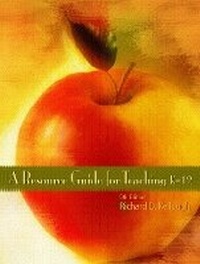
A Resource Guide for Teaching K-12
5th Edition
Published on 2. May 2006
Book
Paperback/Softback
448 pages
978-0-13-170543-2 (ISBN)
Description
Practical and thorough, this engaging resource guide truly practices what it preaches: hands-on, activities-rich, research-based, performance-driven teaching. With its hallmark practicality, the text uses case studies, sample units with lessons, opportunities for practice and feedback, and activities to equip future teachers with numerous examples of best practices, current research findings, and proven teaching strategies. This is truly one of the most comprehensive texts on the market today, made even better in this latest edition with its organization designed around the decision-making phases of instruction.
More details
Edition
5th edition
Language
English
Place of publication
United States
Publishing group
Pearson Education (US)
Target group
Professional and scholarly
Dimensions
Height: 274 mm
Width: 214 mm
Thickness: 23 mm
Weight
946 gr
ISBN-13
978-0-13-170543-2 (9780131705432)
Copyright in bibliographic data and cover images is held by Nielsen Book Services Limited or by the publishers or by their respective licensors: all rights reserved.
Schweitzer Classification
Other editions
New editions
Richard Kellough
Resource Guide for Teaching K-12, A
Book
06/2010
6th Edition
Pearson
€176.40
Article exhausted; check different version
Content
1 Today's Schools: Recognizing and Understanding the Challenge
2 Teacher Professional Responsibilities
3 The Classroom Learning Environment
4 The Curriculum: Selecting and Setting Learning Expectations
5 Planning the Instruction
6 The Use of Questioning
7 Grouping Students for Quality Learning
8 The Thinking Curriculum: Using Teacher Talk, Demonstrations, Thinking, Inquiry, and Games
9 Assessing and Reporting Student Achievement
10 Continued Reflection and Professional Development
2 Teacher Professional Responsibilities
3 The Classroom Learning Environment
4 The Curriculum: Selecting and Setting Learning Expectations
5 Planning the Instruction
6 The Use of Questioning
7 Grouping Students for Quality Learning
8 The Thinking Curriculum: Using Teacher Talk, Demonstrations, Thinking, Inquiry, and Games
9 Assessing and Reporting Student Achievement
10 Continued Reflection and Professional Development