

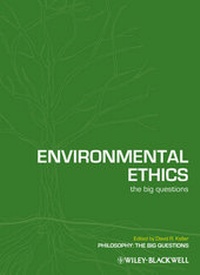
Environmental Ethics
The Big Questions
Published on 26. February 2010
Book
Paperback/Softback
600 pages
978-1-4051-7638-5 (ISBN)
Description
Through a series of multidisciplinary readings, Environmental Ethics: The Big Questions contextualizes environmental ethics within the history of Western intellectual tradition and traces the development of theory since the 1970s.
* Includes an extended introduction that provides an historical and thematic introduction to the field of environmental ethics
* Features a selection of brief original essays on why to study environmental ethics by leaders in the field
* Contextualizes environmental ethics within the history of the Western intellectual tradition by exploring anthropocentric (human-centered) and nonanthropocentric precedents
* Offers an interdisciplinary approach to the field by featuring seminal work from eminent philosophers, biologists, ecologists, historians, economists, sociologists, anthropologists, nature writers, business writers, and others
* Designed to be used with a web-site which contains a continuously updated archive of case studies
Reviews / Votes
"Overall, Environmental Ethics: the big questions is an essential text for anyone looking to get to grips with key thinkers and their contributions to this new and burgeoning domain of ethics. Whilst challenging at times, the variety of papers in terms of both inter-disciplinary and difficulty is wide, allowing readers to effectively engage irrespective of background. Further, the layout is clear and general binding and page quality high to ensure this can remain an indispensable reference text for the future." (The Guardian, 26 November 2013)"Overall, Environmental Ethics: the big questions is an essential text for anyone looking to get to grips with key thinkers and their contributions to this new and burgeoning domain of ethics. Whilst challenging at times, the variety of papers in terms of both inter-disciplinary and difficulty is wide, allowing readers to effectively engage irrespective of background. Further, the layout is clear and general binding and page quality high to ensure this can remain an indispensable reference text for many years to come." (Economics & Philosophy, 1 November 2013)
"The major strength of the book is the fact that it evolved from a classroom course on environmental ethics. The different texts are selected, put together and introduced by an experienced teacher. As such, the selection of text has already proven successful and instructive. The editor has put an enormous amount of effort into selecting the right texts, which took him, according to the preface, over four years." (Ethical Perspectives, 2011)
More details
Series
Edition
1. Auflage
Language
English
Place of publication
Hoboken
United Kingdom
Publishing group
John Wiley and Sons Ltd
Target group
Professional and scholarly
Dimensions
Height: 24.4 cm
Width: 19.6 cm
Thickness: 3.2 cm
Weight
1058 gr
ISBN-13
978-1-4051-7638-5 (9781405176385)
Schweitzer Classification
Other editions
Additional editions
Book
02/2010
1st Edition
Wiley
€122.50
Shipment within 3-4 weeks
Person
David R. Keller is Professor of Philosophy, Director of the Center for the Study of Ethics, Chair of the Environmental Studies Program at Utah Valley University. He is the co-author of The Philosophy of Ecology: From Science to Synthesis (2000). He served as Editor of Teaching Ethics, the journal of the International Society for Ethics Across the Curriculum, from Spring 2006 to Fall 2007. He has published in the journals Bioscience, Humanitas, Teaching Ethics, Environmental Ethics, Interdisciplinary Humanities, Ethics and the Environment. Ecosystem Health, Essays in Philosophy, Process Papers, Encyclia, and Journal of the Utah Academy.
Content
Part I. Preface.
Part II. What is the Proper Subject-Matter of Moral Philosophy? A Brief Overview of Environmental Ethics.
Part III. Why Study Environmental Ethics?.
Part IV. What is Anthropocentrism?.
Part V. What is Nonanthropocentrism?.
Part VI. What is the Scope of Moral Considerability?.
Part VII. What are Prominent Alternatives to Grounding Environmental Ethics in Moral Extensionism?.
Part VIII. What are the Connections between Nature, Culture, Subjectivity, Technology and Environmental Ethics?.
Part IX. What is the Use of Ecological Science for Environmental Ethics?.
Part X. What are Some of the Ethical Dimensions of Environmental Public Policy?Part XI. What is the Future of Environmental Ethics?