

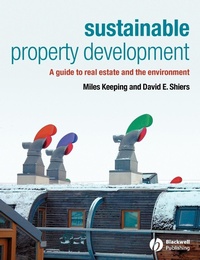
Sustainable Property Development
A Guide to Real Estate and the Environment
1st Edition
Published on 9. December 2003
Book
Paperback/Softback
192 pages
978-0-632-05804-4 (ISBN)
Description
This book identifies, defines and explains in detail property-related environmental issues. It is written in an easy-to-follow style and presented in a lively format. Issues are explained with reference to relevant background information, practical issues and problems posed.
The book is supported by current case studies, and there is learning material - with model answers - for students and lecturers to use for group work.
Each topic - e.g. law, economics, property development - is structured in the same way: headline - the big issues and important questions; background - historical, legislative, technical; practical problems and solutions; discussion points; case studies; sources of information/further study.
The book is supported by current case studies, and there is learning material - with model answers - for students and lecturers to use for group work.
Each topic - e.g. law, economics, property development - is structured in the same way: headline - the big issues and important questions; background - historical, legislative, technical; practical problems and solutions; discussion points; case studies; sources of information/further study.
More details
Language
English
Place of publication
Hoboken
United Kingdom
Publishing group
John Wiley and Sons Ltd
Target group
Professional and scholarly
Product notice
Paperback (trade)
Unsewn / adhesive bound
Dimensions
Height: 246 mm
Width: 189 mm
Thickness: 11 mm
Weight
383 gr
ISBN-13
978-0-632-05804-4 (9780632058044)
Copyright in bibliographic data and cover images is held by Nielsen Book Services Limited or by the publishers or by their respective licensors: all rights reserved.
Schweitzer Classification
Other editions
Additional editions

Miles Keeping | David Shiers
Sustainable Property Development
A Guide to Real Estate and the Environment
E-Book
02/2009
Wiley-Blackwell
€58.99
Available for download
Persons
Miles Keeping is the author of Sustainable Property Development: A Guide to Real Estate and the Environment, published by Wiley.
David Shiers is the author of Sustainable Property Development: A Guide to Real Estate and the Environment, published by Wiley.
David Shiers is the author of Sustainable Property Development: A Guide to Real Estate and the Environment, published by Wiley.
Content
1. THE LOCATION OF PROPERTY: GREENFIELD AND BROWNFIELD DEVELOPMENT. Suggested learning outcomes.
Headlines: big issues and important questions.
Background.
Practical problems and solutions, current approaches, techniques and models.
Part 1: Locations and site-finding for developments.
Market information and market research.
Investigating sites for different uses.
Investigation site-specific characteristics of potential development sites.
Part 2: Government policy regarding location of development.
PPG1: general principles of the planning system.
PPG3: housing.
PPG6: retailing and town centres.
PPG13: transport.
PPG23: planning and pollution control.
The Urban Task Force.
Urban White Paper: Our Towns and Cities: The Future - Delivering an Urban Renaissance.
Part 3: Recent trends in development within city/town centres (as elements of urban regeneration).
Urban regeneration: an introduction.
Mixed use development.
Land assembly and partnerships between developers and local authorities.
Financial aid for necessary redevelopment.
Regional Development Agencies.
Sources of public finance for regeneration.
Planning obligations.
Possible future directions.
Learning materials: problems to solve/issues to discuss in lectures and seminars.
Some questions and issues for discussion.
Examples of media coverage of the issue of regeneration.
References and sources for further study.
Further resources: websites.
2. CONTAMINATION: DEALING WITH POLLUTED LAND.
Suggested learning outcomes.
Headlines: big issues and important questions.
Background.
Historical causes of contamination.
Government action to address contaminated land.
Defining contaminated land today.
The 'suitable for use' standard.
Who is liable for contamination?.
Amount of land that is contaminated.
Controlled waters.
Practical problems and solutions, current approaches, techniques and models.
Why does it matter whether a site is contaminated?.
Registration of contaminated land.
Using a team of advisers.
Inspection methods.
Remediation.
Possible future directions.
Learning materials.
Some questions and issues for discussion.
Discussion points using examples of media coverage of the issue of contaminated land.
References.
Further resources and websites.
3. GREEN PROPERTY: THE DESIGN OF LOWER ENVIRONMENTAL IMPACT BUILDINGS.
Suggested learning outcomes.
Headlines: big issues and important questions.
Defining green buildings.
Some important questions that need to be addressed when considering green buildings.
Background.
BREEAM: an environmental building design and management tool.
One Million Sustainable Homes.
Practical problems and solutions, current approaches, techniques and models.
Whole system solutions.
Location and site issues.
Energy systems.
Water use.
Construction materials.
Green specifications.
LCAs.
The benefits of green buildings.
Possible future directions.
Learning materials.
Some questions and issues for discussion.
Discussion point using examples of media coverage of the issue of green property.
Further resources and websites.
4. PROCUREMENT: SUSTAINABILITY AND THE UK CONSTRUCTION INDUSTRY.
Suggested learning outcomes.
Headlines: big issues and important questions.
Defining procurement.
Background.
Key stages in the procurement process.
Recent industry reports.
Practical problems and solutions, current approaches, techniques and models.
Green taxes.
Key Performance Indicators.
Minimising the use of resources.
Reducing pollution.
Reducing and managing waste.
Improving workforce management.
Common types of contractual arrangement.
The Project Manager.
Design and Build.
Management Contracting.
Accelerating Change.
Technical guidance.
Possible future directions.
Learning materials.
Some questions and issues for discussion.
Discussion points using examples of media coverage of issues relating to the UK construction industry.
Further resources and websites
Headlines: big issues and important questions.
Background.
Practical problems and solutions, current approaches, techniques and models.
Part 1: Locations and site-finding for developments.
Market information and market research.
Investigating sites for different uses.
Investigation site-specific characteristics of potential development sites.
Part 2: Government policy regarding location of development.
PPG1: general principles of the planning system.
PPG3: housing.
PPG6: retailing and town centres.
PPG13: transport.
PPG23: planning and pollution control.
The Urban Task Force.
Urban White Paper: Our Towns and Cities: The Future - Delivering an Urban Renaissance.
Part 3: Recent trends in development within city/town centres (as elements of urban regeneration).
Urban regeneration: an introduction.
Mixed use development.
Land assembly and partnerships between developers and local authorities.
Financial aid for necessary redevelopment.
Regional Development Agencies.
Sources of public finance for regeneration.
Planning obligations.
Possible future directions.
Learning materials: problems to solve/issues to discuss in lectures and seminars.
Some questions and issues for discussion.
Examples of media coverage of the issue of regeneration.
References and sources for further study.
Further resources: websites.
2. CONTAMINATION: DEALING WITH POLLUTED LAND.
Suggested learning outcomes.
Headlines: big issues and important questions.
Background.
Historical causes of contamination.
Government action to address contaminated land.
Defining contaminated land today.
The 'suitable for use' standard.
Who is liable for contamination?.
Amount of land that is contaminated.
Controlled waters.
Practical problems and solutions, current approaches, techniques and models.
Why does it matter whether a site is contaminated?.
Registration of contaminated land.
Using a team of advisers.
Inspection methods.
Remediation.
Possible future directions.
Learning materials.
Some questions and issues for discussion.
Discussion points using examples of media coverage of the issue of contaminated land.
References.
Further resources and websites.
3. GREEN PROPERTY: THE DESIGN OF LOWER ENVIRONMENTAL IMPACT BUILDINGS.
Suggested learning outcomes.
Headlines: big issues and important questions.
Defining green buildings.
Some important questions that need to be addressed when considering green buildings.
Background.
BREEAM: an environmental building design and management tool.
One Million Sustainable Homes.
Practical problems and solutions, current approaches, techniques and models.
Whole system solutions.
Location and site issues.
Energy systems.
Water use.
Construction materials.
Green specifications.
LCAs.
The benefits of green buildings.
Possible future directions.
Learning materials.
Some questions and issues for discussion.
Discussion point using examples of media coverage of the issue of green property.
Further resources and websites.
4. PROCUREMENT: SUSTAINABILITY AND THE UK CONSTRUCTION INDUSTRY.
Suggested learning outcomes.
Headlines: big issues and important questions.
Defining procurement.
Background.
Key stages in the procurement process.
Recent industry reports.
Practical problems and solutions, current approaches, techniques and models.
Green taxes.
Key Performance Indicators.
Minimising the use of resources.
Reducing pollution.
Reducing and managing waste.
Improving workforce management.
Common types of contractual arrangement.
The Project Manager.
Design and Build.
Management Contracting.
Accelerating Change.
Technical guidance.
Possible future directions.
Learning materials.
Some questions and issues for discussion.
Discussion points using examples of media coverage of issues relating to the UK construction industry.
Further resources and websites