

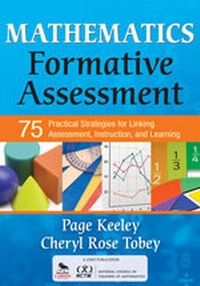
Mathematics Formative Assessment, Volume 1
75 Practical Strategies for Linking Assessment, Instruction, and Learning
1st Edition
Book
Hardback
256 pages
978-1-4129-6811-9 (ISBN)
Description
There is a substantive body of research that indicates formative assessment can significantly improve student learning. Yet, this same research shows that the features of formative assessment that impact student achievement are sadly missing from many classrooms (Black, et al., 2003). This book provides teachers with guidance and suggestions for using formative assessment to improve teaching and learning in the mathematics classroom, and identifies and describes practical techniques teachers can use to build a rich repertoire of formative assessment strategies. The acronym, FACT, is used to label the techniques included in this book. FACT stands for Formative Assessment Classroom Technique. Through the varied use of FACTs, explicitly tied to a purpose for gathering information about or promoting studentsAE thinking and learning, teachers can focus on what works best for learning and design or modify lessons to fit the needs of the students.
Reviews / Votes
"This book is a wonderful resource for integrating formative assessment into student-centered instruction. The authors describe numerous ways teachers can access the many levels of student understanding. It belongs on every mathematics teacher's shelf." -- Edward C. Nolan, PreK-12 Mathematics Specialist "This book contains an incredible set of Math FACTs - Formative Assessment Classroom Techniques. If you have been curious about Formative Assessment or how to implement it in your math classroom, this book provides the tools to get you started." -- Lyneille Meza, Coordinator of Data & Assessment "This book features formative assessment strategies specifically written for math and can be used in any math class. A book that we have been waiting for." -- Zsuzsanna Laughland, Mathematics Teacher "This book is a game-changer! By putting theory into practical digestible units, Mathematics Formative Assessment gives teachers of all levels a bank of techniques to design standards-aligned classes. I wish I had something like this 20 years ago when I was first teaching." -- Daniel Kikuji Rubenstein, Executive Director "Coaches and other teacher leaders will find this compendium of assessment strategies invaluable." -- NCSM Newsletter, Spring 2012 "Most important, Keeley and Tobey discuss extensively the use of teh data generated to inform teaching. Coaches and other teacher leaders will find this compendium of assessment strategies invaluable." -- Kay Gilliland, EditorMore details
Series
Language
English
Place of publication
Thousand Oaks
United States
Target group
Professional and scholarly
Dimensions
Height: 254 mm
Width: 178 mm
ISBN-13
978-1-4129-6811-9 (9781412968119)
Copyright in bibliographic data and cover images is held by Nielsen Book Services Limited or by the publishers or by their respective licensors: all rights reserved.
Schweitzer Classification
Other editions
Additional editions
Page D. Keeley | Cheryl Rose Tobey
Mathematics Formative Assessment, Volume 1
75 Practical Strategies for Linking Assessment, Instruction, and Learning
Book
11/2011
1st Edition
Corwin Press Inc
€40.30
Shipment within 10-20 days
Persons
Consulting Description Page Keeley is an author, speaker, and consultant who works with school districts and STEM organizations throughout the U.S. and internationally in the areas of formative assessment and teaching for conceptual change. She recently retired from the Maine Mathematics and Science Alliance (MMSA) where she was the Senior Science Program Director for 16 years, directing projects and developing resources in the areas of leadership, professional development, linking standards and research on learning, formative assessment, and mentoring and coaching. She has been the Principal Investigator and Project Director of three National Science Foundation-funded projects, including the Northern New England Co-Mentoring Network; PRISMS: Phenomena and Representations for Instruction of Science in Middle School; and Curriculum Topic Study: A Systematic Approach to Utilizing National Standards and Cognitive Research. In addition to NSF funded projects, she has directed state Math-Science Partnership (MSP) projects, including TIES K-12: Teachers Integrating Engineering into Science K-12, and a National Semi-Conductor Foundation grant, Linking Science, Inquiry, and Language Literacy (L-SILL). Keeley also founded and directed the Maine Governor's Academy for Science and Mathematics Education Leadership, a replication of the National Academy for Science Education Leadership, of which she is a fellow.
Keeley is the author of eighteen books and numerous journal articles and book chapters. She is also a co-author for McGraw-Hill's elementary and middle school science programs. Keeley taught high school science for 2 years and middle school mathematics and science for 12 years before leaving the classroom in 1996. At that time she was an active teacher leader at the state and national level. She served two terms as president of the Maine Science Teachers Association and was the District II National Science Teachers Association (NSTA) director. She received the Presidential Award for Excellence in Secondary Science Teaching in 1992, the Milken National Distinguished Educator Award in 1993, was named the AT&T Maine Governor's Fellow in 1994.
As a nationally known professional developer and speaker, she received the National Staff Development Council's (now Learning Forward) Susan Loucks-Horsley Award for Leadership in Science and Mathematics Professional Development in 2009, and the National Science Education Leadership Association's Outstanding Leadership in Science Education Award in 2013. She has been a science education delegation leader for the People to People Citizen Ambassador Professional Programs, leading the South Africa trip in 2009, the China trip in 2010, the India trip in 2012, the Cuba trip in 2014, and the Peru trip in 2015.
Prior to teaching, Keeley was a research assistant in immunogenetics at the Jackson Laboratory of Mammalian Genetics in Bar Harbor, Maine. She received her B.S. in Life Sciences from the University of New Hampshire and her Masters in Science Education from the University of Maine. In 2008, Keeley was elected the sixty-third president of the National Science Teachers Association (NSTA). She can be followed on Twitter @CTSKeeley and can be contacted through her website at www.uncoveringstudentideas.org or through Corwin for information about the professional development she and her colleagues provide.
Cheryl Rose Tobey is a senior mathematics associate at Education Development Center (EDC) in Massachusetts. She is the project director for Formative Assessment in the Mathematics Classroom: Engaging Teachers and Students (FACETS) and a mathematics specialist for Differentiated Professional Development: Building Mathematics Knowledge for Teaching Struggling Students (DPD); both projects are funded by the National Science Foundation (NSF). She also serves as a director of development for an Institute for Educational Science (IES) project, Eliciting Mathematics Misconceptions (EM2). Her work is primarily in the areas of formative assessment and professional development.
Prior to joining EDC, Tobey was the senior program director for mathematics at the Maine Mathematics and Science Alliance (MMSA), where she served as the co-principal investigator of the mathematics section of the NSF-funded Curriculum Topic Study, and principal investigator and project director of two Title IIa state Mathematics and Science Partnership projects. Prior to working on these projects, Tobey was the co-principal investigator and project director for MMSA's NSF-funded Local Systemic Change Initiative, Broadening Educational Access to Mathematics in Maine (BEAMM), and she was a fellow in Cohort 4 of the National Academy for Science and Mathematics Education Leadership. She is the coauthor of six published Corwin books, including seven books in the Uncovering Student Thinking series (2007, 2009, 2011, 2013, 2014), two Mathematics Curriculum Topic Study resources (2006, 2012), and Mathematics Formative Assessment: 75 Practical Strategies for Linking Assessment, Instruction and Learning (2011). Before joining MMSA in 2001 to begin working with teachers, Tobey was a high school and middle school mathematics educator for ten years. She received her BS in secondary mathematics education from the University of Maine at Farmington and her MEd from City University in Seattle. She currently lives in Maine with her husband and blended family of five children.
Keeley is the author of eighteen books and numerous journal articles and book chapters. She is also a co-author for McGraw-Hill's elementary and middle school science programs. Keeley taught high school science for 2 years and middle school mathematics and science for 12 years before leaving the classroom in 1996. At that time she was an active teacher leader at the state and national level. She served two terms as president of the Maine Science Teachers Association and was the District II National Science Teachers Association (NSTA) director. She received the Presidential Award for Excellence in Secondary Science Teaching in 1992, the Milken National Distinguished Educator Award in 1993, was named the AT&T Maine Governor's Fellow in 1994.
As a nationally known professional developer and speaker, she received the National Staff Development Council's (now Learning Forward) Susan Loucks-Horsley Award for Leadership in Science and Mathematics Professional Development in 2009, and the National Science Education Leadership Association's Outstanding Leadership in Science Education Award in 2013. She has been a science education delegation leader for the People to People Citizen Ambassador Professional Programs, leading the South Africa trip in 2009, the China trip in 2010, the India trip in 2012, the Cuba trip in 2014, and the Peru trip in 2015.
Prior to teaching, Keeley was a research assistant in immunogenetics at the Jackson Laboratory of Mammalian Genetics in Bar Harbor, Maine. She received her B.S. in Life Sciences from the University of New Hampshire and her Masters in Science Education from the University of Maine. In 2008, Keeley was elected the sixty-third president of the National Science Teachers Association (NSTA). She can be followed on Twitter @CTSKeeley and can be contacted through her website at www.uncoveringstudentideas.org or through Corwin for information about the professional development she and her colleagues provide.
Cheryl Rose Tobey is a senior mathematics associate at Education Development Center (EDC) in Massachusetts. She is the project director for Formative Assessment in the Mathematics Classroom: Engaging Teachers and Students (FACETS) and a mathematics specialist for Differentiated Professional Development: Building Mathematics Knowledge for Teaching Struggling Students (DPD); both projects are funded by the National Science Foundation (NSF). She also serves as a director of development for an Institute for Educational Science (IES) project, Eliciting Mathematics Misconceptions (EM2). Her work is primarily in the areas of formative assessment and professional development.
Prior to joining EDC, Tobey was the senior program director for mathematics at the Maine Mathematics and Science Alliance (MMSA), where she served as the co-principal investigator of the mathematics section of the NSF-funded Curriculum Topic Study, and principal investigator and project director of two Title IIa state Mathematics and Science Partnership projects. Prior to working on these projects, Tobey was the co-principal investigator and project director for MMSA's NSF-funded Local Systemic Change Initiative, Broadening Educational Access to Mathematics in Maine (BEAMM), and she was a fellow in Cohort 4 of the National Academy for Science and Mathematics Education Leadership. She is the coauthor of six published Corwin books, including seven books in the Uncovering Student Thinking series (2007, 2009, 2011, 2013, 2014), two Mathematics Curriculum Topic Study resources (2006, 2012), and Mathematics Formative Assessment: 75 Practical Strategies for Linking Assessment, Instruction and Learning (2011). Before joining MMSA in 2001 to begin working with teachers, Tobey was a high school and middle school mathematics educator for ten years. She received her BS in secondary mathematics education from the University of Maine at Farmington and her MEd from City University in Seattle. She currently lives in Maine with her husband and blended family of five children.
Content
Preface
Acknowledgments
About the Authors
1. An Introduction to Formative Assessment Classroom Techniques (FACTs)
What Does a Formative Assessment?Centered Classroom Look Like?
Why Use FACTs?
How Does Research Support the Use of FACTs?
Classroom Environments That Support Formative Assessment
Connecting Teaching and Learning
Making the Shift to a Formative Assessment-Centered Classroom
2. Integrating FACTs With Instruction and Learning
Integrating Assessment and Instruction
Assessment That Promotes Thinking and Learning
Linking Assessment, Instruction, and Learning: The Mathematics Assessment, Instruction, and Learning Cycle (MAIL Cycle)
Stages in the MAIL Cycle
Engagement and Readiness
Eliciting Prior Knowledge
Exploration and Discovery
Concept and Skill Development
Concept and Procedure Transfer
Self-Assessment and Reflection
Selecting and Using FACTs to Strengthen the Link Between Assessment, Instruction, and Learning
3. Considerations for Selecting, Implementing and Using Data From FACTs
Selecting FACTs
Selecting FACTs to Match Learning Goals
FACTs and the Common Core Standards for Mathematics
Selecting FACTs to Match Teaching Goals
The Critical Importance of Classroom Context in Selecting FACTs
Planning to Use and Implement FACTs
Starting Off With Small Steps
Maintaining and Extending Implementation
Using Data From the FACTs
4. Get the FACTs! 75 Mathematics Formative Assessment Classroom Techniques (FACTs)
#1. A & D Statements
#2. Agreement Circles
#3. Always, Sometimes, or Never True
#4. Card Sorts
#5. CCC: Collaborative Clued Corrections
#6. Comments-Only Marking
#7. Commit and Toss
#8. Concept Attainment Cards
#9. Concept Card Mapping
#10. Concept Cartoons
#11. Create the Problem
#12. Every Graph Tells a Story
#13. Example, Nonexample
#14. Fact-First Questioning
#15. Feedback to Feed-Forward
#16. Fist to Five
#17. Four Corners
#18. Frayer Model
#19. Friendly Talk Probes
#20. Give Me Five
#21. Hot Seat Questioning
#22. Human Scatter Graph
#23. Is It Fair?
#24. I Used to Think . . . But Now I Know . . .
#25. Justified List
#26. Justified True-or-False Statements
#27. K-W-L Variations
#28. Learning Goals Inventory (LGI)
#29. Look Back
#30. Matching Cards
#31. Mathematician's Ideas Comparison
#32. More A?More B Probes
#33. Muddiest Point
#34. No-Hands Questioning
#35. Odd One Out
#36. Opposing Views Probes
#37. Overgeneralization Probes
#38. Partner Speaks
#39. Pass the Problem
#40. P-E-O Probes (Predict, Explain, Observe)
#41. Peer-to-Peer Focused Feedback
#42. A Picture Tells a Thousand Words
#43. POMS: Point of Most Significance
#44. Popsicle Stick Questioning
#45. PVF: Paired Verbal Fluency
#46. Question Generating
#47. Response Cards
#48. Same A?Same B Probes
#49. Sequencing Cards
#50. Sticky Bars
#51. Strategy Harvest
#52. Strategy Probe
#53. Student Evaluation of Learning Gains
#54. Student Interviews
#55. Terminology Inventory Probe (TIP)
#56. Ten-Two
#57. Thinking Log
#58. Think-Alouds
#59. Think-Pair-Share
#60. Thought Experiments
#61. Three-Minute Pause
#62. 3-2-1
#63. Thumbs Up, Thumbs Down
#64. Traffic Light Cards
#65. Traffic Light Cups
#66. Traffic Light Dots
#67. Two-Minute Paper
#68. Two or Three Before Me
#69. Two Stars and a Wish
#70. Two Thirds Testing
#71. Volleyball, Not Ping-Pong!
#72. Wait Time Variations
#73. What Are You Doing and Why?
#74. Whiteboarding
#75. Word Sort
Appendix: Annotated Resources for Mathematics Formative Assessment
References
Index
Acknowledgments
About the Authors
1. An Introduction to Formative Assessment Classroom Techniques (FACTs)
What Does a Formative Assessment?Centered Classroom Look Like?
Why Use FACTs?
How Does Research Support the Use of FACTs?
Classroom Environments That Support Formative Assessment
Connecting Teaching and Learning
Making the Shift to a Formative Assessment-Centered Classroom
2. Integrating FACTs With Instruction and Learning
Integrating Assessment and Instruction
Assessment That Promotes Thinking and Learning
Linking Assessment, Instruction, and Learning: The Mathematics Assessment, Instruction, and Learning Cycle (MAIL Cycle)
Stages in the MAIL Cycle
Engagement and Readiness
Eliciting Prior Knowledge
Exploration and Discovery
Concept and Skill Development
Concept and Procedure Transfer
Self-Assessment and Reflection
Selecting and Using FACTs to Strengthen the Link Between Assessment, Instruction, and Learning
3. Considerations for Selecting, Implementing and Using Data From FACTs
Selecting FACTs
Selecting FACTs to Match Learning Goals
FACTs and the Common Core Standards for Mathematics
Selecting FACTs to Match Teaching Goals
The Critical Importance of Classroom Context in Selecting FACTs
Planning to Use and Implement FACTs
Starting Off With Small Steps
Maintaining and Extending Implementation
Using Data From the FACTs
4. Get the FACTs! 75 Mathematics Formative Assessment Classroom Techniques (FACTs)
#1. A & D Statements
#2. Agreement Circles
#3. Always, Sometimes, or Never True
#4. Card Sorts
#5. CCC: Collaborative Clued Corrections
#6. Comments-Only Marking
#7. Commit and Toss
#8. Concept Attainment Cards
#9. Concept Card Mapping
#10. Concept Cartoons
#11. Create the Problem
#12. Every Graph Tells a Story
#13. Example, Nonexample
#14. Fact-First Questioning
#15. Feedback to Feed-Forward
#16. Fist to Five
#17. Four Corners
#18. Frayer Model
#19. Friendly Talk Probes
#20. Give Me Five
#21. Hot Seat Questioning
#22. Human Scatter Graph
#23. Is It Fair?
#24. I Used to Think . . . But Now I Know . . .
#25. Justified List
#26. Justified True-or-False Statements
#27. K-W-L Variations
#28. Learning Goals Inventory (LGI)
#29. Look Back
#30. Matching Cards
#31. Mathematician's Ideas Comparison
#32. More A?More B Probes
#33. Muddiest Point
#34. No-Hands Questioning
#35. Odd One Out
#36. Opposing Views Probes
#37. Overgeneralization Probes
#38. Partner Speaks
#39. Pass the Problem
#40. P-E-O Probes (Predict, Explain, Observe)
#41. Peer-to-Peer Focused Feedback
#42. A Picture Tells a Thousand Words
#43. POMS: Point of Most Significance
#44. Popsicle Stick Questioning
#45. PVF: Paired Verbal Fluency
#46. Question Generating
#47. Response Cards
#48. Same A?Same B Probes
#49. Sequencing Cards
#50. Sticky Bars
#51. Strategy Harvest
#52. Strategy Probe
#53. Student Evaluation of Learning Gains
#54. Student Interviews
#55. Terminology Inventory Probe (TIP)
#56. Ten-Two
#57. Thinking Log
#58. Think-Alouds
#59. Think-Pair-Share
#60. Thought Experiments
#61. Three-Minute Pause
#62. 3-2-1
#63. Thumbs Up, Thumbs Down
#64. Traffic Light Cards
#65. Traffic Light Cups
#66. Traffic Light Dots
#67. Two-Minute Paper
#68. Two or Three Before Me
#69. Two Stars and a Wish
#70. Two Thirds Testing
#71. Volleyball, Not Ping-Pong!
#72. Wait Time Variations
#73. What Are You Doing and Why?
#74. Whiteboarding
#75. Word Sort
Appendix: Annotated Resources for Mathematics Formative Assessment
References
Index