


Reason in an Uncertain World
Nyaya Philosophers on Argumentation and Living Well
Published on 26. September 2024
Book
Hardback
232 pages
978-0-19-763425-7 (ISBN)
Description
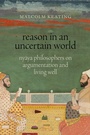
While many people today might turn to ancient Sanskrit philosophers for meditation or yoga, probably few would turn to them for help with difficult contemporary problems, such as what counts as "fake news" or navigating Internet debates. Philosopher Malcolm Keating argues that, in fact, a group of premodern Indian philosophers known as "Nyaya" have important things to say about how we can distinguish truth from falsity and reason well together, both of which are crucial to living a good life.
In Reason in an Uncertain World, Keating teaches us what's distinctive in Nyaya approaches to knowledge and discussion, explaining these ideas in relationship to ordinary examples readers can understand. What are the limits of our reasoning? What counts as good evidence for our beliefs? How do we know if someone is a trustworthy source of information? What do we do when we are gripped by doubt? When is a debate with someone worth our time, and how can we discuss contentious topics? The answers to these questions are as relevant today as they were in ancient India. There, they were the focus of Nyaya philosophy, one of the most influential traditions of Indian philosophy, which few outside of scholarly communities have heard of.
In Reason in an Uncertain World, Keating teaches us what's distinctive in Nyaya approaches to knowledge and discussion, explaining these ideas in relationship to ordinary examples readers can understand. What are the limits of our reasoning? What counts as good evidence for our beliefs? How do we know if someone is a trustworthy source of information? What do we do when we are gripped by doubt? When is a debate with someone worth our time, and how can we discuss contentious topics? The answers to these questions are as relevant today as they were in ancient India. There, they were the focus of Nyaya philosophy, one of the most influential traditions of Indian philosophy, which few outside of scholarly communities have heard of.
More details
Language
English
Place of publication
New York
United States
Illustrations
3 b/w figures
Dimensions
Height: 235 mm
Width: 156 mm
Weight
463 gr
ISBN-13
978-0-19-763425-7 (9780197634257)
Copyright in bibliographic data and cover images is held by Nielsen Book Services Limited or by the publishers or by their respective licensors: all rights reserved.
Schweitzer Classification
Other editions
Additional editions
Book
09/2024
Oxford University Press Inc
€35.50
Shipment within 15-20 days
Person
Malcolm Keating is Visiting Associate Professor of Philosophy at Smith College. His research focuses on philosophy of language, epistemology, and argumentation in Indian philosophy, especially the traditions of Nyaya and Mima?sa.
Content
Acknowledgments
Introduction
Pronunciation Guide
Chapter 1: Sanskrit, S=utras, and Systems
Chapter 2: Tools for Knowing: Introducing Ny=aya's Pram=a.na Theory
Chapter 3: Where There's Smoke, There's Fire: Reasoning with Inference
Chapter 4: Recognizing and Avoiding Fakes: Counterfeit Inferences
Chapter 5: Trustworthy Expert or Quack? Evaluating Testimony
Chapter 6: Is that a Person or a Post? Doubt That Matters
Chapter 7: You Can't Handle the Truth: Rules of Conduct for Reasoning Together
Chapter 8: Nitpicky Literal-Mindedness and Other Fallacies
Chapter 9: Points of Defeat: Twenty-two Ways to Lose an Argument
Chapter 10: Controversies and Character: Concluding Thoughts
Glossary
Appendix: Further Reading and Study Questions
Works Cited
Index
Introduction
Pronunciation Guide
Chapter 1: Sanskrit, S=utras, and Systems
Chapter 2: Tools for Knowing: Introducing Ny=aya's Pram=a.na Theory
Chapter 3: Where There's Smoke, There's Fire: Reasoning with Inference
Chapter 4: Recognizing and Avoiding Fakes: Counterfeit Inferences
Chapter 5: Trustworthy Expert or Quack? Evaluating Testimony
Chapter 6: Is that a Person or a Post? Doubt That Matters
Chapter 7: You Can't Handle the Truth: Rules of Conduct for Reasoning Together
Chapter 8: Nitpicky Literal-Mindedness and Other Fallacies
Chapter 9: Points of Defeat: Twenty-two Ways to Lose an Argument
Chapter 10: Controversies and Character: Concluding Thoughts
Glossary
Appendix: Further Reading and Study Questions
Works Cited
Index