


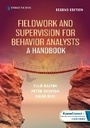
Fieldwork and Supervision for Behavior Analysts
A Handbook
Published on 18. December 2018
Book
Paperback/Softback
282 pages
978-0-8261-3912-2 (ISBN)
Description
This long-awaited resource is the first to focus specifically on orienting and guiding trainees in the field of behavior analysis through the practicum and supervised experience. Clear and succinct, it provides comprehensive information on the competencies as required by the Fifth Edition the BACB (R) Task List. Going beyond the basic nuts and bolts of skill and knowledge requirements, the text prepares students for the day-to-day realities of the supervised practicum experience. It describes the process of locating a site, finding and working with supervisors and peers, and adhering to professional and ethical guidelines. Including seasoned advice on concluding the practicum, getting ready for the board exam, and developing a professional portfolio, this unique resource prepares behavior analyst trainees for employment and beyond.
Real-life examples and case scenarios help students gain an in-depth understanding of requisite competencies. Abundant performance monitoring checklists and sample forms-conveniently downloadable-further reinforce knowledge. This book is also a useful resource for practicing behavior analysts guiding trainees under their supervision.
Key Features:
Delivers concise, structured guidance for students in behavior analysis training programs
Provides practical tips on giving and receiving feedback as well as time management and communication skills
Focuses on the development of competencies and encompasses the BACB (R) Task List
Covers the full range of practicum experience, from orientation to skill development to post-certification employment
Includes abundant checklists and forms, available for download
Illustrated with practical examples and case scenarios
Includes free ebook with purchase of print book
Real-life examples and case scenarios help students gain an in-depth understanding of requisite competencies. Abundant performance monitoring checklists and sample forms-conveniently downloadable-further reinforce knowledge. This book is also a useful resource for practicing behavior analysts guiding trainees under their supervision.
Key Features:
Delivers concise, structured guidance for students in behavior analysis training programs
Provides practical tips on giving and receiving feedback as well as time management and communication skills
Focuses on the development of competencies and encompasses the BACB (R) Task List
Covers the full range of practicum experience, from orientation to skill development to post-certification employment
Includes abundant checklists and forms, available for download
Illustrated with practical examples and case scenarios
Includes free ebook with purchase of print book
Reviews / Votes
"The authors have created a truly valuable resource for those beginning their journey towards a credential as a behavior analyst. Supervision will be most effective when both the supervisor and the supervisee are well-prepared for the experience. This book is full of practical suggestions and activities that help a supervisee take full advantage of his or her opportunities." -- Linda A. LeBlanc, PhD, BCBA-D, Licensed PsychologistMore details
Language
English
Place of publication
New York
United States
Target group
Professional and scholarly
Illustrations
20 Illustrations
Dimensions
Height: 254 mm
Width: 178 mm
Thickness: 16 mm
Weight
543 gr
ISBN-13
978-0-8261-3912-2 (9780826139122)
Copyright in bibliographic data and cover images is held by Nielsen Book Services Limited or by the publishers or by their respective licensors: all rights reserved.
Schweitzer Classification
Other editions
New editions
Book
08/2024
2nd Edition
Springer Publishing Company
€75.51
Shipment within 15-20 days
Persons
Ellie Kazemi, PhD, BCBA-D, Professor, Department of Psychology, California State University, Northridge, Los Angeles, California.
Brian Rice, MA, BCBA, Practica Instructor, California State University, Northridge, Los Angeles, California.
Peter Adzhyan, PsyD, LEP, BCBA-D, Practica Supervisor, California State University, Northridge, Los Angeles, California.
Brian Rice, MA, BCBA, Practica Instructor, California State University, Northridge, Los Angeles, California.
Peter Adzhyan, PsyD, LEP, BCBA-D, Practica Supervisor, California State University, Northridge, Los Angeles, California.
Content
Contents
Preface
Acknowledgements
SECTION I. INTRODUCTION TO SUPERVISION
1. Preparing for Practica
2. Choosing the Type of Fieldwork you want
3. Selecting a Supervisor
4. Applying, Interviewing, and Securing Fieldwork
5. Formalizing Supervision and Record Keeping
SECTION II. BECOMING A COMPETENT SUPERVISEE
6. Gaining the Most from Your Supervision Experience
7. Putting Time and Effort in Increasing your Pivotal Skills
8. Knowing what to expect from Individual vs. Group Supervision Meetings
SECTION III. EVIDENCE-BASED STRATEGIES FOR DEVELOPING COMPETENCE THROUGH SUPERVISION
9. Evidence- and Competency-based Supervision
Competency 1. Adhere to legal, professional, and ethical guidelines
Competency 2. Develop and use behavior measurement methods and record and analyze data
Competency 3. Conduct behavior assessments (e.g., Functional Behavior Assessment, Preference Assessment, Reinforcer Assessment)
Competency 4. Evaluate and develop evidence-based intervention plans
Competency 5. Design and implement skill acquisition procedures based on initial assessment (e.g., design a language acquisition program based on VB-MAPP results)
Competency 6. Design and implement behavior reduction procedures
Competency 7. Program and probe for generalization and maintenance
Competency 8. Conduct experimental evaluations and ongoing assessment of interventions
Competency 9. Train another individual to conduct a procedure
Competency 10. Represent and disseminate the field of behavior analysis
10. Pulling it all Together
Preface
Acknowledgements
SECTION I. INTRODUCTION TO SUPERVISION
1. Preparing for Practica
2. Choosing the Type of Fieldwork you want
3. Selecting a Supervisor
4. Applying, Interviewing, and Securing Fieldwork
5. Formalizing Supervision and Record Keeping
SECTION II. BECOMING A COMPETENT SUPERVISEE
6. Gaining the Most from Your Supervision Experience
7. Putting Time and Effort in Increasing your Pivotal Skills
8. Knowing what to expect from Individual vs. Group Supervision Meetings
SECTION III. EVIDENCE-BASED STRATEGIES FOR DEVELOPING COMPETENCE THROUGH SUPERVISION
9. Evidence- and Competency-based Supervision
Competency 1. Adhere to legal, professional, and ethical guidelines
Competency 2. Develop and use behavior measurement methods and record and analyze data
Competency 3. Conduct behavior assessments (e.g., Functional Behavior Assessment, Preference Assessment, Reinforcer Assessment)
Competency 4. Evaluate and develop evidence-based intervention plans
Competency 5. Design and implement skill acquisition procedures based on initial assessment (e.g., design a language acquisition program based on VB-MAPP results)
Competency 6. Design and implement behavior reduction procedures
Competency 7. Program and probe for generalization and maintenance
Competency 8. Conduct experimental evaluations and ongoing assessment of interventions
Competency 9. Train another individual to conduct a procedure
Competency 10. Represent and disseminate the field of behavior analysis
10. Pulling it all Together