


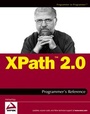
XPath 2.0 Programmer's Reference
1st Edition
Published on 27. August 2004
Book
Paperback/Softback
552 pages
978-0-7645-6910-4 (ISBN)
Description
What is this book about?
XPath 2.0 Programmer's Reference is the only authoritative reference on XPath, a sub-language within XSLT that determines which part of an XML document the XSLT transforms. Written for professional programmers who use XML every day but find the W3C XPath specifications tough to slog through, this book explains in everyday language what every construct in the language does and how to use it. It also offers background material on the design thinking behind the language, gentle criticism of the language specification when appropriate, and a diverse range of interesting examples in various application areas.
XPath 2.0 Programmer's Reference is the only authoritative reference on XPath, a sub-language within XSLT that determines which part of an XML document the XSLT transforms. Written for professional programmers who use XML every day but find the W3C XPath specifications tough to slog through, this book explains in everyday language what every construct in the language does and how to use it. It also offers background material on the design thinking behind the language, gentle criticism of the language specification when appropriate, and a diverse range of interesting examples in various application areas.
More details
Other editions
New editions
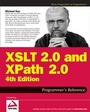
Michael Kay
XSLT 2.0 and XPath 2.0 Programmer's Reference
Book
06/2008
4th Edition
Wrox Press
€69.50
Shipment within 10-20 days
Additional editions
Person
Michael Kay has been working in the XML field since 1997; he became a member of the XSLWorking Group soon after the publication of XSLT 1.0, and took over as editor of the XSLT 2.0 specification in early 2001. He is also a member of the XQueryWorking Group, and is a joint editor of the XPath 2.0 specification. He is well known not only through previous editions of this book, but also as the developer of the open-source Saxon product, a pioneering implementation of XSLT 2.0, XPath 2.0, and XQuery 1.0.
The author has recently formed his own company, Saxonica, to provide commercial software and services building on the success of the Saxon technology. Previously, he spent three years with Software AG, working with the developers of the Tamino XML server, a leading XQuery implementation. His background is in database technology: after leaving the University of Cambridge with a Ph.D., he worked for many years with the (then) computer manufacturer ICL, developing network, relational, and object-oriented database software products as well as a text search engine, and held the position of ICL Fellow.
The author has recently formed his own company, Saxonica, to provide commercial software and services building on the success of the Saxon technology. Previously, he spent three years with Software AG, working with the developers of the Tamino XML server, a leading XQuery implementation. His background is in database technology: after leaving the University of Cambridge with a Ph.D., he worked for many years with the (then) computer manufacturer ICL, developing network, relational, and object-oriented database software products as well as a text search engine, and held the position of ICL Fellow.
Content
Acknowledgments. Introduction. Chapter 1: XPath 2.0 in Context. Chapter 2: The Data Model. Chapter 3: The Type System. Chapter 4: The Evaluation Context. Chapter 5: Basic Constructs. Chapter 6: Operators on Items. Chapter 7: Path Expressions. Chapter 8: Sequence Expressions. Chapter 9: Type Expressions. Chapter 10: XPath Functions. Chapter 11: Regular Expressions. Appendix A: XPath 2.0 Syntax Summary. Appendix B: Operator Precedence. Appendix C: Compatibility with XPath 1.0. Appendix D: Error Codes. Glossary. Index.