

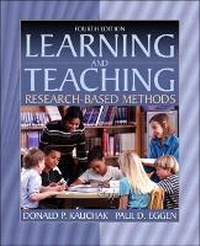
Learning and Teaching
Research-Based Methods, MyLabSchool Edition
4th Edition
Published on 15. February 2005
Book
Mixed media product
461 pages
978-0-205-46465-4 (ISBN)
Description
This substantially revised Fourth Edition represents one of the most up-to-date, research-based methods texts available today.
This text has two specific goals: to change how teachers think about teaching and to change how they actually teach. Solidly grounded in research, the text describes practical methods in a clear, readable manner with numerous case examples and offers suggestions for applying those methods in today's diverse school environments. Kauchak and Eggen organize their discussion around three important themes in education: diversity, motivation, and technology.
This text has two specific goals: to change how teachers think about teaching and to change how they actually teach. Solidly grounded in research, the text describes practical methods in a clear, readable manner with numerous case examples and offers suggestions for applying those methods in today's diverse school environments. Kauchak and Eggen organize their discussion around three important themes in education: diversity, motivation, and technology.
More details
Edition
4th edition
Language
English
Place of publication
United States
Publishing group
Pearson Education (US)
Target group
Professional and scholarly
Dimensions
Height: 235 mm
Width: 191 mm
Weight
771 gr
ISBN-13
978-0-205-46465-4 (9780205464654)
Copyright in bibliographic data and cover images is held by Nielsen Book Services Limited or by the publishers or by their respective licensors: all rights reserved.
Schweitzer Classification
Other editions
New editions
Book
06/2006
5th Edition
Pearson
€100.46
Article exhausted; check for reprint
Content
Preface.
1. Research and Teaching.
Defining Good Teaching.
Research in Teaching: An Historical Perspective.
Contemporary Views of Teaching and Learning.
FROM BEHAVIORIST TO COGNITIVE PERSPECTIVES.
Themes.
Learning to Teach.
2. Student Diversity.
Capitalizing on Cultural Diversity.
Language Diversity.
Students Placed at Risk: Teaching the Children of Poverty.
Teaching Students with Different Learning Abilities.
Learning Styles.
Students with Exceptionalities.
3. Teacher Planning: Research and Reality.
Planning: A Functional Analysis.
Variables in Instructional Planning.
THE LINEAR RATIONAL MODEL: A SEQUENTIAL PLANNING MODEL.
Integrating the Curriculum: Interdisciplinary and Thematic Units.
Research on Teacher Planning.
Planning for Diversity: Individualized Instruction.
4. Effective Teaching: The Research Base.
Classroom Climate: A Prerequisite to Learning.
Effective Teaching and the Concept of Time.
A General Instructional Model.
Characteristics of Effective Teachers.
Effective Lesson Beginnings.
Developing the Lesson.
Ending Lessons Effectively.
5. Increasing Learning through Student Involvement.
Student Involvement: A Key to Learning and Motivation.
Student Involvement: The Need for Clear Goals.
Student Involvement: The Role of Content Representations.
Increasing Student Involvement: Teacher Questioning.
Elements of Effective Questioning.
Classroom Questions: Additional Issues.
6. Creating Productive Learning Environments: Classroom Management.
The Importance of Classroom Management.
Classroom Management: A Definition.
Planning for Classroom Management.
Implementing Management Plans.
Management Interventions.
7. Constructivist Approaches to Instruction.
Constructivism: A View of Learning.
Characteristics of Constructivism.
Planning for Constructivist Learning Activities.
Identifying Clear and Precise Goals.
Multiple Representations of Content.
Planning for Social Interaction.
Planning for Productive Learning Environments.
Planning for Assessment.
Conducting Constructivist Learning Activities.
Lesson Focus.
8. Learning and Teaching Concepts.
Understanding Concepts.
Planning for Concept Learning and Teaching.
Teaching Concepts: Involving Students in Learning.
Understanding Relationships among Concepts: Generalizations, Principles, and Academic Rules.
Teaching Generalizations, Principles, and Academic Rules.
Accommodating Diversity in Concept Learning and Teaching.
Utilizing Technology in Concept Learning.
9. Capitalizing on Social Interaction.
Social Interaction: Theoretical Perspectives.
Using Groupwork to Facilitate Learning.
Cooperative Learning.
Discussions.
Peer Tutoring: Students as Resources.
Research on Peer Tutoring.
10. Problem-Based Instruction.
Problem-Based Learning.
Project-Based Learning.
Problem Solving.
Inquiry Strategies.
11. Teacher-Centered Instruction.
Teacher-Centered and Learner-Centered Instruction.
Characteristics of Teacher-Centered Instruction.
Types of Teacher-Centered Instruction.
Direct Instruction.
Lecture Discussions: Teacher-Centered Strategies for Teaching Organized Bodies of Knowledge.
12. Assessing Learner Understanding.
Classroom Assessment.
Using Traditional Assessment Practices to Promote Learning.
Alternative Assessment.
Accommodating Diversity: Reducing Bias in Assessment.
Designing an Assessment System.
Using Technology in Assessment.
References.
Author Index.
Subject Index.
1. Research and Teaching.
Defining Good Teaching.
Research in Teaching: An Historical Perspective.
Contemporary Views of Teaching and Learning.
FROM BEHAVIORIST TO COGNITIVE PERSPECTIVES.
Themes.
Learning to Teach.
2. Student Diversity.
Capitalizing on Cultural Diversity.
Language Diversity.
Students Placed at Risk: Teaching the Children of Poverty.
Teaching Students with Different Learning Abilities.
Learning Styles.
Students with Exceptionalities.
3. Teacher Planning: Research and Reality.
Planning: A Functional Analysis.
Variables in Instructional Planning.
THE LINEAR RATIONAL MODEL: A SEQUENTIAL PLANNING MODEL.
Integrating the Curriculum: Interdisciplinary and Thematic Units.
Research on Teacher Planning.
Planning for Diversity: Individualized Instruction.
4. Effective Teaching: The Research Base.
Classroom Climate: A Prerequisite to Learning.
Effective Teaching and the Concept of Time.
A General Instructional Model.
Characteristics of Effective Teachers.
Effective Lesson Beginnings.
Developing the Lesson.
Ending Lessons Effectively.
5. Increasing Learning through Student Involvement.
Student Involvement: A Key to Learning and Motivation.
Student Involvement: The Need for Clear Goals.
Student Involvement: The Role of Content Representations.
Increasing Student Involvement: Teacher Questioning.
Elements of Effective Questioning.
Classroom Questions: Additional Issues.
6. Creating Productive Learning Environments: Classroom Management.
The Importance of Classroom Management.
Classroom Management: A Definition.
Planning for Classroom Management.
Implementing Management Plans.
Management Interventions.
7. Constructivist Approaches to Instruction.
Constructivism: A View of Learning.
Characteristics of Constructivism.
Planning for Constructivist Learning Activities.
Identifying Clear and Precise Goals.
Multiple Representations of Content.
Planning for Social Interaction.
Planning for Productive Learning Environments.
Planning for Assessment.
Conducting Constructivist Learning Activities.
Lesson Focus.
8. Learning and Teaching Concepts.
Understanding Concepts.
Planning for Concept Learning and Teaching.
Teaching Concepts: Involving Students in Learning.
Understanding Relationships among Concepts: Generalizations, Principles, and Academic Rules.
Teaching Generalizations, Principles, and Academic Rules.
Accommodating Diversity in Concept Learning and Teaching.
Utilizing Technology in Concept Learning.
9. Capitalizing on Social Interaction.
Social Interaction: Theoretical Perspectives.
Using Groupwork to Facilitate Learning.
Cooperative Learning.
Discussions.
Peer Tutoring: Students as Resources.
Research on Peer Tutoring.
10. Problem-Based Instruction.
Problem-Based Learning.
Project-Based Learning.
Problem Solving.
Inquiry Strategies.
11. Teacher-Centered Instruction.
Teacher-Centered and Learner-Centered Instruction.
Characteristics of Teacher-Centered Instruction.
Types of Teacher-Centered Instruction.
Direct Instruction.
Lecture Discussions: Teacher-Centered Strategies for Teaching Organized Bodies of Knowledge.
12. Assessing Learner Understanding.
Classroom Assessment.
Using Traditional Assessment Practices to Promote Learning.
Alternative Assessment.
Accommodating Diversity: Reducing Bias in Assessment.
Designing an Assessment System.
Using Technology in Assessment.
References.
Author Index.
Subject Index.