

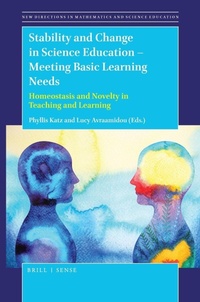
Stability and Change in Science Education -- Meeting Basic Learning Needs
Homeostasis and Novelty in Teaching and Learning
Published on 29. November 2018
Book
Paperback/Softback
260 pages
978-90-04-39161-1 (ISBN)
Description
In this book the editors consider the resistance to change among teachers and learners despite all the evidence that science participation brings benefits for both individuals and nations. Beginning with biology, Stability and Change in Science Education: Meeting Basic Learning Needs explores this balance in teaching and learning science. The authors reflect upon this equilibrium as they each present their work and its contribution.
The book provides a wide range of examples using the change/stability lens. Authors from the Netherlands, Israel, Spain, Canada and the USA discuss how they observe and consider both homeostasis and novelty in theory, projects and other work. The book contains examples from science educators in schools and in other science rich settings.
Contributors are: Lucy Avraamidou, Ayelet Baram-Tsabari, Michelle Crowl, Marilynne Eichinger, Lars Guenther, Maria Heras, Phyllis Katz, Joy Kubarek, Lucy R. McClain, Patricia Patrick, Wolff-Michael Roth, Isabel Ruiz-Mallen, Lara Smetana, Hani Swirski, Heather Toomey Zimmerman, and Bart Van de Laar.
The book provides a wide range of examples using the change/stability lens. Authors from the Netherlands, Israel, Spain, Canada and the USA discuss how they observe and consider both homeostasis and novelty in theory, projects and other work. The book contains examples from science educators in schools and in other science rich settings.
Contributors are: Lucy Avraamidou, Ayelet Baram-Tsabari, Michelle Crowl, Marilynne Eichinger, Lars Guenther, Maria Heras, Phyllis Katz, Joy Kubarek, Lucy R. McClain, Patricia Patrick, Wolff-Michael Roth, Isabel Ruiz-Mallen, Lara Smetana, Hani Swirski, Heather Toomey Zimmerman, and Bart Van de Laar.
More details
Series
Language
English
Place of publication
Leiden
Netherlands
Target group
Professional and scholarly
Product notice
Paperback (trade)
Unsewn / adhesive bound
Dimensions
Height: 231 mm
Width: 152 mm
Thickness: 18 mm
Weight
386 gr
ISBN-13
978-90-04-39161-1 (9789004391611)
Copyright in bibliographic data and cover images is held by Nielsen Book Services Limited or by the publishers or by their respective licensors: all rights reserved.
Schweitzer Classification
Other editions
Additional editions
Phyllis Katz | Lucy Avraamidou
Stability and Change in Science Education -- Meeting Basic Learning Needs
Homeostasis and Novelty in Teaching and Learning
Book
11/2018
Brill
€139.50
Shipment within 10-20 days
Persons
Phyllis Katz, Ph.D. (2002), University of Maryland, is a Research Associate with UMD. She has worked with and done research with families and communities since 1980. She has published for children and adults, including Drawing for Science Education (Sense, 2017).
Lucy Avraamidou, Ph.D. (2003), University of Pennsylvania, is a Rosalind Franklin Fellow and Associate Professor of Science Education, Groningen, The Netherlands. She has numerous publications. Her research is centered around the following two areas: science teacher identity and informal science.
Lucy Avraamidou, Ph.D. (2003), University of Pennsylvania, is a Rosalind Franklin Fellow and Associate Professor of Science Education, Groningen, The Netherlands. She has numerous publications. Her research is centered around the following two areas: science teacher identity and informal science.
Content
Acknowledgements
List of Figures and Tables
Notes on Contributors
PART 1: Theoretical Considerations
1 Introduction: Meeting Basic Needs
?Phyllis Katz and Lucy Avraamidou
2 Meeting Basic Needs: History of Homeostasis and Novelty as Concepts and Terms Relevant to Science Education
?Phyllis Katz and Lucy Avraamidou
3 Novelty: A Phenomenological Perspective
?Wolff-Michael Roth
PART 2: Continual Science Learning
4 Leveraging Families' Shared Experiences to Connect to Disciplinary Content in Ecology: Preliminary Results from the STEM Pillars Museum-Library-University Partnership
?Heather Toomey Zimmerman, Lucy R. McClain and Michele Crowl
5 When Stability Isn't the Baseline: Traumatized Children and Science Education
?Marilynne Eichinger
6 Homeostasis and Novelty as Concepts for Science Journalism: A Re-Interpretation of the Selection and Depiction of Scientific Issues in the Media
?Lars Guenther
7 Making the Unfamiliar Familiar: Zoo and Aquarium Educators Leveraging Novelty and Curiosity
?Joy Kubarek
PART 3: Systemic Change
8 Regional Networks and Ecosystem Learning
?Bart van de Laar
PART 4: Formal Education
9 Teacher Preparation Embraces Homeostasis and Novelty: Expanding Teacher Candidates' Learning Ecologies through a Short-Term Study Abroad
?Lara Smetana
10 Using Photovoice as a Novel Approach to Developing an Anthropogenic Impact Homeostasis Model
?Patricia Patrick
11 Maintaining Homeostasis While Embracing Novelty: Students' Questions as Agents of Student's Voice in the Science Classroom
?Hani Swirski and Ayelet Baram-Tsabari
12 'What Do I Like about Science-Related Activities?': Participatory Indicators Addressing Students' Motivations and Needs When Learning Science
?Maria Heras and Isabel Ruiz-Mallen
13 Synthesis and Recommendations
?Lucy Avraamidou and Phyllis Katz
Index
List of Figures and Tables
Notes on Contributors
PART 1: Theoretical Considerations
1 Introduction: Meeting Basic Needs
?Phyllis Katz and Lucy Avraamidou
2 Meeting Basic Needs: History of Homeostasis and Novelty as Concepts and Terms Relevant to Science Education
?Phyllis Katz and Lucy Avraamidou
3 Novelty: A Phenomenological Perspective
?Wolff-Michael Roth
PART 2: Continual Science Learning
4 Leveraging Families' Shared Experiences to Connect to Disciplinary Content in Ecology: Preliminary Results from the STEM Pillars Museum-Library-University Partnership
?Heather Toomey Zimmerman, Lucy R. McClain and Michele Crowl
5 When Stability Isn't the Baseline: Traumatized Children and Science Education
?Marilynne Eichinger
6 Homeostasis and Novelty as Concepts for Science Journalism: A Re-Interpretation of the Selection and Depiction of Scientific Issues in the Media
?Lars Guenther
7 Making the Unfamiliar Familiar: Zoo and Aquarium Educators Leveraging Novelty and Curiosity
?Joy Kubarek
PART 3: Systemic Change
8 Regional Networks and Ecosystem Learning
?Bart van de Laar
PART 4: Formal Education
9 Teacher Preparation Embraces Homeostasis and Novelty: Expanding Teacher Candidates' Learning Ecologies through a Short-Term Study Abroad
?Lara Smetana
10 Using Photovoice as a Novel Approach to Developing an Anthropogenic Impact Homeostasis Model
?Patricia Patrick
11 Maintaining Homeostasis While Embracing Novelty: Students' Questions as Agents of Student's Voice in the Science Classroom
?Hani Swirski and Ayelet Baram-Tsabari
12 'What Do I Like about Science-Related Activities?': Participatory Indicators Addressing Students' Motivations and Needs When Learning Science
?Maria Heras and Isabel Ruiz-Mallen
13 Synthesis and Recommendations
?Lucy Avraamidou and Phyllis Katz
Index