

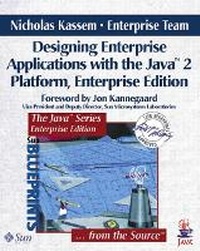
Designing Enterprise Applications with the Java (TM) 2 Platform, Enterprise Edition
Published on 22. June 2000
Book
Paperback/Softback
368 pages
978-0-201-70277-4 (ISBN)
Description
In this book, a team of Sun engineers presents the first start-to-finish guide to enterprise application development with the Java 2 Platform, Enterprise Edition (J2EE). This book covers every component of J2EE, providing "best practices" principles for building secure, high-performance multi-tier enterprise applications, plus a detailed case study showing exactly how to get the job done. The authors begin with an insider's overview of the J2EE platform, and how it can be used. They review each key component, platform, service, and communication technology provided by J2EE; then walk through enterprise development one tier at a time, showing how to leverage J2EE most effectively. The book covers each area: the client tier, Web tier, Enterprise JavaBeans tier, and Enterprise Information System tier, as well as practical techniques for packaging and deployment; extensive coverage of transactions, plus details on the J2EE security model. With the launch of the J2EE Platform, this book is the ideal one-stop resource for IT managers, web providers, EJB developers, database administrators, system administrators and system integrators.
More details
Language
English
Place of publication
Boston
United States
Publishing group
Pearson Education (US)
Target group
College/higher education
Dimensions
Height: 234 mm
Width: 187 mm
Thickness: 17 mm
Weight
548 gr
ISBN-13
978-0-201-70277-4 (9780201702774)
Copyright in bibliographic data and cover images is held by Nielsen Book Services Limited or by the publishers or by their respective licensors: all rights reserved.
Schweitzer Classification
Other editions
New editions
Inderjeet Singh | Beth Stearns | Mark Johnson
Designing Enterprise Applications with the J2EE (TM) Platform
Book
04/2002
2nd Edition
Addison Wesley
€45.96
Article is exhausted; no reprint
Persons
Nicholas Kassem is a Senior Staff Engineer with Sun Microsystems. He has influenced and had responsibility for a number of technologies and initiatives within Java Software, including the Java Web Server, Java Embedded Server, Java Servlet API, JavaServer Pages, Java Message Queuing, and the J2EE programming model.
0201702770AB04062001
0201702770AB04062001
Content
Foreword.
Preface.
1. Introduction.
Challenges of Enterprise Application Development.
The Platform for Enterprise Solutions.
J2EE Application Scenarios.
Summary.
2. J2EE Platform Technologies.
Component Technologies.
Platform Roles.
Platform Services.
Service Technologies.
Communication Technologies.
Summary.
3. The Client Tier.
Requirements and Constraints.
Overview of Client Options.
Web Clients.
EJB Clients.
Enterprise Information System Clients.
Designing for Multiple Types of Client.
Summary.
4. The Web Tier.
Web Applications and Web Containers.
Dynamic Content Creation.
Servlets and JSP Pages.
JSP Page Design.
Internationalization and Localization.
Application Designs.
Application Migration.
Summary.
5. The Enterprise JavaBeans Tier.
Business Logic.
Enterprise Beans as J2EE Business Objects.
Entity Beans.
Session Beans.
Design Guidelines.
Summary.
6. The Enterprise Information System Tier.
Enterprise Information System Capabilities and Limitations.
Enterprise Information System Integration Scenarios.
Relational Database Management System Access.
Other Enterprise Information System Access.
Application Component Provider Tasks.
Application Programming Model.
Programming Access to Data and Functions.
Connections.
Security.
J2EE Connector Architecture.
Summary.
7. Packaging and Deployment.
Roles and Tasks.
Packaging J2EE Applications.
Deployment Descriptors.
Deployment Tools.
Summary.
8. Transaction Management.
Properties of Transactions.
J2EE Platform Transactions.
Scenarios.
JTA Transactions.
Transactions in Applets and Application Clients.
Transactions in Web Components.
Transactions in Enterprise Beans.
Transactions in Enterprise Information Systems.
Summary.
9. Security.
Security Threats and Mechanisms.
Authentication.
Authorization.
Protecting Messages.
Auditing.
Summary.
10. The Sample Application.
Application Functionality.
Application Architecture.
The View.
The Model.
Implementation.
The Controller.
MVC Summary.
Stateless Services.
Deployment.
Transactions.
Security.
Summary.
Afterword.
Glossary.
Index. 0201702770T04062001
Preface.
1. Introduction.
Challenges of Enterprise Application Development.
The Platform for Enterprise Solutions.
J2EE Application Scenarios.
Summary.
2. J2EE Platform Technologies.
Component Technologies.
Platform Roles.
Platform Services.
Service Technologies.
Communication Technologies.
Summary.
3. The Client Tier.
Requirements and Constraints.
Overview of Client Options.
Web Clients.
EJB Clients.
Enterprise Information System Clients.
Designing for Multiple Types of Client.
Summary.
4. The Web Tier.
Web Applications and Web Containers.
Dynamic Content Creation.
Servlets and JSP Pages.
JSP Page Design.
Internationalization and Localization.
Application Designs.
Application Migration.
Summary.
5. The Enterprise JavaBeans Tier.
Business Logic.
Enterprise Beans as J2EE Business Objects.
Entity Beans.
Session Beans.
Design Guidelines.
Summary.
6. The Enterprise Information System Tier.
Enterprise Information System Capabilities and Limitations.
Enterprise Information System Integration Scenarios.
Relational Database Management System Access.
Other Enterprise Information System Access.
Application Component Provider Tasks.
Application Programming Model.
Programming Access to Data and Functions.
Connections.
Security.
J2EE Connector Architecture.
Summary.
7. Packaging and Deployment.
Roles and Tasks.
Packaging J2EE Applications.
Deployment Descriptors.
Deployment Tools.
Summary.
8. Transaction Management.
Properties of Transactions.
J2EE Platform Transactions.
Scenarios.
JTA Transactions.
Transactions in Applets and Application Clients.
Transactions in Web Components.
Transactions in Enterprise Beans.
Transactions in Enterprise Information Systems.
Summary.
9. Security.
Security Threats and Mechanisms.
Authentication.
Authorization.
Protecting Messages.
Auditing.
Summary.
10. The Sample Application.
Application Functionality.
Application Architecture.
The View.
The Model.
Implementation.
The Controller.
MVC Summary.
Stateless Services.
Deployment.
Transactions.
Security.
Summary.
Afterword.
Glossary.
Index. 0201702770T04062001