

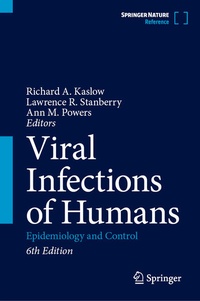
Viral Infections of Humans
Description
This new edition of Viral Infections of Humans: Epidemiology and Control is a timely reference that provides scholars, teachers, and students of epidemiology and infectious diseases with a current, comprehensive summary of what is known about the causes and consequences of infection with every virus known to cause significant human infection, emphasizing its impact at the population level. It presents the latest concepts, methods, and technologies in epidemiology, detection, investigation, modeling, and intervention.
While chapters include core virologic and clinical knowledge that may have changed little in the years since the publication of the fifth edition, these chapters also reflect the variable, often substantial degree to which the epidemiology and approaches to control have evolved. The reference includes both updated and new chapters that either greatly expand on material covered only superficially in the previous edition or introduce viruses just recently discovered to affect human populations. Each chapter presents information in a uniform way, summarizing the methodology, biological characteristics, descriptive epidemiology, transmission, pathogenesis, control, and prevention for each virus.
Among the contents covered include authoritative information on more recent developments and discoveries such as coronavirus disease 2019 (COVID-19); updates on the rapid advances in control of hepatitis C, influenza, and human papilloma virus-related diseases; and other new developments in the field.
The expanded and updated sixth edition of Viral Infections of Humans offers a uniquely comprehensive perspective on viruses in humans, from agents of classic diseases (e.g., hepatitis, measles, polio, rabies, and yellow fever), to those with greatest pandemic impact (e.g., influenza and human immunodeficiency virus), to those discovered relatively recently (e.g., henipavirus, metapneumovirus, and norovirus). It is an essential reference for epidemiology, public health, and medical students; epidemiologists; academic and practicing public health professionals; infectious disease physicians; internists and pediatricians; biopharmaceutical industry professionals; health policy-makers; and fellows and other established professionals in these fields.
More details
Other editions
Previous edition
Persons
Richard Kaslow
is Professor Emeritus of Epidemiology in the School of Public Health, University of Alabama at Birmingham (UAB). He obtained MD and MPH degrees from Harvard and earned board certification in internal medicine, infectious diseases and preventive medicine. He spent 23 years in the US Public Health Service, first at CDC and then leading the epidemiology and biometry branch in the National Institute of Allergy and Infectious Diseases at NIH. During the next 17 years at UAB, he also held joint appointments in the Departments of Medicine, Microbiology, and Genetics. He subsequently assumed Senior Executive Service leadership roles in the Office of Public Health at the Department of Veterans Affairs.
He conducted research on the epidemiology of infectious and immune diseases, vaccines, and genetics of the immune response. His scholarly work is reflected in over 250 original research articles, chapters, reviews and editorials. He has been editor of two other textbooks as well as senior editor of
Viral Infections of Humans
for 30 years. He served on numerous editorial boards and professional and government review panels. He was elected President of the American College of Epidemiology and Chair of the Epidemiology Section in the American Public Health Association (APHA). He has held several visiting faculty appointments and received various awards, including the 2009 John Snow Award from APHA and the 2016 Exemplary Service Award from the Department of Veterans Affairs.
Lawrence Stanberry is Professor Emeritus of Pediatrics at Columbia University. He obtained his MD and PhD degrees from University of Illinois Medical Center, Chicago. His pediatric residency and pediatric infectious fellowship training were at the Children's Medical Center/U.T. Southwestern Medical School and Primary Children's Hospital/ University of Utah Medical School.
He spent 17 years at Columbia's Vagelos College of Physicians and Surgeons as Chair of Pediatrics (2008-2018) and Associate Dean for International Programs (2018-2025). From 2000- 2008, he was Professor and Chair of Pediatrics and Director of the Sealy Center for Vaccine Development at the University of Texas Medical Branch, Galveston. Prior to Galveston, he was the Sabin Professor of Pediatrics and Director of the Division of Infectious Diseases at the Cincinnati Children's Medical Center.
He has served on numerous advisory boards and review panels including as the chair of the Vaccine Study Section at NIH. He has received research funding from the National Institutes of Health, the Centers for Disease Control and Prevention, numerous vaccine, pharmaceutical and biotech companies, and the Bill and Melinda Gates Foundation.
He has authored over 200 scientific articles and chapters and published one book, Understanding Herpes. Besides serving as editor for two editions of
Viral Infections of Humans
, he has served as editor of
Genital and Neonatal Herpes
,
Sexually Transmitted Diseases: Vaccines, Prevention, and Control
and
Vaccines for Biodefense and Emerging and Neglected Diseases
.
Ann M. Powers, PhD, FASTMH , is associate director for science in the Division of Vector-Borne Infectious Diseases at the Centers for Disease Control and Prevention (CDC).