

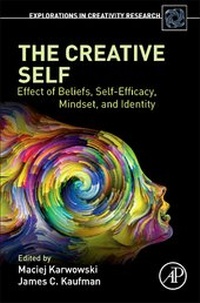
The Creative Self
Effect of Beliefs, Self-Efficacy, Mindset, and Identity
Published on 23. February 2017
Book
Paperback/Softback
418 pages
978-0-12-809790-8 (ISBN)
Description
The Creative Self reviews and summarizes key theories, studies, and new ideas about the role and significance self-beliefs play in one's creativity. It untangles the interrelated constructs of creative self-efficacy, creative metacognition, creative identity, and creative self-concept. It explores how and when creative self-beliefs are formed as well as how creative self-beliefs can be strengthened. Part I discusses how creativity plays a part in one's self-identity and its relationship with free will and efficacy. Part II discusses creativity present in day-to-day life across the lifespan. Part III highlights the intersection of the creative self with other variables such as mindset, domains, the brain, and individual differences. Part IV explores methodology and culture in relation to creativity. Part V, discusses additional constructs or theories that offer promise for future research on creativity.
Reviews / Votes
"We celebrate the release of The Creative Self. The volume shows confidence amongpsychologists who study creativity beyond limited themes such as intelligence and divergent cognition. ...I congratulate the editors and authors for putting The Creative Self together." --PsucCritiques Vol 62, No. 50
More details
Series
Language
English
Place of publication
San Diego
United States
Publishing group
Elsevier Science Publishing Co Inc
Target group
Professional and scholarly
Dimensions
Height: 229 mm
Width: 152 mm
Weight
680 gr
ISBN-13
978-0-12-809790-8 (9780128097908)
Copyright in bibliographic data and cover images is held by Nielsen Book Services Limited or by the publishers or by their respective licensors: all rights reserved.
Schweitzer Classification
Other editions
Additional editions
Maciej Karwowski | James C. Kaufman
The Creative Self
Effect of Beliefs, Self-Efficacy, Mindset, and Identity
E-Book
02/2017
Academic Press
€53.95
Available for download
Persons
Maciej Karwowski, PhD, is an associate professor and head of Creative Education Lab at Maria Grzegorzewska University in Warsaw, Poland. His main research interests include educational psychology of creativity, measurement of creativity and analysis of contextual factor influencing creative thinking. Karwowski is author, coauthor, editor or coeditor of 10 books and more than 100 peer-reviewed articles. He is a co-editor of the journal Creativity: Theories-Research-Applications, associate editor of the Journal of Creative Behavior, senior editor of Europe's Journal of Psychology and on the editorial boards of Thinking Skills and Creativity, Psychology of Aesthetics, Creativity, and the Arts, Journal of Creativity in Business and Innovation, and Frontiers in Educational Psychology. James C. Kaufman, PhD, is a Professor of Educational Psychology at the Neag School of Education at the University of Connecticut. He is the author/editor of more than 30 books and 250 papers. Dr. Kaufman co-founded two APA journals (Psychology of Popular Media Culture and Psychology of Aesthetics, Creativity, and the Arts) and is a Past President of APA's Division 10. He was won numerous awards, including the Torrance Award from the National Association for Gifted Children, the Berlyne and Farnsworth Awards from APA, and Mensa's research award.
Content
Part I: Broad considerations
1. Toward Untangling Creative Self-Beliefs
2. Considering Creative Self-Efficacy: Its Current State and Ideas for Future Inquiry
3. Creativity and Identity
4. Creativity and Free Will: Creative Thought Enhances Personal Freedom?
Part II: Living a creative life
5. Creativity and Identity Formation in Adolescence: A Developmental Perspective
6. Self-Construction and Creative "Life Design?
7. The Creative Self in Dialogue
8. Me, Myself, I, and Creativity: Self-Concepts of Eminent Creators
Part III: Integrating multiple constructs
9. Creativity Is Influenced by Domain, Creative Self-Efficacy, Mindset, Self-Efficacy, and Self-Esteem
10. Creativity, Self-Generated Thought, and the Brain's Default Network
11. Individual Difference Correlates of Self-Perceptions of Creativity
12. Are Implicit Theories of Creativity Domain Specific? Evidence and Implications
Part IV: Specific considerations
13. Creative Self-Efficacy From the Chinese Perspective: Review of Studies in Mainland China, Hong Kong, Taiwan, and Singapore
14. Why You are Probably More Creative (and Less Creative) Than You Think
15. The Creative Self in Context: Experience Sampling and the Ecology of Everyday Creativity
16. Leading for Uniqueness: The Role of Uniqueness in Facilitating Creativity in Employees' Self-Concepts
17. Mind Wandering, Creative Writing, and the Self
Part V: New models and perspectives
18. The Dynamic Force Before Intrinsic Motivation: Exploring Creative Needs
19. Creativity and its Discontents: The Weary Voyager Model of Creativity in Relation to Self
20. From Having an Idea to Doing Something With it: Self-Regulation for Creativity
21. Creative Mindsets: Prospects and Challenges
1. Toward Untangling Creative Self-Beliefs
2. Considering Creative Self-Efficacy: Its Current State and Ideas for Future Inquiry
3. Creativity and Identity
4. Creativity and Free Will: Creative Thought Enhances Personal Freedom?
Part II: Living a creative life
5. Creativity and Identity Formation in Adolescence: A Developmental Perspective
6. Self-Construction and Creative "Life Design?
7. The Creative Self in Dialogue
8. Me, Myself, I, and Creativity: Self-Concepts of Eminent Creators
Part III: Integrating multiple constructs
9. Creativity Is Influenced by Domain, Creative Self-Efficacy, Mindset, Self-Efficacy, and Self-Esteem
10. Creativity, Self-Generated Thought, and the Brain's Default Network
11. Individual Difference Correlates of Self-Perceptions of Creativity
12. Are Implicit Theories of Creativity Domain Specific? Evidence and Implications
Part IV: Specific considerations
13. Creative Self-Efficacy From the Chinese Perspective: Review of Studies in Mainland China, Hong Kong, Taiwan, and Singapore
14. Why You are Probably More Creative (and Less Creative) Than You Think
15. The Creative Self in Context: Experience Sampling and the Ecology of Everyday Creativity
16. Leading for Uniqueness: The Role of Uniqueness in Facilitating Creativity in Employees' Self-Concepts
17. Mind Wandering, Creative Writing, and the Self
Part V: New models and perspectives
18. The Dynamic Force Before Intrinsic Motivation: Exploring Creative Needs
19. Creativity and its Discontents: The Weary Voyager Model of Creativity in Relation to Self
20. From Having an Idea to Doing Something With it: Self-Regulation for Creativity
21. Creative Mindsets: Prospects and Challenges