

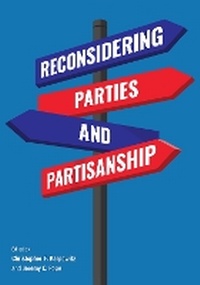
Reconsidering Parties and Partisanship
Published on 22. April 2026
Book
Paperback/Softback
466 pages
978-0-472-05803-7 (ISBN)
Description
Since partisanship has become a powerful force in the U.S., academic literature is replete with different approaches to this complex, multifaceted topic. Reconsidering Parties and Partisanship brings together prominent scholars working on issues related to parties and partisanship for a collection of essays on how American partisanship is shifting and changing in the 21st century. This volume pushes readers to re-evaluate their understanding of the role of parties and partisanship in contemporary politics and offers a helpful set of analyses and tools for understanding the key features of the partisan environment in which the nation finds itself.
The scholars here approach parties from the standpoint of partisan and social identities, polarization, the prevalence of independents (and pseudo-independents), political campaigns, and more. In linking the different faces or levels-party-in-the-electorate, party-in-government, and party-as-an-organization-the chapters provide a wide-ranging set of theories and ideas to consider. Through this exploration, Reconsidering Parties and Partisanship provides a valuable road map for partisanship in our current era.
Readers will learn
How conditional party government seems to work in this highly partisan era
How donors and pressure groups have taken ownership over campaigns
How independents are often undercover partisans, but who also feel repelled by the existing parties-even the one they typically support
How various identities converge to produce partisan affection (when that exists)
How partisanship relates to ideology.
The scholars here approach parties from the standpoint of partisan and social identities, polarization, the prevalence of independents (and pseudo-independents), political campaigns, and more. In linking the different faces or levels-party-in-the-electorate, party-in-government, and party-as-an-organization-the chapters provide a wide-ranging set of theories and ideas to consider. Through this exploration, Reconsidering Parties and Partisanship provides a valuable road map for partisanship in our current era.
Readers will learn
How conditional party government seems to work in this highly partisan era
How donors and pressure groups have taken ownership over campaigns
How independents are often undercover partisans, but who also feel repelled by the existing parties-even the one they typically support
How various identities converge to produce partisan affection (when that exists)
How partisanship relates to ideology.
More details
Language
English
Place of publication
Ann Arbor
United States
Illustrations
103 illustrations, 54 tables
Dimensions
Height: 254 mm
Width: 178 mm
ISBN-13
978-0-472-05803-7 (9780472058037)
Copyright in bibliographic data and cover images is held by Nielsen Book Services Limited or by the publishers or by their respective licensors: all rights reserved.
Schweitzer Classification
Persons
Christopher F. Karpowitz is Mary Lou Fulton Professor of Political Science at Brigham Young University.
Jeremy C. Pope is Professor of Political Science at Brigham Young University.
Jeremy C. Pope is Professor of Political Science at Brigham Young University.
Content
List of Figures: xi
List of Tables: xv
Acknowledgments: xvii
1 | Parties and Partisanship Reconsidered | Christopher F. Karpowitz and Jeremy C. Pope: 1
Part 1. From Identity to Polarization: 9
Introduction to Part 1 | Christopher F. Karpowitz and Jeremy C. Pope: 11
2 | Worldview and Partisanship | Marc J. Hetherington, Andrew M. Engelhardt, and Pamela Johnston Conover: 15
3 | Rallying Hate: How Trump Support Is Not Normal Partisanship | Lilliana Mason, Julie Wronski, and John V. Kane: 39
4 | What Happens When Partisan and Religious Group Identities Unexpectedly Conflict? A Case Study | Christopher F. Karpowitz and J. Quin Monson: 63
5 | Finding Common Ground: Experimental Efforts to Reduce Partisan Animus | Matthew S. Levendusky: 90
6 | Partisanship by Ideologies | Michael Barber and Jeremy C. Pope: 112
7 | The Impact of Donald Trump on Partisan Alignment with Social Identities: A Discussion Essay | Lisa P. Argyle: 135
Part 2. Partisanship and Political Independents: 145
Introduction to Part 2 | Christopher F. Karpowitz and Jeremy C. Pope: 147
8 | Ideology Among Partisans and Independents | David B. Magleby and Alena Smith: 151
9 | Partisan Stealth Fighters: Documenting Extreme Partisanship in Independent Leaners | Nathan P. Kalmoe and Lilliana Mason: 180
10 | Under Cover or Repelled by Parties? Searching for Independents | Samara Klar, Yanna Krupnikov, and John Barry Ryan: 202
11 | Understanding the Declarations of Independents: A Discussion Essay | Kelly D. Patterson: 220
Part 3. Partisanship in Campaigns: 227
Introduction to Part 3 | Christopher F. Karpowitz and Jeremy C. Pope: 229
12 | Money and Mobilization in the 2018 Congressional Elections | Gary C. Jacobson: 234
13 | Partisanship of Donors | Jay Goodliffe: 264
14 | Parties, Groups, and Public Policy: Searching for an Electoral Connection | Larry M. Bartels: 281
15 | Are Partisans Akin to Sports Fans? Competition, Perceptions of Competition, and Mobilizing Participation | Michael P. McDonald, Caroline Tolbert, and Kellen Gracey: 311
16 | The Magnetic Effect of Partisan Identification: A Discussion Essay | Juliet E. Carlisle: 333
Part 4. Partisanship in Institutions: 341
Introduction to Part 4 | Christopher F. Karpowitz and Jeremy C. Pope: 343
17 | Seats, Votes, and Partisans | Daniel B. Magleby: 349
18 | Bipartisanship Reconsidered: Minority Party Contributions to Lawmaking in the 101st to 113th Congresses | Mandi Eatough and Jessica Preece: 373
19 | Reconsidering Responsible Parties: Majority Party (In)Capacity in a Polarized Congress | James M. Curry and Frances E. Lee: 386
20 | Conditional Party Government: Its Relationship to the Party in the Electorate and in Governance | John H. Aldrich and David W. Rohde: 411
21 | Can Representative Democracy Overcome Political Polarization? Maybe: A Discussion Essay | Tyson King-Meadows: 432
Contributors: 439
Index: 443
List of Tables: xv
Acknowledgments: xvii
1 | Parties and Partisanship Reconsidered | Christopher F. Karpowitz and Jeremy C. Pope: 1
Part 1. From Identity to Polarization: 9
Introduction to Part 1 | Christopher F. Karpowitz and Jeremy C. Pope: 11
2 | Worldview and Partisanship | Marc J. Hetherington, Andrew M. Engelhardt, and Pamela Johnston Conover: 15
3 | Rallying Hate: How Trump Support Is Not Normal Partisanship | Lilliana Mason, Julie Wronski, and John V. Kane: 39
4 | What Happens When Partisan and Religious Group Identities Unexpectedly Conflict? A Case Study | Christopher F. Karpowitz and J. Quin Monson: 63
5 | Finding Common Ground: Experimental Efforts to Reduce Partisan Animus | Matthew S. Levendusky: 90
6 | Partisanship by Ideologies | Michael Barber and Jeremy C. Pope: 112
7 | The Impact of Donald Trump on Partisan Alignment with Social Identities: A Discussion Essay | Lisa P. Argyle: 135
Part 2. Partisanship and Political Independents: 145
Introduction to Part 2 | Christopher F. Karpowitz and Jeremy C. Pope: 147
8 | Ideology Among Partisans and Independents | David B. Magleby and Alena Smith: 151
9 | Partisan Stealth Fighters: Documenting Extreme Partisanship in Independent Leaners | Nathan P. Kalmoe and Lilliana Mason: 180
10 | Under Cover or Repelled by Parties? Searching for Independents | Samara Klar, Yanna Krupnikov, and John Barry Ryan: 202
11 | Understanding the Declarations of Independents: A Discussion Essay | Kelly D. Patterson: 220
Part 3. Partisanship in Campaigns: 227
Introduction to Part 3 | Christopher F. Karpowitz and Jeremy C. Pope: 229
12 | Money and Mobilization in the 2018 Congressional Elections | Gary C. Jacobson: 234
13 | Partisanship of Donors | Jay Goodliffe: 264
14 | Parties, Groups, and Public Policy: Searching for an Electoral Connection | Larry M. Bartels: 281
15 | Are Partisans Akin to Sports Fans? Competition, Perceptions of Competition, and Mobilizing Participation | Michael P. McDonald, Caroline Tolbert, and Kellen Gracey: 311
16 | The Magnetic Effect of Partisan Identification: A Discussion Essay | Juliet E. Carlisle: 333
Part 4. Partisanship in Institutions: 341
Introduction to Part 4 | Christopher F. Karpowitz and Jeremy C. Pope: 343
17 | Seats, Votes, and Partisans | Daniel B. Magleby: 349
18 | Bipartisanship Reconsidered: Minority Party Contributions to Lawmaking in the 101st to 113th Congresses | Mandi Eatough and Jessica Preece: 373
19 | Reconsidering Responsible Parties: Majority Party (In)Capacity in a Polarized Congress | James M. Curry and Frances E. Lee: 386
20 | Conditional Party Government: Its Relationship to the Party in the Electorate and in Governance | John H. Aldrich and David W. Rohde: 411
21 | Can Representative Democracy Overcome Political Polarization? Maybe: A Discussion Essay | Tyson King-Meadows: 432
Contributors: 439
Index: 443