

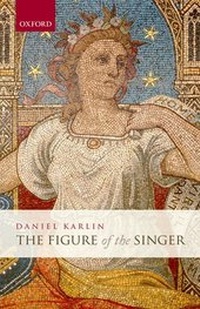
The Figure of the Singer
Published on 4. July 2013
Book
Hardback
232 pages
978-0-19-921398-6 (ISBN)
Description
Why did poets continue to call themselves singers, and their poems songs, long after the formal link between poetry and music had been severed? Daniel Karlin explores the origin and meaning of the 'figure of the singer', tracing its roots in classical mythology and in the Bible, and following its rise from the 'adventurous song' of Milton's Paradise Lost to its apotheosis in the nineteenth century-by which time it had also become an oppressive cliche. Poets might embrace, or resist, this dominant figure of their art, but could not ignore it. Shadowing the metaphor is another figure, that of the literal singer, a source of fascination, and rivalry, to poets who are confined to words on the page.
The book opens with an emblematic figure of the greatest of all 'singers': Homer, playing his lyre, at the centre of the frieze of poets on the Albert Memorial in London. Chapters on the tragicomic rise and fall of 'the bard', on the link between female song and suffering, and on the metaphor of poetry as birdsong, are followed by detailed readings of poems by Tennyson, Robert Browning, Elizabeth Barrett Browning, Walt Whitman, and Thomas Hardy. The final chapter, on the songs of Bob Dylan, suggests that recording technology has given fresh impetus to the quarrel (which is also a love-affair) between poetic language and song.
The Figure of the Singer offers a profound and stimulating analysis of the idea of poetry as song and of the complex, troubled relations between voice and text
The book opens with an emblematic figure of the greatest of all 'singers': Homer, playing his lyre, at the centre of the frieze of poets on the Albert Memorial in London. Chapters on the tragicomic rise and fall of 'the bard', on the link between female song and suffering, and on the metaphor of poetry as birdsong, are followed by detailed readings of poems by Tennyson, Robert Browning, Elizabeth Barrett Browning, Walt Whitman, and Thomas Hardy. The final chapter, on the songs of Bob Dylan, suggests that recording technology has given fresh impetus to the quarrel (which is also a love-affair) between poetic language and song.
The Figure of the Singer offers a profound and stimulating analysis of the idea of poetry as song and of the complex, troubled relations between voice and text
Reviews / Votes
... he [Karlin] is excellent, as we might expect, on echoes between the Brownings ... in general, this is an intriguing new perspective on an old, ubiquitous metaphor, and at its best, a riverting account of how the figure of the singer is turned by some nineteehth-century poets to bring out the doubleness of voice and text, performance and print, which lies at the heart of poetry itself. * Angela Leighton, The Times Literary Supplement * The Figure of the Singer will be a useful complement to any interdisciplinary study of literature and music ... It is a beautifully written, clearly argued contribution to the age-old inquiry into the efficacy and joy of the arts * Jessica Fay, English Studies Review * striking ... an admirable work * John Morton, Tennyson Research Bulletin *More details
Language
English
Place of publication
Oxford
United Kingdom
Target group
College/higher education
Professional and scholarly
Students and scholars of poetry and poetics; students and scholars of the literature of the long nineteenth century.
Illustrations
4pp plate section
Dimensions
Height: 241 mm
Width: 162 mm
Thickness: 20 mm
Weight
528 gr
ISBN-13
978-0-19-921398-6 (9780199213986)
Copyright in bibliographic data and cover images is held by Nielsen Book Services Limited or by the publishers or by their respective licensors: all rights reserved.
Schweitzer Classification
Other editions
Additional editions
Daniel Karlin
The Figure of the Singer
E-Book
07/2013
1st Edition
OUP eBook
€43.99
Available for download
Person
Daniel Karlin was born in London. He did his BA (1971-74) and PhD (1975-78) at Queens' College, Cambridge. He held a Junior Research Fellowship at Merton College, Oxford (1978-1980), beafore teaching at University College London (1980-2004), Boston University (2005-6), and the University of Sheffield (2006-2010). Karlin has taught at Bristol since 2010. He is currently Winterstoke Professor of English Literature.
Content
Preface ; Introduction: Two lyres ; 1. Song and power: the Bard ; 2. Women poets as singers in the nineteenth century ; 3. Hark! Nineteenth-century poetry and the song of birds ; 4. Songs in books (1): Pippa Passes ; 5. Songs in books (2): The Princess ; 6. Aurora Leigh: expressing the old scriptures ; 7. Walt Whitman: song and the making of poems ; 8. Thomas Hardy: Bygone Occasions ; 9. 'Columbia Recording Artist Bob Dylan'