

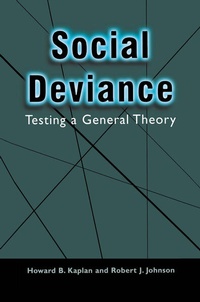
Social Deviance
Testing a General Theory
Published on 23. October 2012
Book
Paperback/Softback
XIII, 232 pages
978-1-4613-5179-5 (ISBN)
Description
Inthisvolumewereportaseriesofanalysesofpaneldatadesignedtotestaspects ofacomprehensivetheoreticalstatementaboutthesocialandsocial-psychological processesthatplayapartintheonsetandcourse(includingcessationandcontinu- ationatincreased,decreased,orconstantlevels)ofdeviantbehavior. InPartIwe outlineourtheoreticalandmethodologicalapproachtothestudyofdeviantbehav- ior. ChapterIpresentsacomprehensivetheoreticalstatementthathasevolvedover aperiodofmorethantwodecades(Kaplan,1972,1975b,1980,1982,1983,1984, 1986,1995,1996)outofaconsiderationofthetheoreticalandempiricalreports ofothersandinresponsetoourownearliertestsofthegeneraltheory(Kaplan & Damphousse,1997;Kaplan&Fukurai,1992;Kaplan&Johnson,1991;Kaplan, Johnson, &Bailey,1986,1987,1988;Kaplan,Martin, &Johnson,1986;Kaplan & Peck,1992).
Thestatementisorganizedasaresponsetofourinterrelatedquestions: Whatsocialandsocial-psychologicalfactors(1)influencethesocialdefinitionof deviantbehavior;(2)motivateindividualstoperformdeviantbehaviors;(3)facili- tatetheperformanceofdeviantbehaviorindependentlyoforininteractionwithfac- torsthatinfluencemotivationtoengageindeviantbehavior;and(4)influencethe stabilityofdeviantbehavior,independentlyoforininteractionwithfactorsthat influencetheinitiationofdeviantbehavior?Thisstatementprovidesaframework andrationaleforthemultivariatemodelsweestimateandreportinlaterpartsofthe volume. Chapter2providesdetailsofthepaneldesignandmultivariateanalytic techniques. Thesample,arandomhalfofthe1971cohortofseventhgradersina largeurbanschooldistrict,wastesteduptofourtimesbetweenearlyadolescence andyoungadulthood. Thetheoreticallyinformedmultivariatemodelsaretested usingtheLISRELVIprogram(Joreskog &Sorbom,1986)toestimatethestruc- turalrelationshipsamonglatentvariables. InPartIIweestimateseveralmodelsthataccountforvariationindeviant behaviormeasuredintheninthgradeintermsofconstructsmeasuredinthesev- enthandeighthgrades.
InChapter3weestimate,forallsubjectswhoprovideddata duringtheseventh,eighth,andninthgradetestings,aseriesoffourincreasingly elaboratedmodelsinwhichanewvariableisaddedtotheimmediatelypreceding modelasplayingcommonantecedentand/orinterveningexplanatoryroles. The vii viii Preface mostinclusivemodelhasbeenpublishedpreviouslyinitspresentform(Kaplan & Johnson,1991);thethreelessinclusivemodelshaveappearedinsomewhatdiffer- entform(Johnson &Kaplan,1987;Kaplan,Johnson, &Bailey,1986,1987;Kaplan, Martin, &Johnson,1986). Thepresentversionsdifferfromtheearlierversionsin termsofexogenousvariables,measurementvariables,samplesize,andinclusionof correlateddisturbancesinthemodels. Therepetitionofthemostinclusivemodel andthereestimationoftheotherthreemodelspermitustodescribeandeasilycom- municatetheeffectsofeachsuccessivetheoreticalelaborationandtodiscussthe resultsingreaterdetailthanpublicationintheperiodicalliteraturegenerallyper- mits. Thereproductionofthemostinclusivemodelalsoprovidesabaseagainst whichwecancomparethemodelsestimatedinthenexttwochapters.
InChapters 4and5,respectively,weestimatethismodelforsubgroupsinordertotestassump- tionsabouttheequivalenceofmeasurementmodelsandstructuralinvariance betweenthedifferentsocialgroupings. InChapter4weestimatethemodelfor malesandfemales. InChapter5weestimatethemostinclusiveexplanatorymodel forsubgroupsdifferentiatedaccordingtorace/ethnicity. InPartIIIwereportanalysesthataddressthevalidityofthemodelasan explanationofdeviantbehaviorthatismeasuredandexpressedinyoungadult- hood. InChapter6theelaboratedmodelasanexplanationofdeviantbehaviorin youngadulthoodisestimatedforthemostinclusivegroupingavailable,white malesandfemalesconsideredtogether. Whenwewereattemptingtoconductsub- groupanalysisforgroupsdifferentiatedaccordingtorace/ethnicity,itbecame apparentthat-unlikethesituationinpredictingdeviantbehaviorinearlyadoles- cence-themeasuresofdeviantbehaviorusedfortheyoungadultanalyses formedavalidconstructonlyforthewhitesubjects. Themeasuresoftheconstruct werenotsufficientlyvalidorreliabletopermitestimationinasampleofyoung blackadults. Further,forHispanicsubjectsthesamplesizesimplywastoosmall toprovidestableestimatesrelativetothenumberofparametersinthemostcom- prehensivemodel.
Hence,inordertoconsiderthedifferentialexplanatorypower oftheelaboratedmodelinaccountingfordeviantbehaviorinyoungadulthood andearlyadolescence,respectively,weusedthemodelsforwhitesubjectsas pointsofreference. InChapter7weapplytheelaboratedmodeltotheexplana- tionofdevianceinyoungadulthoodformalesandfemalesconsideredseparately. InPartIVwesummarizetheanalysesandofferconclusionsaboutthe significanceofthiswork. Chapter8considerstheusefulnessofthecomprehen- sivetheoryinexplainingsomeofthevarianceindeviantbehavioratdifferent pointsinthelifecycleandspecifyingthenatureoftherelationshipsamong explanatoryvariables. Inclosing,weofferillustrativesubsequentstudiesthat buildontheearliertheoryandanalyticstrategies. Acknowledgments ThisworkwassupportedinpartbyresearchgrantsROIDA02497andROI DA04310andbyaResearchScientistAward(K05DAOOI36)tothefIrst-named author,allfromtheNationalInstituteonDrugAbuse. Wearepleasedtorecognizetheunwaveringdedicationof"Sam"McLean, HollyGroves,andJeffersonRogerstothetechnicalproductionofthemanuscript. Wherewerecognizetheoriginsofourideas,weacknowledgethesesources byappropriatetextualcitations.
However,manyofourideas-particularlyas thesearesynthesizedinourcomprehensivetheoryofdeviantbehavior-arethe productsoflifetimesofscholarlyactivityandtheprecisesourcesororiginalityof theseideascannolongerbedetermined. Thus,oftenwemustleaveittoothersto makejudgmentsaboutthehistoricalroots,originality,orindependentcreationof thetheoreticalstatementsinthisvolume. ix Contents PART I. THEORETICAL AND METHODOLOGICAL APPROACHES TO THE STUDY OF DEVIANT BEHAVIOR 1. Toward a General Theory of Deviant Behavior 3 TheNatureofDeviance...3 MotivationtoCommitDeviantActsthatViolateMembership GroupNorms...6 MotivationtoCommitDeviantActsthatConformtoMembershipGroup Norms...9 ActingOutDeviantDispositions 10 ContinuityofDeviantBehavior...17 2. Method...25 SampleandDataCollection...25 Analysis...26 MeasurementModel 26 StructuralModel 30 SubgroupComparisons 36 PART II. DEVIANT BEHAVIOR IN ADOLESCENCE 3. An Elaboration Strategy for the Study of Deviant Behavior 41 ModelI:Self-Rejection intheExplanationofDeviance...43 ModelII:ContinuityofEarlyDeviance...47 Methods...53 xi xii Contents Results...58 DiscussionofModelsIandII 63 ModelIII:DeviantPeerAssociationsandDeviantBehavior 66 Theory...67 Methods...7
3 Results...75 DiscussionofModelIII...79 Conclusion...86 ModelIV:NegativeSocialSanctionsfromtheLabelingPerspective 87 EmpiricalSupport 88 TheoreticalIssues 89 ElaboratingaModelofDeviantBehavior 96 Method 100 Results...103 DiscussionofModelIV...108 Appendix...119 4. GenderasaModeratorinExplanationsofAdolescentDeviance*.
Thestatementisorganizedasaresponsetofourinterrelatedquestions: Whatsocialandsocial-psychologicalfactors(1)influencethesocialdefinitionof deviantbehavior;(2)motivateindividualstoperformdeviantbehaviors;(3)facili- tatetheperformanceofdeviantbehaviorindependentlyoforininteractionwithfac- torsthatinfluencemotivationtoengageindeviantbehavior;and(4)influencethe stabilityofdeviantbehavior,independentlyoforininteractionwithfactorsthat influencetheinitiationofdeviantbehavior?Thisstatementprovidesaframework andrationaleforthemultivariatemodelsweestimateandreportinlaterpartsofthe volume. Chapter2providesdetailsofthepaneldesignandmultivariateanalytic techniques. Thesample,arandomhalfofthe1971cohortofseventhgradersina largeurbanschooldistrict,wastesteduptofourtimesbetweenearlyadolescence andyoungadulthood. Thetheoreticallyinformedmultivariatemodelsaretested usingtheLISRELVIprogram(Joreskog &Sorbom,1986)toestimatethestruc- turalrelationshipsamonglatentvariables. InPartIIweestimateseveralmodelsthataccountforvariationindeviant behaviormeasuredintheninthgradeintermsofconstructsmeasuredinthesev- enthandeighthgrades.
InChapter3weestimate,forallsubjectswhoprovideddata duringtheseventh,eighth,andninthgradetestings,aseriesoffourincreasingly elaboratedmodelsinwhichanewvariableisaddedtotheimmediatelypreceding modelasplayingcommonantecedentand/orinterveningexplanatoryroles. The vii viii Preface mostinclusivemodelhasbeenpublishedpreviouslyinitspresentform(Kaplan & Johnson,1991);thethreelessinclusivemodelshaveappearedinsomewhatdiffer- entform(Johnson &Kaplan,1987;Kaplan,Johnson, &Bailey,1986,1987;Kaplan, Martin, &Johnson,1986). Thepresentversionsdifferfromtheearlierversionsin termsofexogenousvariables,measurementvariables,samplesize,andinclusionof correlateddisturbancesinthemodels. Therepetitionofthemostinclusivemodel andthereestimationoftheotherthreemodelspermitustodescribeandeasilycom- municatetheeffectsofeachsuccessivetheoreticalelaborationandtodiscussthe resultsingreaterdetailthanpublicationintheperiodicalliteraturegenerallyper- mits. Thereproductionofthemostinclusivemodelalsoprovidesabaseagainst whichwecancomparethemodelsestimatedinthenexttwochapters.
InChapters 4and5,respectively,weestimatethismodelforsubgroupsinordertotestassump- tionsabouttheequivalenceofmeasurementmodelsandstructuralinvariance betweenthedifferentsocialgroupings. InChapter4weestimatethemodelfor malesandfemales. InChapter5weestimatethemostinclusiveexplanatorymodel forsubgroupsdifferentiatedaccordingtorace/ethnicity. InPartIIIwereportanalysesthataddressthevalidityofthemodelasan explanationofdeviantbehaviorthatismeasuredandexpressedinyoungadult- hood. InChapter6theelaboratedmodelasanexplanationofdeviantbehaviorin youngadulthoodisestimatedforthemostinclusivegroupingavailable,white malesandfemalesconsideredtogether. Whenwewereattemptingtoconductsub- groupanalysisforgroupsdifferentiatedaccordingtorace/ethnicity,itbecame apparentthat-unlikethesituationinpredictingdeviantbehaviorinearlyadoles- cence-themeasuresofdeviantbehaviorusedfortheyoungadultanalyses formedavalidconstructonlyforthewhitesubjects. Themeasuresoftheconstruct werenotsufficientlyvalidorreliabletopermitestimationinasampleofyoung blackadults. Further,forHispanicsubjectsthesamplesizesimplywastoosmall toprovidestableestimatesrelativetothenumberofparametersinthemostcom- prehensivemodel.
Hence,inordertoconsiderthedifferentialexplanatorypower oftheelaboratedmodelinaccountingfordeviantbehaviorinyoungadulthood andearlyadolescence,respectively,weusedthemodelsforwhitesubjectsas pointsofreference. InChapter7weapplytheelaboratedmodeltotheexplana- tionofdevianceinyoungadulthoodformalesandfemalesconsideredseparately. InPartIVwesummarizetheanalysesandofferconclusionsaboutthe significanceofthiswork. Chapter8considerstheusefulnessofthecomprehen- sivetheoryinexplainingsomeofthevarianceindeviantbehavioratdifferent pointsinthelifecycleandspecifyingthenatureoftherelationshipsamong explanatoryvariables. Inclosing,weofferillustrativesubsequentstudiesthat buildontheearliertheoryandanalyticstrategies. Acknowledgments ThisworkwassupportedinpartbyresearchgrantsROIDA02497andROI DA04310andbyaResearchScientistAward(K05DAOOI36)tothefIrst-named author,allfromtheNationalInstituteonDrugAbuse. Wearepleasedtorecognizetheunwaveringdedicationof"Sam"McLean, HollyGroves,andJeffersonRogerstothetechnicalproductionofthemanuscript. Wherewerecognizetheoriginsofourideas,weacknowledgethesesources byappropriatetextualcitations.
However,manyofourideas-particularlyas thesearesynthesizedinourcomprehensivetheoryofdeviantbehavior-arethe productsoflifetimesofscholarlyactivityandtheprecisesourcesororiginalityof theseideascannolongerbedetermined. Thus,oftenwemustleaveittoothersto makejudgmentsaboutthehistoricalroots,originality,orindependentcreationof thetheoreticalstatementsinthisvolume. ix Contents PART I. THEORETICAL AND METHODOLOGICAL APPROACHES TO THE STUDY OF DEVIANT BEHAVIOR 1. Toward a General Theory of Deviant Behavior 3 TheNatureofDeviance...3 MotivationtoCommitDeviantActsthatViolateMembership GroupNorms...6 MotivationtoCommitDeviantActsthatConformtoMembershipGroup Norms...9 ActingOutDeviantDispositions 10 ContinuityofDeviantBehavior...17 2. Method...25 SampleandDataCollection...25 Analysis...26 MeasurementModel 26 StructuralModel 30 SubgroupComparisons 36 PART II. DEVIANT BEHAVIOR IN ADOLESCENCE 3. An Elaboration Strategy for the Study of Deviant Behavior 41 ModelI:Self-Rejection intheExplanationofDeviance...43 ModelII:ContinuityofEarlyDeviance...47 Methods...53 xi xii Contents Results...58 DiscussionofModelsIandII 63 ModelIII:DeviantPeerAssociationsandDeviantBehavior 66 Theory...67 Methods...7
3 Results...75 DiscussionofModelIII...79 Conclusion...86 ModelIV:NegativeSocialSanctionsfromtheLabelingPerspective 87 EmpiricalSupport 88 TheoreticalIssues 89 ElaboratingaModelofDeviantBehavior 96 Method 100 Results...103 DiscussionofModelIV...108 Appendix...119 4. GenderasaModeratorinExplanationsofAdolescentDeviance*.
More details
Edition
Softcover reprint of the original 1st ed. 2001
Language
English
Place of publication
New York
United States
Target group
Professional and scholarly
Research
Illustrations
XIII, 232 p.
Dimensions
Height: 235 mm
Width: 155 mm
Thickness: 14 mm
Weight
388 gr
ISBN-13
978-1-4613-5179-5 (9781461351795)
DOI
10.1007/978-1-4615-0655-3
Schweitzer Classification
Other editions
Additional editions
Book
11/2001
Kluwer Academic/Plenum Publishers
€53.49
Shipment within 10-15 days
Content
I. Theoretical and Methodological Approaches to the Study of Deviant Behavior.- 1. Toward a General Theory of Deviant Behavior.- 2. Method.- II. Deviant Behavior in Adolescence.- 3. An Elaboration Strategy for the Study of Deviant Behavior.- 4. Gender as a Moderator in Explanations of Adolescent Deviance.- 5. Multigroup Analysis of the General Theory of Deviant Behavior: Three-Wave Panel Analysis by Race.- III. Deviant Behavior from Adolescence to Young Adulthood.- 6. Deviance from Adolescence to Young Adulthood: The Experience of White-Anglo Adolescents.- 7. Deviance and Gender: Adolescence to Young Adulthood.- IV. Summary And Conclusions.- 8. The Study of Deviant Behavior: Retrospect and Prospect.- References.