


The Diversity Paradox
Parties, Legislatures, and the Organizational Foundations of Representation in America
Published on 24. May 2012
Book
Hardback
224 pages
978-0-19-989172-6 (ISBN)
Description
Majority-minority group relations are central to the proper functioning of any organization, but these relationships are especially important in democratically-elected legislatures. In legislatures, for example, group dynamics affect how the legislature operates, who is valued enough to play a critical decision-making role, and what voices matter in determining policy outcomes.
In The Diversity Paradox, George Krause and Kristin Kanthak explore the nature of these relationships, particularly their effect on both the valuation of minority group legislators and the ideological stability of the legislature in general. Interestingly, they demonstrate that an increase in a minority group's size within a legislature actually leads to the devaluation of individual minority group members. They call this the 'diversity paradox': In fact, representative institutions such as legislatures face a 'diversity paradox': when the size of a minority group increases beyond mere 'tokenism' in representative institutions such as legislatures, it tends to create an unintended backlash toward the minority group's members that emanates from both majority and fellow minority group members. Representative institutions, therefore, can only fulfill the promise of adequate representation of minority group interests only by conquering this paradox. They can accomplish this through jointly attaining sufficient 'numbers' and overcoming the coordination problems those numbers create. This is no small task and no small issue: the inclusion of minority group voices in representative institutions is critical in a wide range of political decisions, ranging from legislative gender quotas in the new Iraqi constitution to attempts in the U.S. to increase minority representation through redistricting. The question of whether or not an increase in descriptive representation (numbers) has an impact on substantive representation (policy) is central to such efforts, and therefore The Diversity Paradox has important ramifications for all students interested in democratic representation.
In The Diversity Paradox, George Krause and Kristin Kanthak explore the nature of these relationships, particularly their effect on both the valuation of minority group legislators and the ideological stability of the legislature in general. Interestingly, they demonstrate that an increase in a minority group's size within a legislature actually leads to the devaluation of individual minority group members. They call this the 'diversity paradox': In fact, representative institutions such as legislatures face a 'diversity paradox': when the size of a minority group increases beyond mere 'tokenism' in representative institutions such as legislatures, it tends to create an unintended backlash toward the minority group's members that emanates from both majority and fellow minority group members. Representative institutions, therefore, can only fulfill the promise of adequate representation of minority group interests only by conquering this paradox. They can accomplish this through jointly attaining sufficient 'numbers' and overcoming the coordination problems those numbers create. This is no small task and no small issue: the inclusion of minority group voices in representative institutions is critical in a wide range of political decisions, ranging from legislative gender quotas in the new Iraqi constitution to attempts in the U.S. to increase minority representation through redistricting. The question of whether or not an increase in descriptive representation (numbers) has an impact on substantive representation (policy) is central to such efforts, and therefore The Diversity Paradox has important ramifications for all students interested in democratic representation.
More details
Language
English
Place of publication
New York
United States
Target group
College/higher education
Illustrations
18 charts and graphs
Dimensions
Height: 240 mm
Width: 161 mm
Thickness: 17 mm
Weight
499 gr
ISBN-13
978-0-19-989172-6 (9780199891726)
Copyright in bibliographic data and cover images is held by Nielsen Book Services Limited or by the publishers or by their respective licensors: all rights reserved.
Schweitzer Classification
Other editions
Additional editions
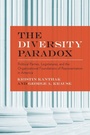
Kristin Kanthak | George Krause
The Diversity Paradox
Parties, Legislatures, and the Organizational Foundations of Representation in America
Book
05/2012
Oxford University Press Inc
€52.70
Shipment within 15-20 days

Kristin Kanthak | George A. Krause
The Diversity Paradox
Political Parties, Legislatures, and the Organizational Foundations of Representation in America
E-Book
03/2012
1st Edition
OUP eBook
€17.49
Available for download
Persons
Kristin Kanthak is Assistant Professor of Political Science at the University of Pittsburgh. George Krause is Professor of Political Science at the University of Pittsburgh.
Content
Table of Contents ; Preface ; Chapter 1: Diversity Dilemmas in Democratic Representation ; Chapter 2: Internal Valuation in Political Organizations: ; Political Parties and Gender-Based Group Dynamics in the ; U.S. House of Representatives ; Chapter 3: A Unified Theory of Colleague Valuation in Political Organizations ; Chapter 4: Testing the Unified Theory of Colleague Valuation in the ; U.S. House of Representatives ; Chapter 5: Coordination Dilemmas and the Critical Mass Problem: ; Differentiating Colleague Valuation Between Incumbents and ; Challengers in the U.S. Senate ; Chapter 6: Can Organizational Mechanisms Solve Minority Group ; Coordination Problems? Logic, Lessons, and Evidence from Legislative Caucuses in the American States ; Chapter 7: The Organizational Foundations of Democratic Representation ; References