

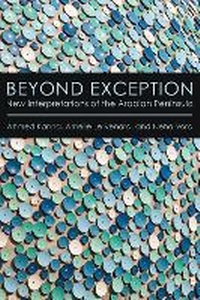
Beyond Exception
New Interpretations of the Arabian Peninsula
Published on 15. August 2020
Book
Hardback
162 pages
978-1-5017-5029-8 (ISBN)
Description
Over the nearly two decades that they have each been conducting fieldwork in the Arabian Peninsula, Ahmed Kanna, Amelie Le Renard, and Neha Vora have regularly encountered exoticizing and exceptionalist discourses about the region and its people, political systems, and prevalent cultural practices. These persistent encounters became the springboard for this book, a reflection on conducting fieldwork within a "field" that is marked by such representations. The three focus on deconstructing the exceptionalist representations that circulate about the Arabian Peninsula. They analyze what exceptionalism does, how it is used by various people, and how it helps shape power relations in the societies they study. They propose ways that this analysis of exceptionalism provides tools for rethinking the concepts that have become commonplace, structuring narratives and analytical frameworks within fieldwork in and on the Arabian Peninsula. They ask: What would not only Middle East studies, but studies of postcolonial societies and global capitalism in other parts of the world look like if the Arabian Peninsula was central rather than peripheral or exceptional to ongoing sociohistorical processes and representational practices? The authors explore how the exceptionalizing discourses that permeate Arabian Peninsula studies spring from colonialist discourses still operative in anthropology and sociology more generally, and suggest that de-exceptionalizing the region within their disciplines can offer opportunities for decolonized knowledge production.
Reviews / Votes
This thought-provoking book is a clear invitation and reminder for every reader interested in Gulf studies and involved in their production to always interrogate and revisit her/his own work, reflect and act upon her/his own research practice, thereby contributing to the "new venues for interpretations of the Arabian Peninsula" called for by the authors.(Anthropos)
More details
Language
English
Place of publication
Ithaca
United States
Target group
Professional and scholarly
Product notice
Paper over boards
Illustrations
1 b&w halftone - 1 Halftones, black and white
Dimensions
Height: 229 mm
Width: 152 mm
Thickness: 19 mm
Weight
454 gr
ISBN-13
978-1-5017-5029-8 (9781501750298)
Copyright in bibliographic data and cover images is held by Nielsen Book Services Limited or by the publishers or by their respective licensors: all rights reserved.
Schweitzer Classification
Other editions
Additional editions
Ahmed Kanna | Amelie Le Renard | Neha Vora
Beyond Exception
New Interpretations of the Arabian Peninsula
E-Book
08/2020
Cornell University Press
€17.49
Available for download
Persons
Ahmed Kanna is Associate Professor of Anthropology at University of the Pacific. He is author of Dubai, The City as Corporation, and has published articles in peer-reviewed journals including Cultural Anthropology, International Journal of Middle East Studies and Journal of Urban Affairs.
Amelie Le Renard is Sociologist and Researcher at the Centre National de la Recherche Scientifique, and author of A Society of Young Women.
Neha Vora is Associate Professor of Sociology and Anthropology at Lafayette College, and is author of Impossible Citizens and Teach for Arabia. Follow her on X @nativeinformant.
Amelie Le Renard is Sociologist and Researcher at the Centre National de la Recherche Scientifique, and author of A Society of Young Women.
Neha Vora is Associate Professor of Sociology and Anthropology at Lafayette College, and is author of Impossible Citizens and Teach for Arabia. Follow her on X @nativeinformant.
Content
Introduction: Ethnography from the Exceptional to the Everyday
1. Space, Mobility, and Shifting Identities in the Constitution of the "Field"
2. How Western Residents in Riyadh and Dubai Produce and Challenge Exceptionalism
3. Anthropology and the Educational Encounter: Archival Logics and Gendered "Backlash" in Qatar's Education City
4. Class Struggle and De-exceptionalizing the Gulf
Conclusion: Centering the Arabian Peninsula, Decolonizing the Academy
1. Space, Mobility, and Shifting Identities in the Constitution of the "Field"
2. How Western Residents in Riyadh and Dubai Produce and Challenge Exceptionalism
3. Anthropology and the Educational Encounter: Archival Logics and Gendered "Backlash" in Qatar's Education City
4. Class Struggle and De-exceptionalizing the Gulf
Conclusion: Centering the Arabian Peninsula, Decolonizing the Academy