

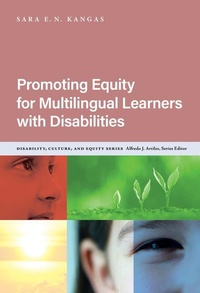
Promoting Equity for Multilingual Learners with Disabilities
Published on 24. October 2025
Book
Paperback/Softback
240 pages
978-0-8077-8680-2 (ISBN)
Description
This book examines the nature of equity for one of the most vulnerable populations of K-12 students-multilingual learners (MLs) with disabilities.
Drawing from a rich array of research and experiences as a teacher educator and policy consultant, the author demonstrates how MLs with disabilities encounter inequities in predictable, repeated ways throughout their schooling. Kangas establishes how these patterned inequities pervade education systems, school policies, and processes, ultimately stifling the learning opportunities and educational rights of students with intersecting language learning and disability needs.
Through concrete recommendations and helpful resources, the text empowers educators, researchers, and policymakers to detect and dismantle patterned inequities in their respective roles. This is an important guide for all stakeholders wishing to promote equitable learning and life opportunities for MLs with disabilities.
Book Features:
Examines contemporary research across a range of topics (e.g., service provision, individualized plans, reclassification, and policy).
Offers a lens for understanding the challenges and solutions to supporting multilingual learners with disabilities.
Focuses on equity and social justice in education systems, classrooms, and policies.
Written to be accessible for a wide range of stakeholders, including K-12 administrators and teachers, researchers, and policymakers.
Drawing from a rich array of research and experiences as a teacher educator and policy consultant, the author demonstrates how MLs with disabilities encounter inequities in predictable, repeated ways throughout their schooling. Kangas establishes how these patterned inequities pervade education systems, school policies, and processes, ultimately stifling the learning opportunities and educational rights of students with intersecting language learning and disability needs.
Through concrete recommendations and helpful resources, the text empowers educators, researchers, and policymakers to detect and dismantle patterned inequities in their respective roles. This is an important guide for all stakeholders wishing to promote equitable learning and life opportunities for MLs with disabilities.
Book Features:
Examines contemporary research across a range of topics (e.g., service provision, individualized plans, reclassification, and policy).
Offers a lens for understanding the challenges and solutions to supporting multilingual learners with disabilities.
Focuses on equity and social justice in education systems, classrooms, and policies.
Written to be accessible for a wide range of stakeholders, including K-12 administrators and teachers, researchers, and policymakers.
More details
Series
Language
English
Place of publication
New York
United States
Target group
Professional and scholarly
Product notice
Paperback (trade)
Unsewn / adhesive bound
Dimensions
Height: 228 mm
Width: 156 mm
Thickness: 16 mm
Weight
318 gr
ISBN-13
978-0-8077-8680-2 (9780807786802)
Copyright in bibliographic data and cover images is held by Nielsen Book Services Limited or by the publishers or by their respective licensors: all rights reserved.
Schweitzer Classification
Persons
Sara E. N. Kangas is an associate professor and director of the special education and ESL programs in the College of Education at Lehigh University.
Content
Contents
Preface ?xi
PART I: EQUITY FOUNDATIONS
1. ?Introduction ?3
Demographic Overview of MLs With Disabilities ?4
Inequities Experienced by MLs With Disabilities ?6
Audiences of the Book ?7
Structure and Features of the Book ?7
A Few Thoughts ?10
2. ?Patterned Inequities ?11
Pattern One: Language-or-Disability Filter ?11
Pattern Two: Unitary Identity ?14
Pattern Three: Specialization Trap ?16
Patterned Inequities Up Close: Disproportionality and Special Education Evaluation ?18
Summary ?24
PART II: EQUITY IN SYSTEMS
3. ?Organization of Services and Students ?29
The Organization of Services and Students: Key Research Findings ?30
Evidence of Patterns ?33
Responses to Patterned Inequities in the Organizing of Services and Students ?41
Summary ?48
Recommended Resources ?48
4. ?Individualized Plans and Teams ?50
The Organization of Individualized Plans and Teams: Key Research Findings ?51
Evidence of Patterns ?54
Responses to Patterned Inequities in Individualized Plans and Teams ?61
Summary ?68
Recommended Resources ?68
5. ?Teacher Education Programs and Professional Certifications ?70
The Organization of Teacher Education Programs and Certifications: Key Trends ?72
Evidence of Patterns ?73
Responses to Patterned Inequities in Teacher Education Programs and Certifications ?77
Summary ?81
PART III: EQUITY IN CLASSROOMS
6. ?High Expectations ?85
High Expectations: Key Research Findings ?87
Evidence of Patterns ?89
Responses to Patterned Inequities in Teacher Expectations ?92
Summary ?97
Recommended Resources ?97
7. ?Rigorous Instruction ?99
Rigorous Instruction: Key Research Findings ?99
Evidence of Patterns ?104
Responses to Patterned Inequities in Instruction ?107
Summary ?117
Recommended Resources ?117
8. ?Sound Data Interpretation and Use ?119
Sound Interpretation and Use of Data: Key Research Findings ?120
Evidence of Patterns ?122
Responses to Patterned Inequities in Data Use and Interpretation ?125
Summary ?129
PART IV: EQUITY IN POLICIES
9. ?Academic Standard Policies ?133
Reclassification Policies: Key Research Findings ?134
Evidence of Patterns ?137
Responses to Patterned Inequities in Academic Standard Policies ?143
Summary ?150
10. ?State Policy Contexts ?151
SEAs: Key Research Findings ?152
Evidence of Patterns ?153
Responses to Patterned Inequities in SEAs ?156
Summary ?165
Recommended Resources ?166
PART V: CONCLUSION
11. ?Pathways Forward ?169
Our Awareness ?169
Our Response ?172
Final Thoughts ?181
Notes ?183
References ?185
Index ?211
About the Author ?225
Preface ?xi
PART I: EQUITY FOUNDATIONS
1. ?Introduction ?3
Demographic Overview of MLs With Disabilities ?4
Inequities Experienced by MLs With Disabilities ?6
Audiences of the Book ?7
Structure and Features of the Book ?7
A Few Thoughts ?10
2. ?Patterned Inequities ?11
Pattern One: Language-or-Disability Filter ?11
Pattern Two: Unitary Identity ?14
Pattern Three: Specialization Trap ?16
Patterned Inequities Up Close: Disproportionality and Special Education Evaluation ?18
Summary ?24
PART II: EQUITY IN SYSTEMS
3. ?Organization of Services and Students ?29
The Organization of Services and Students: Key Research Findings ?30
Evidence of Patterns ?33
Responses to Patterned Inequities in the Organizing of Services and Students ?41
Summary ?48
Recommended Resources ?48
4. ?Individualized Plans and Teams ?50
The Organization of Individualized Plans and Teams: Key Research Findings ?51
Evidence of Patterns ?54
Responses to Patterned Inequities in Individualized Plans and Teams ?61
Summary ?68
Recommended Resources ?68
5. ?Teacher Education Programs and Professional Certifications ?70
The Organization of Teacher Education Programs and Certifications: Key Trends ?72
Evidence of Patterns ?73
Responses to Patterned Inequities in Teacher Education Programs and Certifications ?77
Summary ?81
PART III: EQUITY IN CLASSROOMS
6. ?High Expectations ?85
High Expectations: Key Research Findings ?87
Evidence of Patterns ?89
Responses to Patterned Inequities in Teacher Expectations ?92
Summary ?97
Recommended Resources ?97
7. ?Rigorous Instruction ?99
Rigorous Instruction: Key Research Findings ?99
Evidence of Patterns ?104
Responses to Patterned Inequities in Instruction ?107
Summary ?117
Recommended Resources ?117
8. ?Sound Data Interpretation and Use ?119
Sound Interpretation and Use of Data: Key Research Findings ?120
Evidence of Patterns ?122
Responses to Patterned Inequities in Data Use and Interpretation ?125
Summary ?129
PART IV: EQUITY IN POLICIES
9. ?Academic Standard Policies ?133
Reclassification Policies: Key Research Findings ?134
Evidence of Patterns ?137
Responses to Patterned Inequities in Academic Standard Policies ?143
Summary ?150
10. ?State Policy Contexts ?151
SEAs: Key Research Findings ?152
Evidence of Patterns ?153
Responses to Patterned Inequities in SEAs ?156
Summary ?165
Recommended Resources ?166
PART V: CONCLUSION
11. ?Pathways Forward ?169
Our Awareness ?169
Our Response ?172
Final Thoughts ?181
Notes ?183
References ?185
Index ?211
About the Author ?225