

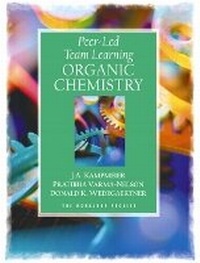
Peer-Led Team Learning
Organic Chemistry
Published on 24. April 2001
Book
Paperback/Softback
107 pages
978-0-13-028413-6 (ISBN)
Description
Peer-Led Team Learning is an innovative model in science education. Student-leaders (peers) guide the activities of small groups of students in weekly Workshop meetings. The students work through challenging problems that are designed to be solved cooperatively. The peer leaders are trained to ensure that the students are actively and productively engaged with the material and with the each other. This methodology offers a number of educational opportunities: the supportive format encourages questions and discussions that lead to conceptual understanding; students learn to work in teams and to communicate more effectively; peer leaders learn teaching and group management skills.
Two of the five books in this series provide students, instructors, learning specialists and peer leaders with all of the materials they need to successfully implement this new teaching methodology. Three other books provide specific materials for different introductory chemistry courses. This book, Workshops for Organic Chemistry, is designed exclusively for instructors and provides Workshop problems that cover the two-semester/three-quarter curriculum.
Two of the five books in this series provide students, instructors, learning specialists and peer leaders with all of the materials they need to successfully implement this new teaching methodology. Three other books provide specific materials for different introductory chemistry courses. This book, Workshops for Organic Chemistry, is designed exclusively for instructors and provides Workshop problems that cover the two-semester/three-quarter curriculum.
More details
Language
English
Place of publication
United States
Publishing group
Pearson Education (US)
Target group
Professional and scholarly
Dimensions
Width: 280 mm
Thickness: 10 mm
Weight
294 gr
ISBN-13
978-0-13-028413-6 (9780130284136)
Copyright in bibliographic data and cover images is held by Nielsen Book Services Limited or by the publishers or by their respective licensors: all rights reserved.
Schweitzer Classification
Other editions
New editions
Jack A. Kampmeier | Pratibha Varma-Nelson | Donald K. Wedegaertner
Peer-Led Team Learning
Organic Chemistry
Book
08/2005
2nd Edition
Pearson
€48.27
Article is exhausted; no reprint
Content
Preface to the Peer-Led Team Learning Series.
Introduction to Workshop for Organic Chemistry.
Workshops:
Structure: Functional Groups. Structure: Bonding. Structure: Properties: Acids and Bases. Conformational Stereochemistry: Alkanes and Cycloalkanes. Alkenes: Electrophilic Addition Mechanism: Carbocations. Review. Alkenes: Reactions. Alkynes: Synthesis. Synthesis. Chirality. Alkyl Halides and Tosylates: Mechanism I. Alkyl Halides and Tosylates: Mechanism II. Alkyl Halides and Alcohols: Synthesis. Review. Dienes: Allylic Systems: Diels-Alder. Aromaticity. Aromatic Electrophilic Substitution. Aldehydes and Ketones: Synthesis and Nucleophilic Additions. Aldehydes and Ketones: Enol/Enolate Chemistry. Synthesis and Reactions of U-Dicarbonyl Compounds. Carboxylic Acids. Carboxylic Acid Derivatives: Nucleophilic Acyl Substitution. Amines. Nucleophilic Aromatic Substitution. Phenols. Carbohydrates. Review.
Introduction to Workshop for Organic Chemistry.
Workshops:
Structure: Functional Groups. Structure: Bonding. Structure: Properties: Acids and Bases. Conformational Stereochemistry: Alkanes and Cycloalkanes. Alkenes: Electrophilic Addition Mechanism: Carbocations. Review. Alkenes: Reactions. Alkynes: Synthesis. Synthesis. Chirality. Alkyl Halides and Tosylates: Mechanism I. Alkyl Halides and Tosylates: Mechanism II. Alkyl Halides and Alcohols: Synthesis. Review. Dienes: Allylic Systems: Diels-Alder. Aromaticity. Aromatic Electrophilic Substitution. Aldehydes and Ketones: Synthesis and Nucleophilic Additions. Aldehydes and Ketones: Enol/Enolate Chemistry. Synthesis and Reactions of U-Dicarbonyl Compounds. Carboxylic Acids. Carboxylic Acid Derivatives: Nucleophilic Acyl Substitution. Amines. Nucleophilic Aromatic Substitution. Phenols. Carbohydrates. Review.