

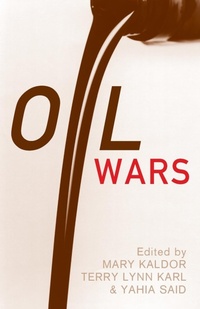
Oil Wars
Published on 20. March 2007
Book
Paperback/Softback
304 pages
978-0-7453-2478-4 (ISBN)
Description
Are oil-rich countries prone to war? And, if so, why? There is a widely held belief that contemporary wars are motivated by the desire of great powers like the United States or Russia to control precious oil resources and to ensure energy security.
This book argues that the main reason why oil-rich countries are prone to war is because of the character of their society and economy. Sectarian groups compete for access to oil resources and finance their military adventures through smuggling oil, kidnapping oil executives, or blowing up pipelines. Outside intervention only makes things worse. The use of conventional military force as in Iraq can bring neither stability nor security of supply.
This book examines the relationship between oil and war in six different regions: Angola, Azerbaijan, Colombia, Indonesia, Nigeria and Russia. Each country has substantial oil reserves, and has a long history of conflict. The contributors assess what part oil plays in causing, aggravating or mitigating war in each region and how this relation has altered with the changing nature of war. It offers a novel conceptual approach bringing together Kaldor's work on 'new wars' and Karl's work on the petro-state.
This book argues that the main reason why oil-rich countries are prone to war is because of the character of their society and economy. Sectarian groups compete for access to oil resources and finance their military adventures through smuggling oil, kidnapping oil executives, or blowing up pipelines. Outside intervention only makes things worse. The use of conventional military force as in Iraq can bring neither stability nor security of supply.
This book examines the relationship between oil and war in six different regions: Angola, Azerbaijan, Colombia, Indonesia, Nigeria and Russia. Each country has substantial oil reserves, and has a long history of conflict. The contributors assess what part oil plays in causing, aggravating or mitigating war in each region and how this relation has altered with the changing nature of war. It offers a novel conceptual approach bringing together Kaldor's work on 'new wars' and Karl's work on the petro-state.
Reviews / Votes
'[Oil Wars] offers the reader most authoritative, compelling and comprehensive coverage of the oil wars and its impact' -- Strategic Studies JournalMore details
Language
English
Place of publication
London
United Kingdom
Target group
Professional and scholarly
Product notice
Paperback (UK-trade)
Dimensions
Height: 216 mm
Width: 140 mm
Thickness: 18 mm
Weight
437 gr
ISBN-13
978-0-7453-2478-4 (9780745324784)
Copyright in bibliographic data and cover images is held by Nielsen Book Services Limited or by the publishers or by their respective licensors: all rights reserved.
Schweitzer Classification
Other editions
Persons
Mary Kaldor is Professor of Global Governance at the London School of Economics and Political Science and co-editor of Oil Wars (Pluto, 2007) and New and Old Wars (Polity, 2012).
Terry Lynn Karl is a professor of political science at Stanford University, where she has also been named the Gildred Professor of Latin American Studies and serves as a senior research scholar at the Center on Democracy, Development, and the Rule of Law. She is the author of The Paradox of Plenty: Oil Booms and Petro-States (University of California Press, 1998) and co-editor of Oil Wars (Pluto, 2007).
Yahia Said is visiting Research Fellow at the London School of Economics and the World Bank economist for Iraq. He is co-editor of Oil Wars (Pluto, 2008).
Terry Lynn Karl is a professor of political science at Stanford University, where she has also been named the Gildred Professor of Latin American Studies and serves as a senior research scholar at the Center on Democracy, Development, and the Rule of Law. She is the author of The Paradox of Plenty: Oil Booms and Petro-States (University of California Press, 1998) and co-editor of Oil Wars (Pluto, 2007).
Yahia Said is visiting Research Fellow at the London School of Economics and the World Bank economist for Iraq. He is co-editor of Oil Wars (Pluto, 2008).
Content
Introduction
1. Nigeria: Political Violence, Governance and Corporate Responsibility in a Petro-State, by Robin Luckham and Okey Ibeanu
2. Drilling in Deep Water: Oil, Business and War in Angola, by Phillippe Le Billon
3. Greed and Grievance in Chechnya, by Yahia Said
4. Oil and Conflict: The Case of Nagorno Karabakh, by Mary Kaldor
5. The Conflict in Aceh: Struggle Over Oil?, by Kirsten E. Schulze
6. Oil and Armed Conflict in Casanare, Colombia: Complex Contexts and Contingent Moments, by Jenny Pearce
Conclusions
Index
1. Nigeria: Political Violence, Governance and Corporate Responsibility in a Petro-State, by Robin Luckham and Okey Ibeanu
2. Drilling in Deep Water: Oil, Business and War in Angola, by Phillippe Le Billon
3. Greed and Grievance in Chechnya, by Yahia Said
4. Oil and Conflict: The Case of Nagorno Karabakh, by Mary Kaldor
5. The Conflict in Aceh: Struggle Over Oil?, by Kirsten E. Schulze
6. Oil and Armed Conflict in Casanare, Colombia: Complex Contexts and Contingent Moments, by Jenny Pearce
Conclusions
Index