

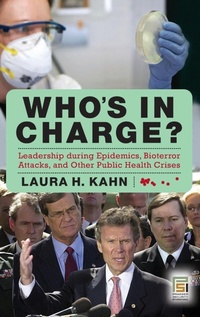
Who's in Charge?
Leadership during Epidemics, Bioterror Attacks, and Other Public Health Crises
Published on 3. September 2009
Book
Hardback
236 pages
978-0-275-99485-3 (ISBN)
Description
A detailed exploration of leadership problems that can develop during public health crises such as the anthrax attacks, SARS, and Mad Cow disease.
An imminent threat to the public health, such as the swine flu outbreak, is no time for a muddled chain of command and contradictory decision making. Who's In Charge? Leadership during Epidemics, Bioterror Attacks, and Other Public Health Crises explores the crucial relationships between political leaders, public health officials, journalists, and others to see why leadership confusion develops.
Who's In Charge? begins by looking at the overarching issues of leadership, public health administration, and the threats of bioterrorism. It then examines five recent emergencies-the 2001 anthrax attacks and 1993 cryptosporidium outbreak in the United States, the 2003 SARS outbreak in Toronto, the 2001 foot-and-mouth disease crisis, and the decade-long battle against Mad Cow Disease in the U.K. A perfect text for schools in public health, or as a reference for elected officials at every level of government, the book shows how each event developed step-by-step to pinpoint specific leadership issues. Engaging and absorbing, the work presents official reports, medical literature, first-person accounts from officials and journalists, and discussions of the role of law enforcement and the military during health care emergencies.
First-person accounts from leaders involved in the actual crises, as well as leading experts, scientists, and others
Primary documents including excerpts from official reports and the medical literature
Chronologies of five recent public health emergencies
A comprehensive index organized by disease and by individuals involved in emergency response
An imminent threat to the public health, such as the swine flu outbreak, is no time for a muddled chain of command and contradictory decision making. Who's In Charge? Leadership during Epidemics, Bioterror Attacks, and Other Public Health Crises explores the crucial relationships between political leaders, public health officials, journalists, and others to see why leadership confusion develops.
Who's In Charge? begins by looking at the overarching issues of leadership, public health administration, and the threats of bioterrorism. It then examines five recent emergencies-the 2001 anthrax attacks and 1993 cryptosporidium outbreak in the United States, the 2003 SARS outbreak in Toronto, the 2001 foot-and-mouth disease crisis, and the decade-long battle against Mad Cow Disease in the U.K. A perfect text for schools in public health, or as a reference for elected officials at every level of government, the book shows how each event developed step-by-step to pinpoint specific leadership issues. Engaging and absorbing, the work presents official reports, medical literature, first-person accounts from officials and journalists, and discussions of the role of law enforcement and the military during health care emergencies.
First-person accounts from leaders involved in the actual crises, as well as leading experts, scientists, and others
Primary documents including excerpts from official reports and the medical literature
Chronologies of five recent public health emergencies
A comprehensive index organized by disease and by individuals involved in emergency response
Reviews / Votes
"A perfect text for schools in public health, or as a reference for elected officials at every level of government, the book shows how each event developed step-by-step to pinpoint specific leadership issues. Engaging and absorbing, the work presents official reports, medical literature, first-person accounts from officials and journalists, and discussions of the role of law enforcement and the military during health care emergencies." - Veterinaria Italiana "The book can be used as a supplemental text for courses in public health, or as a reference for elected officials at every level." - SciTech Book News "Kahn's examples of the generalities between the political and bureaucratic gravity fields in government is expanded in the first few chapters into an excellent framework of historical facts and lessons learned. . . . If you want to better understand the 'how' and 'why' behind the United States' health care responses to H1N1 Influenza Outbreak and the Haitian earthquake disaster, read this book!" - Journal of Homeland Security and Emergency Management "This well-written, thoroughly researched, and authoritative book will interest public health and medical professionals and public policy students, along with the general public. Recommended. Lower-level undergraduates and above; general readers." - Choice "Who's in Charge? is written in an easy, informal style that can be understood by readers with minimal knowledge about medicine and public health....the content is strong, and the result is a useful, thought-provoking book and valuable resource for public officials. The volume also raises a number of important policy issues that warrant attention and action-or at least serious reflection-by those likely to be in charge the next time disaster comes calling." - Health Affairs "Who's in Charge? Leadership During Epidemics, Bioterror Attacks, and Other Public Health Crises is a well researched and easily readable book that offers valuable insight into many leadership challenges that politicians, health authorities, and medical scientists faced when dealing with some large and widely publicized health crises. ... This text is a valuable contribution." - JAVMAMore details
Series
Language
English
Place of publication
United States
Publishing group
Bloomsbury Publishing Plc
Target group
College/higher education
Professional and scholarly
Dimensions
Height: 240 mm
Width: 161 mm
Thickness: 18 mm
Weight
540 gr
ISBN-13
978-0-275-99485-3 (9780275994853)
Copyright in bibliographic data and cover images is held by Nielsen Book Services Limited or by the publishers or by their respective licensors: all rights reserved.
Schweitzer Classification
Other editions
Additional editions
Laura H. Kahn
Who's in Charge?
Leadership During Epidemics, Bioterror Attacks, and Other Public Health Crises
E-Book
09/2009
1st Edition
Praeger Publishers Inc
€56.49
Available for download
Person
Laura H. Kahn is a physician and research scholar in the Program on Science and Global Security at the Woodrow Wilson School of Public and International Affairs at Princeton University, Princeton, NJ.
Content
Preface
Acknowledgments
1. Understanding Leadership
An Overview of Leadership
Studying Public Health Leadership
Political Leaders and Bureaucrats
Defining Leadership
2. The Long March to Improving the Public's Health
Infectious Disease Epidemics
Vaccines: A Fortunate Coincidence
An Unfortunate Side Effect of Hospitals
Early Public Health Epidemics in the Newly Formed United States
Sweeping Social Changes in Europe
The Father of Epidemiology
Crossing Borders: European Influences on Early American Public Health Efforts
Awakenings: A Long-Awaited Breakthrough
The Germ Theory of Disease
The Civil War and the Changing Face of U.S. Public Health
Postwar Public Health Developments
The Beginnings of International Health
Pandemic Influenza in the Early 20th Century
The Beginnings of the World Health Organization
The HIV/AIDS Pandemic
Public Health Past, Present, and Future
3. Microbes as Weapons
Biowarfare and Bioterrorism through the Ages
Advances in the 20th Century
The Role of the United States
The Role of the Soviet Union
Terrorist Acts by Groups and Individuals
Emerging Concerns
4. Rising to the Occasion
Political Leadership during Infectious Disease Crises
Anthrax Attack, Fall 2001, Hamilton Township, New Jersey
Mayor Glen D. Gilmore, Hamilton Township, New Jersey
Cryptosporidium Outbreak, Spring 1993, Milwaukee, Wisconsin
Mayor John Norquist, Milwaukee, Wisconsin
Severe Acute Respiratory Syndrome (SARS), Spring 2003, Toronto, Canada
Deputy Mayor Case Ootes, Toronto, Canada
Conclusion
5. Success Favors the Prepared Public Health Leader
Anthrax Attacks in New Jersey, Florida, Maryland, and New York
New Jersey
Florida
Maryland
New York City
Cryptosporidium in Milwaukee, Wisconsin
SARS in Toronto, Canada
Conclusion
6. Confronting Uncertainty
The 1976-77 Swine Flu Dilemma
The 1997 Avian Flu Dilemma
The 2009 Swine Flu Dilemma
Leaders' Responses to Disease Threats
Information Required for Decision Making
Conclusion
7. Part I: The Vital Link between Animal and Human Health
The Impact of Animal Health Crises
Bovine Spongiform Encephalopathy (BSE)
Views of the Crisis
Conclusion
Part II: The Vital Link between Animal and Human Health
The Foot-and-Mouth Disease Crisis
Views of the Crisis
Summing Up
Conclusion
8. Reaching the Masses
Risk Assessment, Perception, and Communication
Smallpox Outbreak in New York City, 1947
The Changing Media
From the Media Perspective
Anthrax Outbreak in New Jersey, 2001
Cryptosporidium Outbreak in Wisconsin, 1993
SARS Outbreak in Toronto, 2003
Conclusion
9. All Hands on Deck
Worst Case Scenarios
Legal Challenges of Public Health and Bioterrorism
Improving Preparedness
A Better Model
Experts' Advice
Public Health and Emergency Management
Who's in Charge?
Epidemics and Bioterrorist Attacks: Leadership Challenges
Public Health, the Military, and the National Guard
Conclusion
10. Conclusion
Critical Need: Prepared Elected Officials
Relationships between Leaders
When Science Does Not Have the Answers
The Public Communication Roles of Different Leaders
Legal and Organizational Structures and Crisis Leadership
Training Elected Officials
Notes
Index
Acknowledgments
1. Understanding Leadership
An Overview of Leadership
Studying Public Health Leadership
Political Leaders and Bureaucrats
Defining Leadership
2. The Long March to Improving the Public's Health
Infectious Disease Epidemics
Vaccines: A Fortunate Coincidence
An Unfortunate Side Effect of Hospitals
Early Public Health Epidemics in the Newly Formed United States
Sweeping Social Changes in Europe
The Father of Epidemiology
Crossing Borders: European Influences on Early American Public Health Efforts
Awakenings: A Long-Awaited Breakthrough
The Germ Theory of Disease
The Civil War and the Changing Face of U.S. Public Health
Postwar Public Health Developments
The Beginnings of International Health
Pandemic Influenza in the Early 20th Century
The Beginnings of the World Health Organization
The HIV/AIDS Pandemic
Public Health Past, Present, and Future
3. Microbes as Weapons
Biowarfare and Bioterrorism through the Ages
Advances in the 20th Century
The Role of the United States
The Role of the Soviet Union
Terrorist Acts by Groups and Individuals
Emerging Concerns
4. Rising to the Occasion
Political Leadership during Infectious Disease Crises
Anthrax Attack, Fall 2001, Hamilton Township, New Jersey
Mayor Glen D. Gilmore, Hamilton Township, New Jersey
Cryptosporidium Outbreak, Spring 1993, Milwaukee, Wisconsin
Mayor John Norquist, Milwaukee, Wisconsin
Severe Acute Respiratory Syndrome (SARS), Spring 2003, Toronto, Canada
Deputy Mayor Case Ootes, Toronto, Canada
Conclusion
5. Success Favors the Prepared Public Health Leader
Anthrax Attacks in New Jersey, Florida, Maryland, and New York
New Jersey
Florida
Maryland
New York City
Cryptosporidium in Milwaukee, Wisconsin
SARS in Toronto, Canada
Conclusion
6. Confronting Uncertainty
The 1976-77 Swine Flu Dilemma
The 1997 Avian Flu Dilemma
The 2009 Swine Flu Dilemma
Leaders' Responses to Disease Threats
Information Required for Decision Making
Conclusion
7. Part I: The Vital Link between Animal and Human Health
The Impact of Animal Health Crises
Bovine Spongiform Encephalopathy (BSE)
Views of the Crisis
Conclusion
Part II: The Vital Link between Animal and Human Health
The Foot-and-Mouth Disease Crisis
Views of the Crisis
Summing Up
Conclusion
8. Reaching the Masses
Risk Assessment, Perception, and Communication
Smallpox Outbreak in New York City, 1947
The Changing Media
From the Media Perspective
Anthrax Outbreak in New Jersey, 2001
Cryptosporidium Outbreak in Wisconsin, 1993
SARS Outbreak in Toronto, 2003
Conclusion
9. All Hands on Deck
Worst Case Scenarios
Legal Challenges of Public Health and Bioterrorism
Improving Preparedness
A Better Model
Experts' Advice
Public Health and Emergency Management
Who's in Charge?
Epidemics and Bioterrorist Attacks: Leadership Challenges
Public Health, the Military, and the National Guard
Conclusion
10. Conclusion
Critical Need: Prepared Elected Officials
Relationships between Leaders
When Science Does Not Have the Answers
The Public Communication Roles of Different Leaders
Legal and Organizational Structures and Crisis Leadership
Training Elected Officials
Notes
Index