

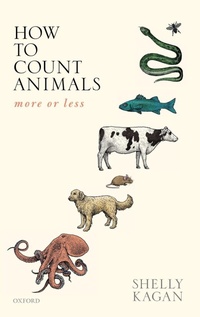
How to Count Animals, more or less
Published on 16. April 2019
Book
Hardback
320 pages
978-0-19-882967-6 (ISBN)
Description
Most people agree that animals count morally, but how exactly should we take animals into account? A prominent stance in contemporary ethical discussions is that animals have the same moral status that people do, and so in moral deliberation the similar interests of animals and people should be given the very same consideration. In How to Count Animals, more or less, Shelly Kagan sets out and defends a hierarchical approach in which people count more than animals do and some animals count more than others. For the most part, moral theories have not been developed in such a way as to take account of differences in status. By arguing for a hierarchical account of morality - and exploring what status sensitive principles might look like - Kagan reveals just how much work needs to be done to arrive at an adequate view of our duties toward animals, and of morality more generally.
More details
Series
Language
English
Place of publication
Oxford
United Kingdom
Target group
Professional and scholarly
Dimensions
Height: 240 mm
Width: 161 mm
Thickness: 22 mm
Weight
646 gr
ISBN-13
978-0-19-882967-6 (9780198829676)
Copyright in bibliographic data and cover images is held by Nielsen Book Services Limited or by the publishers or by their respective licensors: all rights reserved.
Schweitzer Classification
Other editions
Additional editions
Shelly Kagan
How to Count Animals, more or less
E-Book
04/2019
1st Edition
OUP eBook
€11.49
Available for download
Shelly Kagan
How to Count Animals, more or less
E-Book
04/2019
1st Edition
OUP eBook
€11.49
Available for download
Person
Shelly Kagan is the Clark Professor of Philosophy at Yale, where he has taught since 1995. He was an undergraduate at Wesleyan University and received his PhD in philosophy from Princeton University in 1982. Before coming to Yale, Professor Kagan taught at the University of Pittsburgh and at the University of Illinois at Chicago. He is the author of The Limits of Morality, Normative Ethics, and The Geometry of Desert. The videos of his undergraduate class on death (available online) have been popular around the world, and the book based on the course, Death, was a national bestseller in South Korea.
Content
Introduction
1: Standing
2: Unitarianism
3: The Argument from Distribution
4: Hierarchy and the Value of Outcomes
5: Status
6: Worries about Hierarchy
7: Deontology
8: Restricted Deontology
9: Hierarchical Deontology
10: Defense
11: Limited Hierarchy
1: Standing
2: Unitarianism
3: The Argument from Distribution
4: Hierarchy and the Value of Outcomes
5: Status
6: Worries about Hierarchy
7: Deontology
8: Restricted Deontology
9: Hierarchical Deontology
10: Defense
11: Limited Hierarchy