

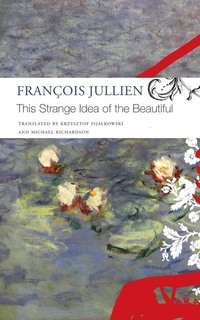
This Strange Idea of the Beautiful
Published on 14. October 2022
Book
Paperback/Softback
256 pages
978-1-80309-057-3 (ISBN)
Description
An exploration of what it means when we say something is beautiful.
Bringing together ideas of beauty from both Eastern and Western philosophy, Francois Jullien challenges the assumptions underlying our commonly agreed-upon definition of what is beautiful and offers a new way of beholding art. Jullien argues that the Western concept of beauty was established by Greek philosophy and became consequently embedded within the very structure of European languages. And due to its relationship to language, this concept has determined ways of thinking about beauty that often go unnoticed or unchecked in discussions of Western aesthetics. Moreover, through globalization, Western ideals of beauty have even spread to cultures whose ancient traditions are based upon radically different aesthetic foundations; yet, these cultures have adopted such views without question and without recognizing the cultural assumptions they contain.
Looking specifically at how Chinese texts have been translated into Western languages, Jullien reveals how the traditional Chinese refusal to isolate or abstract beauty is obscured in translation in order to make the works more understandable to Western readers. Creating an engaging dialogue between Chinese and Western ideas, Jullien reassesses the essence of beauty.
Bringing together ideas of beauty from both Eastern and Western philosophy, Francois Jullien challenges the assumptions underlying our commonly agreed-upon definition of what is beautiful and offers a new way of beholding art. Jullien argues that the Western concept of beauty was established by Greek philosophy and became consequently embedded within the very structure of European languages. And due to its relationship to language, this concept has determined ways of thinking about beauty that often go unnoticed or unchecked in discussions of Western aesthetics. Moreover, through globalization, Western ideals of beauty have even spread to cultures whose ancient traditions are based upon radically different aesthetic foundations; yet, these cultures have adopted such views without question and without recognizing the cultural assumptions they contain.
Looking specifically at how Chinese texts have been translated into Western languages, Jullien reveals how the traditional Chinese refusal to isolate or abstract beauty is obscured in translation in order to make the works more understandable to Western readers. Creating an engaging dialogue between Chinese and Western ideas, Jullien reassesses the essence of beauty.
More details
Language
English
Place of publication
Greenford
United Kingdom
Target group
Professional and scholarly
Edition type
New edition
Product notice
Paperback (trade)
Unsewn / adhesive bound
Dimensions
Height: 201 mm
Width: 132 mm
Thickness: 18 mm
Weight
295 gr
ISBN-13
978-1-80309-057-3 (9781803090573)
Copyright in bibliographic data and cover images is held by Nielsen Book Services Limited or by the publishers or by their respective licensors: all rights reserved.
Schweitzer Classification
Persons
Francois Jullien is professor at Universite Paris Diderot, a member of the Institut universitaire de France, and director of the Institut de la pensee contemporaine. His other books include In Praise of Blandness: Proceeding from Chinese Thought and Aesthetics, The Impossible Nude, and Silent Transformations, the last also published by Seagull Books. Krzysztof Fijalkowski is a senior lecturer in critical studies at the Norwich Unversity College of the Arts. Michael Richardson's translations with Krzysztof Fijalkowski include Refusal of the Shadow, Surrealism Against the Current, and States of Violence: An Essay on the End of War, the last also published by Seagull Books.
Content
Translators' Note
1. Beautiful, the Beautiful
2. The Beautiful: Exercises in Philosophy
3. In the Rut of an Impossible Definition
4. Statement: China Has Not Been Aware of the Monopolization of the Beautiful
5. What Do We Lose Owing to the Beautiful
6. The Beautiful: Lynchpin of Metaphysics
7. Separation-Medication: On What the Beautiful Is Perched
8. To" Transmit the Spirit' through the Tangible
9. Beauty Comes from Form
10. Or To Paint the Transformation
11. Variety or Variance
12. Essence/Valency
13. Resemblance/Resonance
14. Presence/Pregnancy
15. About the Nude or Beauty
16. The 'Beautiful Representation of a Thing'
17. 'How Beautiful', or What Can I do but 'Judge'?
18. Is It a Matter of Pleasure?
19. Democracy of the Beautiful
20. The Dread of the Beautiful
21. The Beautiful Dead
22. The Cult of the Beautiful
23. To Be free of Beauty?
24. To Restore to Beauty Its Strangeness
Notes
Bibliography
1. Beautiful, the Beautiful
2. The Beautiful: Exercises in Philosophy
3. In the Rut of an Impossible Definition
4. Statement: China Has Not Been Aware of the Monopolization of the Beautiful
5. What Do We Lose Owing to the Beautiful
6. The Beautiful: Lynchpin of Metaphysics
7. Separation-Medication: On What the Beautiful Is Perched
8. To" Transmit the Spirit' through the Tangible
9. Beauty Comes from Form
10. Or To Paint the Transformation
11. Variety or Variance
12. Essence/Valency
13. Resemblance/Resonance
14. Presence/Pregnancy
15. About the Nude or Beauty
16. The 'Beautiful Representation of a Thing'
17. 'How Beautiful', or What Can I do but 'Judge'?
18. Is It a Matter of Pleasure?
19. Democracy of the Beautiful
20. The Dread of the Beautiful
21. The Beautiful Dead
22. The Cult of the Beautiful
23. To Be free of Beauty?
24. To Restore to Beauty Its Strangeness
Notes
Bibliography