

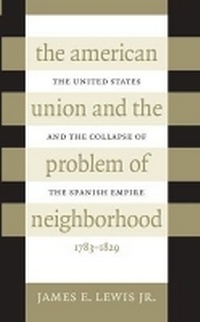
The American Union and the Problem of Neighborhood
The United States and the Collapse of the Spanish Empire, 1783-1829
Published on 21. September 1998
Book
Hardback
320 pages
978-0-8078-2429-0 (ISBN)
Description
In this book, James Lewis demonstrates the centrality of American
ideas about and concern for the union of the states in the
policymaking of the early republic. For four decades after the
nation's founding in the 1780s, he says, this focus on securing a
union operated to blur the line between foreign policies and
domestic concerns. Such leading policymakers as Thomas Jefferson, James Madison, James Monroe, John Quincy Adams, and Henry Clay worried about the challenges to the goals of the Revolution that would arise from a hostile neighborhood--whether composed of new nations outside the union or the existing states following a division of the union.
At the center of Lewis's story is the American response to
the dissolution of Spain's empire in the New World, from the
transfer of Louisiana to France in 1800 to the independence of
Spain's mainland colonies in the 1820s. The breakup of the
Spanish empire, he argues, presented a series of crises for the
unionist logic of American policymakers, leading them, finally,
to abandon a crucial element of the distinctly American approach
to international relations embodied in their own federal union.
|Uses the American response to the dissolution of Spain's empire in the New World (1783-1829) to demonstrate that American concern for the union of the states was a major factor in the policymaking of the early republic.
ideas about and concern for the union of the states in the
policymaking of the early republic. For four decades after the
nation's founding in the 1780s, he says, this focus on securing a
union operated to blur the line between foreign policies and
domestic concerns. Such leading policymakers as Thomas Jefferson, James Madison, James Monroe, John Quincy Adams, and Henry Clay worried about the challenges to the goals of the Revolution that would arise from a hostile neighborhood--whether composed of new nations outside the union or the existing states following a division of the union.
At the center of Lewis's story is the American response to
the dissolution of Spain's empire in the New World, from the
transfer of Louisiana to France in 1800 to the independence of
Spain's mainland colonies in the 1820s. The breakup of the
Spanish empire, he argues, presented a series of crises for the
unionist logic of American policymakers, leading them, finally,
to abandon a crucial element of the distinctly American approach
to international relations embodied in their own federal union.
|Uses the American response to the dissolution of Spain's empire in the New World (1783-1829) to demonstrate that American concern for the union of the states was a major factor in the policymaking of the early republic.
More details
Language
English
Place of publication
Chapel Hill
United States
Target group
College/higher education
Professional and scholarly
Dimensions
Height: 235 mm
Width: 156 mm
ISBN-13
978-0-8078-2429-0 (9780807824290)
Copyright in bibliographic data and cover images is held by Nielsen Book Services Limited or by the publishers or by their respective licensors: all rights reserved.
Schweitzer Classification
Other editions
Additional editions
James E. Lewis
The American Union and the Problem of Neighborhood
The United States and the Collapse of the Spanish Empire, 1783-1829
E-Book
11/2000
The University of North Carolina Press
€29.49
Available for download
Person
James E. Lewis Jr. is assistant professor of history at Louisiana State University in Baton Rouge.