

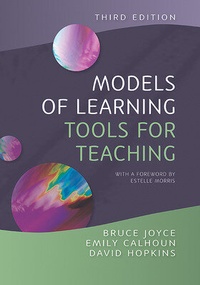
Models of Learning, Tools for Teaching
3rd Edition
Published on 16. December 2008
Book
Paperback/Softback
280 pages
978-0-335-23419-6 (ISBN)
Description
Review of the previous edition: "This powerful book makes many of its points through the use of case studies and examples. Rarely, if ever, has discussion of so wide a variety of approaches to learning been gathered together in a single volume."
British Journal of Educational TechnologyThe new edition of this bestselling text provides a comprehensive and accessible introduction to an array of models of teaching and learning.Written in a clear, engaging and accessible style, the authors offer a wide range of teaching strategies that have been developed, polished and studied over the last thirty years. Rather than being formulas to be followed word-for-word, each model draws teachers into the study of how students learn, promoting reflective action research in the classroom.Some of the models have been proven not only to accelerate learning, but also to allow pupils to engage in alternative modes of inquiry, which have been almost impossible to generate through traditional chalk-and-talk teaching.Updated features include:
A foreword by Estelle Morris A new chapter on teaching adolescents with disabilities to read A wealth of new scenarios and examples with clear guidelines for implementation A new synectics study New research and illustrations A revised Picture Word Inductive Model Revisions and updates to ten chapters Updated appendix on Peer Coaching Guides
Models of Learning, Tools for Teaching is an essential text for trainee teachers, practitioners, advisors, inspectors and teacher educators.
British Journal of Educational TechnologyThe new edition of this bestselling text provides a comprehensive and accessible introduction to an array of models of teaching and learning.Written in a clear, engaging and accessible style, the authors offer a wide range of teaching strategies that have been developed, polished and studied over the last thirty years. Rather than being formulas to be followed word-for-word, each model draws teachers into the study of how students learn, promoting reflective action research in the classroom.Some of the models have been proven not only to accelerate learning, but also to allow pupils to engage in alternative modes of inquiry, which have been almost impossible to generate through traditional chalk-and-talk teaching.Updated features include:
A foreword by Estelle Morris A new chapter on teaching adolescents with disabilities to read A wealth of new scenarios and examples with clear guidelines for implementation A new synectics study New research and illustrations A revised Picture Word Inductive Model Revisions and updates to ten chapters Updated appendix on Peer Coaching Guides
Models of Learning, Tools for Teaching is an essential text for trainee teachers, practitioners, advisors, inspectors and teacher educators.
More details
Persons
David Hopkins is the inaugural HSBC Chair in International Leadership, International arm of the Specialist Schools and Academies Trust and the Leadership Centre at the Institute of Education, University of London. Between 2002 and 2005 he served three Secretary of States as the Chief Adviser on School Standards at the Department for Education and Skills. Previously, he was Chair of the Leicester City Partnership Board and Dean of the Faculty of Education at the University of Nottingham. David is also an International Mountain Guide who still climbs regularly in the Alps and Himalayas. He has previously outlined his views on teaching quality, school improvement and large scale reform in Hopkins D. (2001) School Improvement for Real, Routledge / Falmer and Hopkins D (2007) Every School a Great School, Open University Press.
Content
PART 1: ORIENTATION
CHAPTER ONE
Learning How to Learn: The (Central?) Goal of Education
CHAPTER TWO
Hempshill Hall School
PART 2: LEARNING TO PROCESS INFORMATION
CHAPTER THREE
Learning to Think Inductively
CHAPTER FOUR
Learning to Explore Concepts
CHAPTER FIVE
Learning to Think Metaphorically with Synectics
CHAPTER SIX
Learning to Read and Write with the Picture/ Word InductiveModel
CHAPTER SEVEN
Learning to Learn Through Cooperative Inquiry
CHAPTER EIGHT
Building Multidimensional Curriculums for Learning Disabled and Literacy-Challenged Secondary School Students
PART 3: LEARNING TO STUDY ONESELF
CHAPTER NINE
Learning through Counselling
CHAPTER TEN
Learning to Study Values
PART 4: SOURCES OF DEVELOPED MODELS OF LEARNING
CHAPTER ELEVEN
An Inquiry into Learning and Teaching
CHAPTER TWELVE
Sources - Families of Models of Learning and Teaching
CHAPTER THIRTEEN
The conditions of learning: integrating models of learning and teaching
PART 5:THE LEADING EDGE
CHAPTER FOURTEEN
Learning through Simulations
CHAPTER FIFTEEN
Literacy in The Early Years: A Report
CODA
How do we learn new models of learning?
LITERATURE
APPENDIX
CHAPTER ONE
Learning How to Learn: The (Central?) Goal of Education
CHAPTER TWO
Hempshill Hall School
PART 2: LEARNING TO PROCESS INFORMATION
CHAPTER THREE
Learning to Think Inductively
CHAPTER FOUR
Learning to Explore Concepts
CHAPTER FIVE
Learning to Think Metaphorically with Synectics
CHAPTER SIX
Learning to Read and Write with the Picture/ Word InductiveModel
CHAPTER SEVEN
Learning to Learn Through Cooperative Inquiry
CHAPTER EIGHT
Building Multidimensional Curriculums for Learning Disabled and Literacy-Challenged Secondary School Students
PART 3: LEARNING TO STUDY ONESELF
CHAPTER NINE
Learning through Counselling
CHAPTER TEN
Learning to Study Values
PART 4: SOURCES OF DEVELOPED MODELS OF LEARNING
CHAPTER ELEVEN
An Inquiry into Learning and Teaching
CHAPTER TWELVE
Sources - Families of Models of Learning and Teaching
CHAPTER THIRTEEN
The conditions of learning: integrating models of learning and teaching
PART 5:THE LEADING EDGE
CHAPTER FOURTEEN
Learning through Simulations
CHAPTER FIFTEEN
Literacy in The Early Years: A Report
CODA
How do we learn new models of learning?
LITERATURE
APPENDIX