

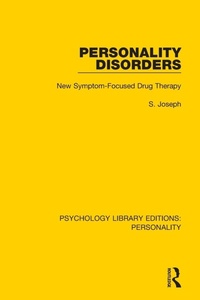
Personality Disorders
New Symptom-Focused Drug Therapy
1st Edition
Published on 26. April 2021
Book
Paperback/Softback
296 pages
978-0-367-13648-2 (ISBN)
Description
Originally published in 1997, using 50 pharmacological case studies, this title illustrates how chronic and difficult psychiatric disorders ranging from paranoid to obsessive-compulsive personality disorder can be responsive to treatment. Readers are first taught to translate DSM-IV diagnostic criteria to identifiable and treatable symptom correlates which are then targeted for treatment using rationally chosen medications or combinations of medication along with psychotherapy. Since medications rapidly control dysfunctional symptoms, psychotherapy becomes much more effective, enabling psychotherapists and patients to focus on underlying psychosocial issues and conflicts.
Personality Disorders can help you acquire an understanding of general diagnostic and treatment concepts, the ability to identify target symptoms, and the knowledge to select medications to address each symptom identified. As a result, psychotherapy will become less time-consuming and costly and therapeutic results will be felt more quickly--desirable goals in this managed care environment.
This guidebook prepares you for effective treatment of personality disorders by exploring:
symptom correlates of all personality disorders
medication groups with dosage guidelines
clinically relevant explanations for choice of symptoms and medications
clinical profiles of new antidepressants and antipsychotics
intelligent use of modern rational polypharmacy
Clinicians seeking to modernize and refine their approaches to treating personality disorders will learn effective drug therapy treatments that produce rapid results. Personality Disorders helps psychiatrists, primary care physicians, psychologists, psychiatric residents, counselors, social workers, and nurses who manage personality disorders to understand that patients' dysfunctional thoughts, perceptions, and behaviors are symptoms mediated by the brain. Medical students and clinical psychology students learn to approach personality disorders in the same clinically precise manner they would use when learning to treat nonpsychiatric illness.
Personality Disorders is an important resource for dispelling the myth that personality disorders are permanent and un-responsive to treatment as it walks readers through successful intervention strategies step by step and disorder by disorder.
Personality Disorders can help you acquire an understanding of general diagnostic and treatment concepts, the ability to identify target symptoms, and the knowledge to select medications to address each symptom identified. As a result, psychotherapy will become less time-consuming and costly and therapeutic results will be felt more quickly--desirable goals in this managed care environment.
This guidebook prepares you for effective treatment of personality disorders by exploring:
symptom correlates of all personality disorders
medication groups with dosage guidelines
clinically relevant explanations for choice of symptoms and medications
clinical profiles of new antidepressants and antipsychotics
intelligent use of modern rational polypharmacy
Clinicians seeking to modernize and refine their approaches to treating personality disorders will learn effective drug therapy treatments that produce rapid results. Personality Disorders helps psychiatrists, primary care physicians, psychologists, psychiatric residents, counselors, social workers, and nurses who manage personality disorders to understand that patients' dysfunctional thoughts, perceptions, and behaviors are symptoms mediated by the brain. Medical students and clinical psychology students learn to approach personality disorders in the same clinically precise manner they would use when learning to treat nonpsychiatric illness.
Personality Disorders is an important resource for dispelling the myth that personality disorders are permanent and un-responsive to treatment as it walks readers through successful intervention strategies step by step and disorder by disorder.
More details
Series
Language
English
Place of publication
London
United Kingdom
Publishing group
Taylor & Francis Ltd
Target group
College/higher education
Professional and scholarly
Dimensions
Height: 234 mm
Width: 156 mm
Thickness: 16 mm
Weight
456 gr
ISBN-13
978-0-367-13648-2 (9780367136482)
Copyright in bibliographic data and cover images is held by Nielsen Book Services Limited or by the publishers or by their respective licensors: all rights reserved.
Schweitzer Classification
Other editions
Additional editions
Book
03/2019
1st Edition
Routledge
€136.18
Shipment within 15-20 days
E-Book
03/2019
1st Edition
Routledge
€47.49
Available for download
E-Book
03/2019
1st Edition
Routledge
€47.49
Available for download
Content
Foreword. E. Michael Gutman Preface. Acknowledgements. Part 1: Personality Disorders and Case Studies 1. Personality Disorders: General Clinical Concepts 2. Paranoid Personality Disorder 3. Schizoid Personality Disorder 4. Schizotypal Personality Disorder 5. Antisocial Personality Disorder 6. Borderline Personality Disorder 7. Histrionic Personality Disorder 8. Narcissistic Personality Disorder 9. Avoidant Personality Disorder 10. Dependent Personality Disorder 11. Obsessive-Compulsive Personality Disorder 12. Personality Disorder, Not Otherwise Specified 13. Personality Disorder Due to a General Medical Condition (Axis I) Part 2: Clinical Profiles of Selected Psychiatric Drugs 14. Clinical Profiles of Selected New Generation Antidepressants 15. Clinical Profiles of Selected New Generation Antipsychotics. Appendix A: Alphabetical Listing of Drugs by Generic Names, with US Brand Names. Appendix B: Alphabetical Listing of Drugs by US Brand Names, with Generic Names. Appendix C: Alphabetical Listing of Abbreviations. Bibliography. Index.