

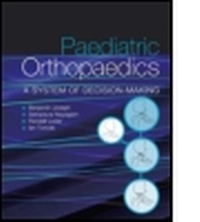
Paediatric Orthopaedics
A system of decision-making
1st Edition
Published on 31. July 2009
Book
Hardback
528 pages
978-0-340-88945-9 (ISBN)
Description
This concise postgraduate textbook of Pediatric Orthopedics focuses firmly on treatment, allowing trainee orthopedic surgeons to make an informed contribution during their Pediatrics rotation and to speak confidently about the approach to individual patients during their specialty exams. While other textbooks concentrate on theory and the comprehensive presentation of all treatment options, Paediatric Orthopaedics: A system of decision-making provides detailed practical insight into available treatments and a strategy for determining which treatment to follow in particular circumstances. Its aim is thereby to provide the gold standard for practice in the field and to be the key practical source of reference for trainees.
Reviews / Votes
"This is a very good book...[It is] targeted at higher surgical trainees and younger consultants ... and worth every penny.""-Scottish Medical Journal
"Having used this book for revision for a recent exam, I have no hesitation in recommending its approach. It appears comprehensive in the breadth of its coverage as well as its depth."
-British Orthopaedic Trainees Association
"This outstanding global work has very focused goals. It rationally evaluates a disorder and then proceeds to outline a management strategy with the emphasis on the author's personal experience. I very highly recommend this work to all orthopedists caring for children, including trainees. It also can serve as an excellent reference for pediatricians and therapists."
-Edward Abraham, Doody's Book Review Service
"the text is easy to dip-into, with heavy use of illustrations, radiographs and line drawings to make topics clear"
-Association of Surgeons in Training Yearbook, 2009-2010
"This is a very salutary book, a major work which will become a very valuable tool for every orthopaedic trainee and young orthopaedic surgeon."
-Springer
More details
Language
English
Place of publication
London
United Kingdom
Publishing group
Taylor & Francis Ltd
Target group
Professional and scholarly
Illustrations
450 s/w Abbildungen, 150 farbige Abbildungen, 450 s/w Photographien bzw. Rasterbilder, 150 farbige Zeichnungen
150 Line drawings, color; 450 Halftones, black and white; 150 Illustrations, color; 450 Illustrations, black and white
Dimensions
Height: 276 mm
Width: 210 mm
Weight
1837 gr
ISBN-13
978-0-340-88945-9 (9780340889459)
Copyright in bibliographic data and cover images is held by Nielsen Book Services Limited or by the publishers or by their respective licensors: all rights reserved.
Schweitzer Classification
Other editions
Additional editions
Benjamin Joseph | Selvadurai Nayagam | Randall T. Loder
Paediatric Orthopaedics
A system of decision-making
E-Book
07/2009
Hodder Arnold
€53.99
Available for download
Persons
Benjamin Joseph Professor of Orthopaedics, Kasturba Medical College, Manipal, Karnataka, India
Selvadurai Nayagam Consultant Orthopaedic Surgeon, Royal Liverpool Hospital, Alder Hey, Liverpool, UK
Randall T Loder Professor of Orthopaedic Surgery, and Director of Paediatric Orthopaedics, University of Indiana, Indianapolis, USA
Ian Torode Professor of Orthopaedic Surgery, Royal Children's Hospital, Melbourne, Australia Chairman, Paediatric Orthopaedic Section, Asia Pacific Orthopaedic Association
Selvadurai Nayagam Consultant Orthopaedic Surgeon, Royal Liverpool Hospital, Alder Hey, Liverpool, UK
Randall T Loder Professor of Orthopaedic Surgery, and Director of Paediatric Orthopaedics, University of Indiana, Indianapolis, USA
Ian Torode Professor of Orthopaedic Surgery, Royal Children's Hospital, Melbourne, Australia Chairman, Paediatric Orthopaedic Section, Asia Pacific Orthopaedic Association
Content
Section A: Deformities
General principles of treatment of deformities
Equinus deformity
Equinovarus
Calcaneus deformity
Cavus
Congenital vertical talus
Planovalgus deformity
Valgus deformity of the ankle and subtalar joint
Metatarsus adductus and skewfoot
Anterolateral bowing of the tibia & congenital pseudarthrosis of the tibia
Posteromedial bowing of the tibia
Tibial Torsion
Flexion deformity of the knee
Genu recurvatum
Genu varum
Genu valgum
Coxa vara
Femoral anteversion
Cubitus varus and valgus
Varus and valgus deformity of the wrist
Scoliosis
Kyphotic deformities of the spine
Torticollis
Section B. Dislocations
HIP
Developmental dysplasia of the hip
Paralytic dislocation of the hip - Cerebral palsy
Paralytic dislocation of the hip - Polio and spina bifida
Teratologic hip dislocation in Multiple Congenital Contractures
Pathological (post infective) dislocation
KNEE
Congenital dislocation of the knee
Congenital dislocation of the patella
Recurrent and habitual dislocation of the patella
SHOULDER
Recurrent and voluntary dislocation of the shoulder
ELBOW
Radial head dislocation
SPINE
Atlanto-axial dislocation (non-traumatic)
Section C. Deficiencies (35-41)
LEG
Fibular hemimelia
Tibial hemimelia
THIGH
Congenital short femur and proximal focal femoral deficiency
Distal focal femoral deficiency
FOREARM
Radial club hand
Ulnar club hand
HAND
Thumb deficiencies
Section D. Discrepancies of limb length
General principles of management of discrepancies of limb length in children
LOWER LIMB
Limb discrepancy of the Femur
Limb discrepancy of the Tibia
Discrepancies of length in the Fibula
Length discrepancy of the Metatarsals
UPPER LIMB
Length discrepancy of the Humerus
Discrepancies length of the Forearm & hand
Section E. Decreased joint mobility
General principles of management of decreased joint mobility in children
UPPER LIMB
Radio-ulnar synostosis
LOWER LIMB
Tarsal coalition
Contractures of muscles
Section F. Paralysis
General principles of management of lower motor neuron paralysis
LOWER LIMB
The paralysed hip
The paralysed knee
The paralysed foot and ankle
UPPER LIMB
The paralysed elbow
The paralysed shoulder in the child
The paralyzed elbow and shoulder in the infant
The paralyzed hand and wrist
General principles of management of upper motor neuron paralysis
The spastic foot and ankle
The spastic knee
The spastic hip
The spastic forearm and hand
The spastic thumb
Section G. Epiphyseal & physeal problems
Blount's disease
Perthes' disease
Slipped Capital Femoral Epiphysis
Physeal bar
Section H. Infections
Acute septic arthritis
Acute osteomyelitis
General principles of treatment of deformities
Equinus deformity
Equinovarus
Calcaneus deformity
Cavus
Congenital vertical talus
Planovalgus deformity
Valgus deformity of the ankle and subtalar joint
Metatarsus adductus and skewfoot
Anterolateral bowing of the tibia & congenital pseudarthrosis of the tibia
Posteromedial bowing of the tibia
Tibial Torsion
Flexion deformity of the knee
Genu recurvatum
Genu varum
Genu valgum
Coxa vara
Femoral anteversion
Cubitus varus and valgus
Varus and valgus deformity of the wrist
Scoliosis
Kyphotic deformities of the spine
Torticollis
Section B. Dislocations
HIP
Developmental dysplasia of the hip
Paralytic dislocation of the hip - Cerebral palsy
Paralytic dislocation of the hip - Polio and spina bifida
Teratologic hip dislocation in Multiple Congenital Contractures
Pathological (post infective) dislocation
KNEE
Congenital dislocation of the knee
Congenital dislocation of the patella
Recurrent and habitual dislocation of the patella
SHOULDER
Recurrent and voluntary dislocation of the shoulder
ELBOW
Radial head dislocation
SPINE
Atlanto-axial dislocation (non-traumatic)
Section C. Deficiencies (35-41)
LEG
Fibular hemimelia
Tibial hemimelia
THIGH
Congenital short femur and proximal focal femoral deficiency
Distal focal femoral deficiency
FOREARM
Radial club hand
Ulnar club hand
HAND
Thumb deficiencies
Section D. Discrepancies of limb length
General principles of management of discrepancies of limb length in children
LOWER LIMB
Limb discrepancy of the Femur
Limb discrepancy of the Tibia
Discrepancies of length in the Fibula
Length discrepancy of the Metatarsals
UPPER LIMB
Length discrepancy of the Humerus
Discrepancies length of the Forearm & hand
Section E. Decreased joint mobility
General principles of management of decreased joint mobility in children
UPPER LIMB
Radio-ulnar synostosis
LOWER LIMB
Tarsal coalition
Contractures of muscles
Section F. Paralysis
General principles of management of lower motor neuron paralysis
LOWER LIMB
The paralysed hip
The paralysed knee
The paralysed foot and ankle
UPPER LIMB
The paralysed elbow
The paralysed shoulder in the child
The paralyzed elbow and shoulder in the infant
The paralyzed hand and wrist
General principles of management of upper motor neuron paralysis
The spastic foot and ankle
The spastic knee
The spastic hip
The spastic forearm and hand
The spastic thumb
Section G. Epiphyseal & physeal problems
Blount's disease
Perthes' disease
Slipped Capital Femoral Epiphysis
Physeal bar
Section H. Infections
Acute septic arthritis
Acute osteomyelitis