

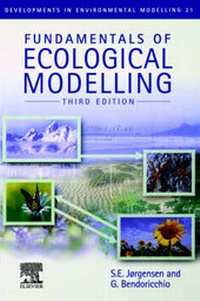
Fundamentals of Ecological Modelling: Volume 21
3rd Edition
Published on 14. August 2001
Book
Paperback/Softback
544 pages
978-0-08-044028-6 (ISBN)
Description
This is a thoroughly revised and updated edition of an authoritative introduction to ecological modelling. Sven Erik Jorgensen, Editor-in-Chief of the journal Ecological Modelling, and Giuseppe Bendoricchio, Professor of Environmental Modelling at the University of Padova, Italy, offer compelling insights into the subject. This volume explains the concepts and processes involved in ecological modelling, presents the latest developments in the field and provides readers with the tools to construct their own models.
The Third Edition features:
* A detailed discussion and step-by-step outline of the modelling procedure.
* An account of different model types including overview tables, examples and illustrations.
* A comprehensive presentation of the submodels and unit processes used in modelling.
* In-depth descriptions of the latest modelling techniques.
* Structured exercises at the end of each chapter.
* Three mathematical appendices and a subject index.
This practical and proven book very effectively combines the theory, methodology and applications of ecological modelling. The new edition is an essential, up-to-date guide to a rapidly growing field.
The Third Edition features:
* A detailed discussion and step-by-step outline of the modelling procedure.
* An account of different model types including overview tables, examples and illustrations.
* A comprehensive presentation of the submodels and unit processes used in modelling.
* In-depth descriptions of the latest modelling techniques.
* Structured exercises at the end of each chapter.
* Three mathematical appendices and a subject index.
This practical and proven book very effectively combines the theory, methodology and applications of ecological modelling. The new edition is an essential, up-to-date guide to a rapidly growing field.
Reviews / Votes
Reviews of the previous edition:"[Ecological modelling] is obviously a huge area, and this book, which is both an overview and a how-to guide, covers an enormous amount of it." --Global Ecology and Biogeography Letters
"Excellent synoptique." --Information Eaux
"...this book will be an invaluable source of information for a variety of engineers and ecologists, who have a mathematical background and may wish to gain an introduction to the rapidly growing field of ecological and environmental modelling. This book will also be very adequate for courses on this subject." --International Journal of Environmental Analytical Chemistry
More details
Series
Edition
3rd edition
Language
English
Place of publication
Oxford
United Kingdom
Publishing group
Elsevier Science & Technology
Target group
Professional and scholarly
Edition type
New edition
Dimensions
Height: 234 mm
Width: 156 mm
Weight
1000 gr
ISBN-13
978-0-08-044028-6 (9780080440286)
Copyright in bibliographic data and cover images is held by Nielsen Book Services Limited or by the publishers or by their respective licensors: all rights reserved.
Schweitzer Classification
Other editions
New editions
S.E. Jorgensen
Fundamentals of Ecological Modelling: Volume 21
Applications in Environmental Management and Research
Book
02/2011
4th Edition
Elsevier
€79.22
Shipment within 15-20 days
Previous edition

S.E. Jorgensen
Fundamentals of Ecological Modelling: Volume 21
Applications in Environmental Management and Research
Book
08/2001
Elsevier
€74.27
Article exhausted; check for reprint
Persons
Sven Erik Jorgensen has worked at the Royal Danish School of Pharmacy as Professor in Environmental Chemistry since 1965, and has also held the position of Professor in Environmental Technology at the Danish Agricultural University since 1978. His areas of professional expertise include systems ecology, ecological modelling, ecological engineering, environmental science and environmental technology. He has held the position of visiting professor at institutions in Egypt, China, France and Thailand, and has taught courses in ecological modelling in many different countries. He has acted as Secretary General of the International Society for Ecological Modelling since 1978, and took on the role of Vice President of the International Lake Environmental Committee in 1994. He has published over 200 research papers and more than 40 books. He has been Editor-in-Chief of the international peer-reviewed journal Ecological Modelling since 1974, and acts as an editorial board member on a number of other journals.
Content
Preface, Third Edition. Acknowledgements.
1. Introduction.
Physical and mathematical models.
Models as a management tool.
Models as a scientific tool.
Models and holism.
The ecosystem as an object for research.
Outline of the book.
The development of ecological and environmental models.
State of the art in the application of models.
2. Concepts of Modelling.
Introduction.
Modelling elements.
The modelling procedure.
Types of model.
Selection of the model type.
Selection of model complexity and structure.
Verification.
Sensitivity analysis.
Parameter estimation.
Validation.
Ecological modelling and quantum theory.
Modelling constraints.
Problems.
3. Ecological Processes.
Space and time resolution.
Mass transport.
Mass balance.
Energetic factors.
Settling and resuspension.
Chemical reactions.
Chemical equilibrium.
Hydrolysis.
Redox.
Acid-Base.
Adsorption and ion exchange.
Volatilization.
Biogeochemical cycles in aquatic environments.
Photosynthesis.
Algal growth.
Zooplankton growth.
Fish growth.
Single population growth.
Ecotoxicological processes.
Problems.
4. Conceptual Models.
Introduction.
Application of conceptual diagrams.
Types of conceptual diagrams.
The conceptual diagram as modelling tool.
Problems.
5. Static Models.
Introduction.
Network models.
Network analysis.
ECOPATH software.
Response models.
6. Modelling Population Dynamics.
Introduction.
Basic concepts.
Growth models in population dynamics.
Interaction between populations.
Matrix models.
Problems.
7. Dynamic Biogeochemical Models.
Introduction.
Application of dynamic models.
Eutrophication models I: Overview and two simple eutrophication models.
Eutrophication models II: A complex eutrophication model.
A wetland model.
Problems.
8. Ecotoxicological Models.
Classification and application of ecotoxicological models.
Environmental risk assessment.
Characteristics and structure of ecotoxicological models.
An overview: The application of models in ecotoxicology.
Estimation of ecotoxicological parameters.
Ecotoxicological case study I: Modelling the distribution of chromium in a Danish fjord.
Ecotoxicological case study II: Contamination of agricultural products by cadmium and lead.
Ecotoxicological case study III: A mercury model for Mex Bay, Alexandria.
Fugacity fate models.
Problems.
9. Recent Developments in Ecological and Environmental Modelling.
Introduction.
Ecosystem characteristics.
Structurally dynamic models.
Four illustrative structurally dynamic case studies.
Application of chaos theory in modelling.
Application of catastrophe theory in ecological modelling.
New approaches in modelling techniques.
Problems.
Appendix 1. Mathematical Tools.
Vectors.
Matrices.
Square matrices, eigenvalues and eigenvectors.
Differential equations.
Systems of differential equations.
Numerical methods.
Appendix 2. Definition of Expressions, Concepts and Indices.
Appendix 3. Parameters for Fugacity Models.
References.
Subject Index.
1. Introduction.
Physical and mathematical models.
Models as a management tool.
Models as a scientific tool.
Models and holism.
The ecosystem as an object for research.
Outline of the book.
The development of ecological and environmental models.
State of the art in the application of models.
2. Concepts of Modelling.
Introduction.
Modelling elements.
The modelling procedure.
Types of model.
Selection of the model type.
Selection of model complexity and structure.
Verification.
Sensitivity analysis.
Parameter estimation.
Validation.
Ecological modelling and quantum theory.
Modelling constraints.
Problems.
3. Ecological Processes.
Space and time resolution.
Mass transport.
Mass balance.
Energetic factors.
Settling and resuspension.
Chemical reactions.
Chemical equilibrium.
Hydrolysis.
Redox.
Acid-Base.
Adsorption and ion exchange.
Volatilization.
Biogeochemical cycles in aquatic environments.
Photosynthesis.
Algal growth.
Zooplankton growth.
Fish growth.
Single population growth.
Ecotoxicological processes.
Problems.
4. Conceptual Models.
Introduction.
Application of conceptual diagrams.
Types of conceptual diagrams.
The conceptual diagram as modelling tool.
Problems.
5. Static Models.
Introduction.
Network models.
Network analysis.
ECOPATH software.
Response models.
6. Modelling Population Dynamics.
Introduction.
Basic concepts.
Growth models in population dynamics.
Interaction between populations.
Matrix models.
Problems.
7. Dynamic Biogeochemical Models.
Introduction.
Application of dynamic models.
Eutrophication models I: Overview and two simple eutrophication models.
Eutrophication models II: A complex eutrophication model.
A wetland model.
Problems.
8. Ecotoxicological Models.
Classification and application of ecotoxicological models.
Environmental risk assessment.
Characteristics and structure of ecotoxicological models.
An overview: The application of models in ecotoxicology.
Estimation of ecotoxicological parameters.
Ecotoxicological case study I: Modelling the distribution of chromium in a Danish fjord.
Ecotoxicological case study II: Contamination of agricultural products by cadmium and lead.
Ecotoxicological case study III: A mercury model for Mex Bay, Alexandria.
Fugacity fate models.
Problems.
9. Recent Developments in Ecological and Environmental Modelling.
Introduction.
Ecosystem characteristics.
Structurally dynamic models.
Four illustrative structurally dynamic case studies.
Application of chaos theory in modelling.
Application of catastrophe theory in ecological modelling.
New approaches in modelling techniques.
Problems.
Appendix 1. Mathematical Tools.
Vectors.
Matrices.
Square matrices, eigenvalues and eigenvectors.
Differential equations.
Systems of differential equations.
Numerical methods.
Appendix 2. Definition of Expressions, Concepts and Indices.
Appendix 3. Parameters for Fugacity Models.
References.
Subject Index.