

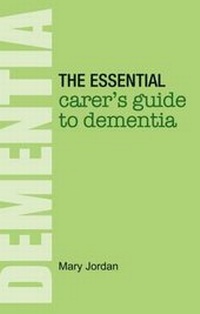
The Essential Carer's Guide to Dementia
Will be published approx. on 14. December 2014
Book
Paperback/Softback
240 pages
978-1-78161-049-7 (ISBN)
Description
"Tell me what to expect at each stage of dementia, and how to deal with it," Mary Jordan's clients frequently ask her. The advice she gives, one-to-one while working for a national dementia charity and in the workshops she runs for carers, forms the basis of this practical guide. In the Essential Carer's Guide to Dementia, Mary explains what you can expect when you receive a diagnosis of one of the many causes of dementia and what you can do to manage life going forward - how you can slow the progress of symptoms and how you can maximise available support. The earlier you start, the better you will be able to cope.
More details
Other editions
Additional editions
Mary Jordan
The Essential Carer's Guide to Dementia
E-Book
12/2014
Hammersmith Health Books
€7.19
Available for download
Person
Mary Jordan has first-hand experience of dementia, both through caring for friends and relatives and professionally in her work for a national dementia charity. She has many years of experience working for the National Health Service and in the field of medical publishing. In addition to articles and papers published in medical, nursing and social care journals and general magazines, Mary is also known for her books 'The Essential Carer's Guide', 'The Fundholder's Handbook', the award-winning 'End of Life, The Essential Guide to Caring' and 'The Essential Guide to Avoiding Dementia'.
Content
About dementia; Build a team (and why you need to do this as early as possible); The system and how to work with it; Difficulties and challenges, including challenging behaviour; Communication; Behavioural tactics (why it has to be the carer who adapts); Retaining independence; Keeping occupied; Lifestyle (what slows the condition down); Health; Practical things; Caring for yourself.