


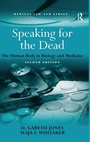
Speaking for the Dead
Cadavers in Biology and Medicine
Published on 15. February 2000
Book
Hardback
290 pages
978-0-7546-2073-0 (ISBN)
Description
This text explores issues surrounding the use of human cadavers and human tissues in science and medicine. This is an area of increasing significance in contemporary society, as more and more techniques become available for manipulating human genes and human material (including embryos, body organs and brain tissue). These issues are explored through case studies from contemporary society. Some of the most topical issues examined include plastination of human bodies as an art form, the use of biopsies from surgical operations, the ethics of using human DNA and stem cells in research, and the debate surrounding the transplantation of animal tissue and organs into humans.
More details
Language
English
Place of publication
United Kingdom
Publishing group
Taylor & Francis Ltd
Target group
College/higher education
Professional and scholarly
Illustrations
bibliography, index
Dimensions
Height: 156 mm
Width: 223 mm
ISBN-13
978-0-7546-2073-0 (9780754620730)
Copyright in bibliographic data is held by Nielsen Book Services Limited or its licensors: all rights reserved.
Schweitzer Classification
Other editions
New editions
Book
02/2009
2nd Edition
Routledge
€232.20
Shipment within 10-20 days
Content
Part 1 Cadavers as images of ourselves: anatomy and the culture of dissection; the world of the dead body; locating anatomy; anatomy and art; the ethos and ethics of anatomical science. Part 2 History and contemporary ethos of dissection: anatomy, history and society; the ethical significance of the dead body; obtaining bodies for dissection; why people bequeath their bodies for dissection; is it ethical to use unclaimed bodies?; cadavers as a teaching tool; the centrality of dissection for understanding the human body. Part 3 Acceptable and unacceptable uses of cadavers and tissues: body parts, organs and tissues of the body; the place of autopsies in the world of medicine; can cadavers be abused?; unethical experiments on humans - what can they teach us?. Part 4 Human skeletal remains -when indigenous concerns conflict with scientific aspirations: background; policy developments; scientific interest and indigenous concerns; guidelines for study of human skeletal remains; skeletal material as teaching tools. Part 5 Organ and tissue transplantation - further uses of cadavers: human organ transplantation; consent in cadaveric organ donation; organ transplantation in infants - the use of anencephalics; neural transplantation - the use of foetuses; transplantation of foetal gametes for assisted fertilization; stem cells as sources of tissues and organs; xenotransplantation - crossing species boudaries. Part 6 Cadavers that may not be cadavers: brain death in historical context; definitions of death and brain death; whole brain definition of death; higher brain definition of death; persistent vegetative state; a continuum from life to death. Part 7 Uses of human embryos and foetuses: when are human embryos of ethical significance? - the place of biology; pre-embryo; from brain death to brain birth; embryos as proto-cadavers.