

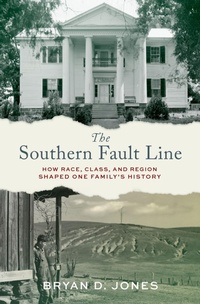
The Southern Fault Line
How Race, Class, and Region Shaped One Family's History
Published on 3. June 2025
Book
Hardback
472 pages
978-0-19-777042-9 (ISBN)
Description
A highly original reinterpretation of how race and class shaped the entirety of Southern history through the experience of four interconnected family lines.
The Southern Fault Line explores the under-appreciated division in the South between the oligarchic rule of plantation owners and industrialists on the one hand, and the more democratic mindset of the mountain-dwelling small farmers on the other. These two mindsets were in continual tension from the 1800s to the 1960s, when the adherents of the more democratic side of the struggle capitulated to the oligarchical side in response to the Civil Rights movement.
Bryan Jones draws from his own family's centuries-old history in the region to explore the rise and fall of the "two minds" of the South. Through a comparison of the experiences of a slaveholding line in his family with three non-slaveholding lines, Jones provides a rich history of the politics of both class and race in the region from the Founding era to the present. The slaveholding side of his family settled in Black Belt Alabama, while ancestral members of the other side of his family were poorer uplanders. In the 1890s, the latter supported the burgeoning populist movement, which for a short window of time tried to unite poor Blacks and poor whites against the patrician planter class and industrialists. After a series of close elections, the planter class was able to stanch the populist tide. They did this in large part by sowing racial division among populism's supporters. Indeed, one of Jones' ancestors helped draft the 1901 Alabama constitution that made Jim Crow the law of the state.
Throughout, Jones shows how deep the political differences were between the two regions, with oligarchy characterizing the slaveholding region and a more democratic ethos shaping the non-slaveholding areas. Jones serves as the final observer, a white boy observing not only the demise of the Jim Crow South, but--in the wake of the Civil Rights movement--the demise of the mountain democratic South as well. Today, the vast majority of Southern whites regardless of class support an oligarchical Republican Party.
The Southern Fault Line explores the under-appreciated division in the South between the oligarchic rule of plantation owners and industrialists on the one hand, and the more democratic mindset of the mountain-dwelling small farmers on the other. These two mindsets were in continual tension from the 1800s to the 1960s, when the adherents of the more democratic side of the struggle capitulated to the oligarchical side in response to the Civil Rights movement.
Bryan Jones draws from his own family's centuries-old history in the region to explore the rise and fall of the "two minds" of the South. Through a comparison of the experiences of a slaveholding line in his family with three non-slaveholding lines, Jones provides a rich history of the politics of both class and race in the region from the Founding era to the present. The slaveholding side of his family settled in Black Belt Alabama, while ancestral members of the other side of his family were poorer uplanders. In the 1890s, the latter supported the burgeoning populist movement, which for a short window of time tried to unite poor Blacks and poor whites against the patrician planter class and industrialists. After a series of close elections, the planter class was able to stanch the populist tide. They did this in large part by sowing racial division among populism's supporters. Indeed, one of Jones' ancestors helped draft the 1901 Alabama constitution that made Jim Crow the law of the state.
Throughout, Jones shows how deep the political differences were between the two regions, with oligarchy characterizing the slaveholding region and a more democratic ethos shaping the non-slaveholding areas. Jones serves as the final observer, a white boy observing not only the demise of the Jim Crow South, but--in the wake of the Civil Rights movement--the demise of the mountain democratic South as well. Today, the vast majority of Southern whites regardless of class support an oligarchical Republican Party.
More details
Language
English
Place of publication
New York
United States
Target group
College/higher education
Product notice
sewn/stitched
Cloth over boards
Dimensions
Height: 239 mm
Width: 163 mm
Thickness: 44 mm
Weight
757 gr
ISBN-13
978-0-19-777042-9 (9780197770429)
Copyright in bibliographic data and cover images is held by Nielsen Book Services Limited or by the publishers or by their respective licensors: all rights reserved.
Schweitzer Classification
Other editions
Additional editions
E-Book
02/2025
OUP eBook
€24.99
Available for download
E-Book
02/2025
OUP eBook
€24.99
Available for download
Person
Bryan Jones is J.J."Jake" Pickle Regents' Chair in Congressional Studies at the University of Texas at Austin. His research interests center on the study of public policy processes, American governing institutions, and the connection between human decision-making and organizational behavior. He directs the U.S. Policy Agendas Project, the major resource for examining changes in public policy processes in American national institutions. The Policy Agendas system has been adopted in thirty countries, allowing comparisons of policy change worldwide.
Content
Forward
Chapter 1: Southern Democracy or Southern Oligarchy
Chapter 2: Blount and Sumter
Part 1: Slaves, Owners, and the Black Belt
Chapter 3: The Lasting Legacy of Slavery
Chapter 4: Plantation Politics
Chapter 5: Myth and Reality in the Black Belt
Part 2: Upland Uprising On Sand Mountain
Chapter 6: Removals, Religion, and the White Republic
Chapter 7: North Alabama Sand Mountain People
Chapter 8: Yeoman Farming in the Mountains
Chapter 9: North Alabama in War and Reconstruction
Chapter 10: "The Blowhard of Blount"
Chapter 11: "Our Demosthenes"
Part 3: Traverses of the Common White Man
Chapter 12: The Two Faces of Brother Charley Jones
Chapter 13: Charley Jones Goes to War
Chapter 14: The Life of a South Alabama Tenant Farmer
Chapter 15: "I Was Greatly Embarrassed Because of My Ignorance"
Part 4: The Brackets of Jim Crow
Chapter 16: A Lynching Thwarted and a Brutal Murder
Chapter 17: The Arc of Injustice
Part 5: The Tragic Failure of Southern Moderates
Chapter 18: The Greatest Generation
Chapter 19: Three Southern Editors
Chapter 20: The Center Does Not Hold: The Evolution of an Editor
Part 6: The Collapse of Jim Crow
Chapter 21: A Bad Hotdog and a Big Orange
Chapter 22: The Pallbearer Who Could Not Go Into the Church
Chapter 23: Roll Tide at High Tide
Chapter 24: Looking Back to Look Forward
Chapter 1: Southern Democracy or Southern Oligarchy
Chapter 2: Blount and Sumter
Part 1: Slaves, Owners, and the Black Belt
Chapter 3: The Lasting Legacy of Slavery
Chapter 4: Plantation Politics
Chapter 5: Myth and Reality in the Black Belt
Part 2: Upland Uprising On Sand Mountain
Chapter 6: Removals, Religion, and the White Republic
Chapter 7: North Alabama Sand Mountain People
Chapter 8: Yeoman Farming in the Mountains
Chapter 9: North Alabama in War and Reconstruction
Chapter 10: "The Blowhard of Blount"
Chapter 11: "Our Demosthenes"
Part 3: Traverses of the Common White Man
Chapter 12: The Two Faces of Brother Charley Jones
Chapter 13: Charley Jones Goes to War
Chapter 14: The Life of a South Alabama Tenant Farmer
Chapter 15: "I Was Greatly Embarrassed Because of My Ignorance"
Part 4: The Brackets of Jim Crow
Chapter 16: A Lynching Thwarted and a Brutal Murder
Chapter 17: The Arc of Injustice
Part 5: The Tragic Failure of Southern Moderates
Chapter 18: The Greatest Generation
Chapter 19: Three Southern Editors
Chapter 20: The Center Does Not Hold: The Evolution of an Editor
Part 6: The Collapse of Jim Crow
Chapter 21: A Bad Hotdog and a Big Orange
Chapter 22: The Pallbearer Who Could Not Go Into the Church
Chapter 23: Roll Tide at High Tide
Chapter 24: Looking Back to Look Forward