

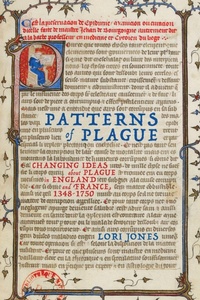
Patterns of Plague
Changing Ideas about Plague in England and France, 1348-1750
Published on 15. June 2022
Book
Paperback/Softback
408 pages
978-0-2280-1080-7 (ISBN)
Description
For centuries, recurrent plague outbreaks took a grim toll on populations across Europe and Asia. While medical interventions and treatments did not change significantly from the fourteenth century to the eighteenth century, understandings of where and how plague originated did.
Through an innovative reading of medical advice literature produced in England and France, Patterns of Plague explores these changing perceptions across four centuries. When plague appeared in the Mediterranean region in 1348, physicians believed the epidemic's timing and spread could be explained logically and the disease could be successfully treated. This confidence resulted in the widespread and long-term circulation of plague tracts, which described the causes and signs of the disease, offered advice for preventing infection, and recommended therapies in a largely consistent style. What, where, and especially who was blamed for plague outbreaks changed considerably, however, as political, religious, economic, intellectual, medical, and even publication circumstances evolved.
Patterns of Plague sheds light on what was consistent about plague thinking and what was idiosyncratic to particular places and times, revealing the many factors that influence how people understand and respond to epidemic disease.
Through an innovative reading of medical advice literature produced in England and France, Patterns of Plague explores these changing perceptions across four centuries. When plague appeared in the Mediterranean region in 1348, physicians believed the epidemic's timing and spread could be explained logically and the disease could be successfully treated. This confidence resulted in the widespread and long-term circulation of plague tracts, which described the causes and signs of the disease, offered advice for preventing infection, and recommended therapies in a largely consistent style. What, where, and especially who was blamed for plague outbreaks changed considerably, however, as political, religious, economic, intellectual, medical, and even publication circumstances evolved.
Patterns of Plague sheds light on what was consistent about plague thinking and what was idiosyncratic to particular places and times, revealing the many factors that influence how people understand and respond to epidemic disease.
Reviews / Votes
"Patterns of Plague is an innovative, well-crafted and important study in intellectual, cultural, and medical history. Jones's writing is sophisticated and her interpretations original and well-substantiated." Mary Lindemann, University of Miami "Not only an excellent insight into how plague tracts can be reinterpreted, but ... an example of how historical sources more generally can be reassessed in fruitful and fascinating ways." Medicine, Conflict, SurvivalMore details
Series
Language
English
Place of publication
Montreal
Canada
Target group
Professional and scholarly
Product notice
Paperback (trade)
Unsewn / adhesive bound
Illustrations
25 photos
Dimensions
Height: 229 mm
Width: 156 mm
Thickness: 30 mm
Weight
571 gr
ISBN-13
978-0-2280-1080-7 (9780228010807)
Copyright in bibliographic data and cover images is held by Nielsen Book Services Limited or by the publishers or by their respective licensors: all rights reserved.
Schweitzer Classification
Other editions
Additional editions
E-Book
06/2022
1st Edition
McGill-Queen's University Press
€160.99
Available for download
E-Book
06/2022
1st Edition
McGill-Queen's University Press
€160.99
Available for download
Person
Lori Jones is a historian of medieval and early modern medicine at Carleton University and the University of Ottawa.