

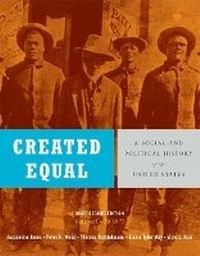
Created Equal
A Social and Political History of the United States, Brief Edition, Volume 1 (to 1877)
2nd Edition
Published on 23. February 2007
Book
Paperback/Softback
464 pages
978-0-321-42981-0 (ISBN)
Description
With its inclusive view of American history, Created Equal, Brief Edition, Volume One, emphasizes social history-including the lives and labors of women, immigrants, working people, and minorities in all regions of the country-while delivering the basics of political and economic history.
In this streamlined version of Created Equal, the authors have preserved the chronological framework and strong narrative thread, the rich tapestry of people and events, the engaging and illuminating stories, and the Interpreting History features of the original text, but have sharpened the presentation and prose condensing each chapter by 25 percent.
In this streamlined version of Created Equal, the authors have preserved the chronological framework and strong narrative thread, the rich tapestry of people and events, the engaging and illuminating stories, and the Interpreting History features of the original text, but have sharpened the presentation and prose condensing each chapter by 25 percent.
More details
Edition
2nd edition
Language
English
Place of publication
United States
Publishing group
Pearson Education (US)
Target group
Adult education
Dimensions
Height: 276 mm
Width: 216 mm
Weight
821 gr
ISBN-13
978-0-321-42981-0 (9780321429810)
Copyright in bibliographic data and cover images is held by Nielsen Book Services Limited or by the publishers or by their respective licensors: all rights reserved.
Schweitzer Classification
Other editions
New editions

Jacqueline A. Jones | Peter H. Wood | Thomas Borstelmann
Created Equal
A History of the United States, Volume 1
Book
10/2013
4th Edition
Pearson
€109.27
Article exhausted; check for reprint
Previous edition
Pearson Education
Created Equal
A Social and Political History of the United States, Brief Edition, Volume I (to 1877) (with Study Card)
Book
01/2007
Pearson
€40.91
Article exhausted; check for reprint
Content
Each chapter ends with "Conclusion," "Sites to Visit," and "For Further Reading."
I. NORTH AMERICAN FOUNDERS.
1. First Founders.
Ancient America.
A Thousand Years of Change: 500 to 1500.
Linking the Continents.
Spain Enters the Americas.
The Protestant Reformation Plays Out in America.
Interpreting History: "These Gods That We Worship Give Us Everything We Need."
2. European Footholds in North America, 1600-1660.
Spain's Ocean-Spanning Reach.
France and Holland: Overseas Competition for Spain.
English Beginnings on the Atlantic Coast.
The Puritan Experiment.
The Chesapeake Bay Colonies.
Interpreting History: Anne Bradstreet: "The Tenth Muse, Lately Sprung Up in America."
3. Controlling the Edges of the Continent, 1660-1715.
France and the American Interior.
The Spanish Empire on the Defensive.
England's American Empire Takes Shape.
Bloodshed in the English Colonies: 1670-1690.
Consequences of War and Growth: 1690-1715.
Interpreting History: "Marry or Do Not Marry."
II. A CENTURY OF COLONIAL EXPANSION TO 1775.
4. African Enslavement: The Terrible Transformation.
The Descent into Race Slavery.
The Growth of Slave Labor Camps.
England Enters the Atlantic Slave Trade.
Survival in a Strange New Land.
The Transformation Completed.
Interpreting History: "Releese Us out of This Cruell Bondegg."
5. An American Babel, 1713-1763.
New Cultures on the Western Plains.
Britain's Mainland Colonies: A New Abundance of People.
The Varied Economic Landscape.
Matters of Faith: The Great Awakening.
The French Lose a North American Empire.
Interpreting History: "Pastures Can Be Found Almost Everywhere." Joshua Von Kochertal Recruits Germans to Carolina.
6. The Limits of Imperial Control, 1763-1775.
New Challenges to Spain's Expanded Empire.
New Challenges to Britain's Expanded Empire.
"The Unconquerable Rage of the People."
A Conspiracy of Corrupt Ministers?
Launching a Revolution.
Interpreting History: "Squeez'd and Oppressed." A 1768 Petition by 30 Regulators.
III. THE UNFINISHED REVOLUTION, 1775-1803.
7. Revolutionaries at War, 1775-1783.
"Things Are Now Come to That Crisis."
Declaring Independence.
The Struggle to Win French Support.
Legitimate States, a Respectable Military.
The Long Road to Yorktown.
Interpreting History: "Revoking Those Sacred Trusts Which Are Violated."
8. New Beginnings: The 1780s
Beating Swords into Plowshares.
Competing for Control of the Mississippi Valley.
Creditors and Debtors.
Drafting a New Constitution.
Ratification and the Bill of Rights.
Interpreting History: Demobilization: "Turned Adrift Like Old Worn-Out Horses."
9. Revolutionary Legacies, 1789-1803.
Competing Political Visions in the New Nation.
People of Color: New Freedoms, New Struggles.
Continuity and Change in the West.
Shifting Social Identities in the Post-Revolutionary Era.
The Election of 1800: Revolution or Reversal?
Interpreting History: A Sailmaker Discusses "Means for the Preservation of Liberty" on the Fourth of July, 1797.
IV. EXPANDING THE BOUNDARIES OF FREEDOM AND SLAVERY, 1803-1848.
10. Defending and Expanding the New Nation, 1803-1818.
The British Menace.
The War of 1812.
The "Era of Good Feelings"?
The Rise of the Cotton Plantation Economy.
11. Expanding Westward: Society and Politics in the "Age of the Common Man," 1819-1832.
The Politics Behind Western Expansion.
Federal Authority and Its Opponents.
Real People in the "Age of the Common Man."
Ties That Bound a Growing Population.
Interpreting History: Jose Agustin de Escudero Describes New Mexico as a Land of Opportunity.
12. Peoples in Motion, 1832-1848.
Mass Migrations.
A Multitude of Voices in the National Political Arena.
Reform Impulses.
The United States Extends Its Reach.
Interpreting History:Senator John C. Calhoun Warns Against Incorporating Mexico into the United States.
V. DISUNION AND REUNION.
13. The Crisis over Slavery, 1848-1860.
Regional Economies and Conflicts.
Individualism vs. Group Identity.
The Paradox of Southern Political Power.
The Deepening Conflict over Slavery.
Interpreting History:Professor Howe on the Subordination of Women.
14. "To Fight to Gain a Country": The Civil War.
Mobilization for War, 1861-1862.
The Course of War, 1862-1864.
The Other War: African American Struggles for Liberation.
Battle Fronts and Home Fronts in 1863.
The Prolonged Defeat of the Confederacy, 1864-1865.
Interpreting History: A Virginia Slaveholder Objects to the Impressment of Slaves.
15. In the Wake of War: Consolidating a Triumphant Union, 1865-1877.
The Struggle over the South.
Claiming Territory for the Union.
The Republican Vision and Its Limits.
Interpreting History: A Southern Labor Contract.
Appendix.
The Declaration of Independence.
The Articles of Confederation.
The Constitution of the United States of America.
Amendments to the Constitution.
Presidential Elections.
Present Day United States.
Present Day World.
Glossary.
I. NORTH AMERICAN FOUNDERS.
1. First Founders.
Ancient America.
A Thousand Years of Change: 500 to 1500.
Linking the Continents.
Spain Enters the Americas.
The Protestant Reformation Plays Out in America.
Interpreting History: "These Gods That We Worship Give Us Everything We Need."
2. European Footholds in North America, 1600-1660.
Spain's Ocean-Spanning Reach.
France and Holland: Overseas Competition for Spain.
English Beginnings on the Atlantic Coast.
The Puritan Experiment.
The Chesapeake Bay Colonies.
Interpreting History: Anne Bradstreet: "The Tenth Muse, Lately Sprung Up in America."
3. Controlling the Edges of the Continent, 1660-1715.
France and the American Interior.
The Spanish Empire on the Defensive.
England's American Empire Takes Shape.
Bloodshed in the English Colonies: 1670-1690.
Consequences of War and Growth: 1690-1715.
Interpreting History: "Marry or Do Not Marry."
II. A CENTURY OF COLONIAL EXPANSION TO 1775.
4. African Enslavement: The Terrible Transformation.
The Descent into Race Slavery.
The Growth of Slave Labor Camps.
England Enters the Atlantic Slave Trade.
Survival in a Strange New Land.
The Transformation Completed.
Interpreting History: "Releese Us out of This Cruell Bondegg."
5. An American Babel, 1713-1763.
New Cultures on the Western Plains.
Britain's Mainland Colonies: A New Abundance of People.
The Varied Economic Landscape.
Matters of Faith: The Great Awakening.
The French Lose a North American Empire.
Interpreting History: "Pastures Can Be Found Almost Everywhere." Joshua Von Kochertal Recruits Germans to Carolina.
6. The Limits of Imperial Control, 1763-1775.
New Challenges to Spain's Expanded Empire.
New Challenges to Britain's Expanded Empire.
"The Unconquerable Rage of the People."
A Conspiracy of Corrupt Ministers?
Launching a Revolution.
Interpreting History: "Squeez'd and Oppressed." A 1768 Petition by 30 Regulators.
III. THE UNFINISHED REVOLUTION, 1775-1803.
7. Revolutionaries at War, 1775-1783.
"Things Are Now Come to That Crisis."
Declaring Independence.
The Struggle to Win French Support.
Legitimate States, a Respectable Military.
The Long Road to Yorktown.
Interpreting History: "Revoking Those Sacred Trusts Which Are Violated."
8. New Beginnings: The 1780s
Beating Swords into Plowshares.
Competing for Control of the Mississippi Valley.
Creditors and Debtors.
Drafting a New Constitution.
Ratification and the Bill of Rights.
Interpreting History: Demobilization: "Turned Adrift Like Old Worn-Out Horses."
9. Revolutionary Legacies, 1789-1803.
Competing Political Visions in the New Nation.
People of Color: New Freedoms, New Struggles.
Continuity and Change in the West.
Shifting Social Identities in the Post-Revolutionary Era.
The Election of 1800: Revolution or Reversal?
Interpreting History: A Sailmaker Discusses "Means for the Preservation of Liberty" on the Fourth of July, 1797.
IV. EXPANDING THE BOUNDARIES OF FREEDOM AND SLAVERY, 1803-1848.
10. Defending and Expanding the New Nation, 1803-1818.
The British Menace.
The War of 1812.
The "Era of Good Feelings"?
The Rise of the Cotton Plantation Economy.
11. Expanding Westward: Society and Politics in the "Age of the Common Man," 1819-1832.
The Politics Behind Western Expansion.
Federal Authority and Its Opponents.
Real People in the "Age of the Common Man."
Ties That Bound a Growing Population.
Interpreting History: Jose Agustin de Escudero Describes New Mexico as a Land of Opportunity.
12. Peoples in Motion, 1832-1848.
Mass Migrations.
A Multitude of Voices in the National Political Arena.
Reform Impulses.
The United States Extends Its Reach.
Interpreting History:Senator John C. Calhoun Warns Against Incorporating Mexico into the United States.
V. DISUNION AND REUNION.
13. The Crisis over Slavery, 1848-1860.
Regional Economies and Conflicts.
Individualism vs. Group Identity.
The Paradox of Southern Political Power.
The Deepening Conflict over Slavery.
Interpreting History:Professor Howe on the Subordination of Women.
14. "To Fight to Gain a Country": The Civil War.
Mobilization for War, 1861-1862.
The Course of War, 1862-1864.
The Other War: African American Struggles for Liberation.
Battle Fronts and Home Fronts in 1863.
The Prolonged Defeat of the Confederacy, 1864-1865.
Interpreting History: A Virginia Slaveholder Objects to the Impressment of Slaves.
15. In the Wake of War: Consolidating a Triumphant Union, 1865-1877.
The Struggle over the South.
Claiming Territory for the Union.
The Republican Vision and Its Limits.
Interpreting History: A Southern Labor Contract.
Appendix.
The Declaration of Independence.
The Articles of Confederation.
The Constitution of the United States of America.
Amendments to the Constitution.
Presidential Elections.
Present Day United States.
Present Day World.
Glossary.